Demonstrate Open House Value to Sellers: A Guide

Table of Contents
- Why Sellers Question Open House Value
- The Data Behind Open House Effectiveness
- Building a Digital Open House Sign-In System
- Creating an Open House Seller Report Template
- Managing Seller Expectations in Real Estate
- Real Estate Automation Tools That Demonstrate Value
- Turning Feedback Into Proof of Market Exposure
- Your Action Plan: Present Open House Value With Confidence
Last Updated: August 29, 2026
Why Sellers Question Open House Value
Sellers want proof. Without concrete evidence, an open house can feel like theater: you stage the home, you're unavailable for showings, and at the end of the day, you have illegible names on a clipboard with no clear sense of whether it moved the needle.
Paper sign-in sheets produce illegible names, fake phone numbers, and no real-time visibility. By the time an agent manually enters data into their CRM days later, the moment to communicate results to the seller has passed. Agents who win these conversations come prepared with verified visitor counts, buying-timeline breakdowns, and aggregate feedback on how serious the traffic was.
The Data Behind Open House Effectiveness
Open houses remain a cornerstone of real estate marketing, but their value depends entirely on execution and measurement. The buying-timeline data matters most to sellers. When you can tell a seller "We had 22 registered visitors, and 8 plan to purchase within 3 months," you've moved from anecdote to evidence.
Qualified leads are the real measure of success. When a visitor has to provide a real phone number and email to get in, the pool self-selects for serious interest. Fake contact information disappears.
Building a Digital Open House Sign-In System
From Paper to Verified Check-In
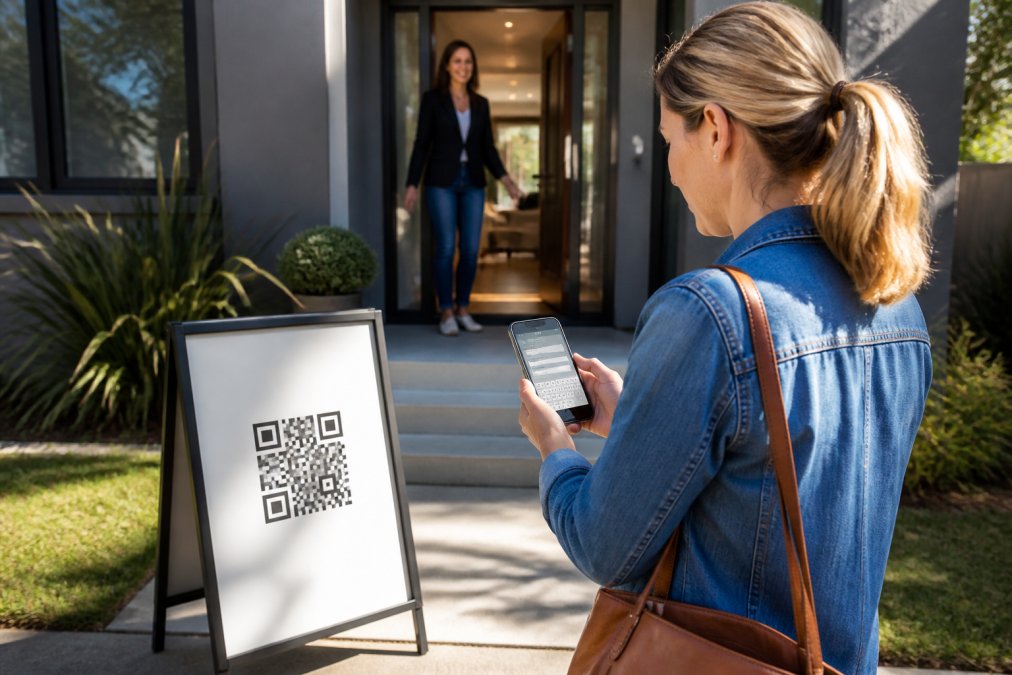
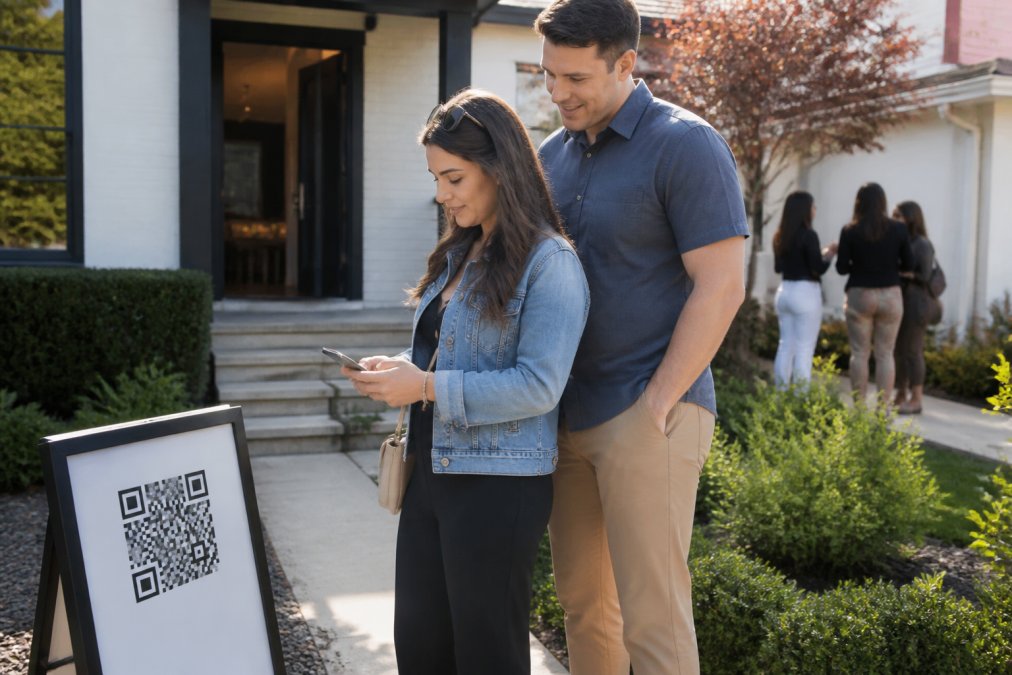
A visitor arrives and scans a QR code posted on a sign outside the property. They fill out a short form on their own phone: name, email, phone, and buying timeline (0-3 months, 3-6 months, 6-12 months, or 12+ months). The form takes less than 30 seconds. The moment they submit, they receive two codewords: one by text message and one by email. They tell one of those codewords to the agent at the door to enter.
This flow accomplishes three things. First, it verifies the contact information is real, if the phone number or email is fake, the codeword won't arrive. Second, it captures buying intent immediately. Third, it eliminates manual data entry. The agent gets an instant text and email alert with the visitor's details, and the lead is already in their system.
For international visitors, the system sends the text codeword via WhatsApp. Returning visitors are remembered for a year, so their information pre-fills on the next visit. An agent generates a QR code (permanent or per-event), prints it on a branded sign, and posts it outside. Visitors scan and register on their own phones. No app download, no account creation, nothing to install.
Capturing Qualified Leads Automatically
Every visitor's data goes straight into your CRM. The moment an agent receives a codeword alert, the visitor's information, name, email, phone, buying timeline, and any custom questions, is already in the system, ready for follow-up.
Most CRMs have a lead-intake email address. ohACCESS sends a formatted lead email to that address, and the CRM automatically parses it into the right fields. No manual entry. If your CRM isn't on the supported list, you can connect ohACCESS to your CRM through Zapier, which integrates with thousands of apps. For team-based workflows, a team lead can configure the system to copy every agent's leads to a shared team CRM.
The buying-timeline data is the key differentiator. When a visitor selects "0-3 months," your CRM knows to prioritize them. Custom questions let you capture additional intent signals, for example, "Are you a first-time buyer?" The answers come back with the lead data, giving the agent more context for follow-up.
Creating an Open House Seller Report Template
What to Include in Your Report
A seller report isn't a list of visitor names. It's a story told with data. Start with the headline number: total registered visitors. "We had 28 registered visitors on Saturday." Next, break down the buying timeline. "Of those 28 visitors, 6 plan to buy within 3 months, 8 within 6 months, 9 within 6-12 months, and 5 beyond 12 months."
Include the scan-to-registration funnel if tracking foot traffic separately. "We estimate 35-40 people walked by or through the property. 28 completed registration." Add the average visitor rating and price verdict if collecting After Tour feedback. "Visitors rated the home 8.2 out of 10 on average. The majority felt the price was reasonable." Include aggregated answers to your custom questions.
Keep the report to one page. The seller should understand what happened at the open house in 30 seconds.
Privacy-First Reporting That Builds Seller Trust
A seller report does NOT include visitor names, phone numbers, emails, or arrival times. Visitors consented to the agent having their contact information, not the seller. This privacy-first design respects that boundary and builds trust with both the seller and your visitors.
The aggregate data is actually more useful to a seller than a list of names. A seller doesn't need to know that "John from Main Street" came through. They need to know that the home rated 8.2 out of 10 and that serious buyers plan to purchase within 3-6 months.
Managing Seller Expectations in Real Estate
Setting Goals Before the Open House
The conversation about open house value starts before the open house happens. Meet with the seller a few days before and agree on specific goals. In a hot market, you might target 25-30 registered visitors. In a slower market, 12-15 might be solid. Make the goals measurable: "We want to attract at least 15 qualified buyers, with at least 4 planning to purchase within 3 months."
Document the goals in writing. Send the seller an email: "Here's what we agreed to for Saturday's open house: 15-20 registered visitors, with a focus on attracting buyers in the 0-6 month timeline. We'll send you a full report by Sunday morning." This creates accountability.
Communicating Results and Next Steps
Send the seller report within 24 hours of the open house. Lead with the headline. "Saturday's open house was a success. We registered 22 qualified visitors, with 5 planning to purchase within 3 months." Then walk through the breakdown. Show the timeline distribution, the visitor rating, the price verdict, and the feedback themes.
Connect the results to market activity. If you had 22 visitors and 5 are near-term buyers, that's a 23% conversion rate to serious buyers. Follow up with the seller in a week. "We've had three inquiries from Saturday's open house. Two are scheduling private showings this week." If the open house didn't generate expected traffic, address it directly. "We had lower-than-expected attendance due to the weather. Here's what we learned from the visitors who did come, and here's how we'll adjust our strategy."
Real Estate Automation Tools That Demonstrate Value
Instant Lead Capture and CRM Integration
The tools that let you demonstrate open house value share a common feature: they eliminate the gap between visitor registration and lead follow-up. When a visitor registers at 10:15 a.m., you know about it at 10:15 a.m., and your CRM knows about it at 10:15 a.m. No manual entry. No delay.
Digital check-in systems that integrate with your CRM are the foundation. The visitor scans, registers, receives codewords, and their data flows directly into your system. The agent gets instant alerts so they can prioritize follow-up. Look for systems that deliver leads to your CRM via formatted email or through Zapier.
Automated Reporting for Same-Day Seller Updates
Automated reporting systems let you send seller updates without manual work. The best systems generate a report automatically after the open house ends, and you can share it with one tap. The report should include visitor count, timeline breakdown, average rating, price verdict, and feedback themes. Same-day delivery is critical.
| Feature | Why It Matters | What to Look For |
|---|---|---|
| Instant lead capture | Eliminates manual data entry and delays | Real-time alerts to agent and CRM |
| CRM integration | Leads go straight into your follow-up system | Formatted email or Zapier |
| Verified contact info | Reduces fake leads and invalid numbers | QR code + phone verification at registration |
| Buying timeline data | Lets you segment and prioritize leads | Captured at registration |
| Automated seller reports | Demonstrates value without extra work | Same-day delivery, aggregate-only data |
| Custom questions | Captures intent signals for better follow-up | 1-2 questions per registration form |
Turning Feedback Into Proof of Market Exposure
Collect feedback immediately after the tour, while the impression is fresh. Ask visitors to rate the home on a 1-10 scale and share their price verdict: "Too High," "Reasonable," or "Too Low." These two data points tell the seller everything they need to know about market perception.
If 80% of visitors think the price is reasonable and the home rates 8.5 out of 10, the seller knows the price is competitive and the home is appealing. Aggregate the feedback and share it in the seller report. Instead of individual visitor comments, summarize themes: "Multiple visitors mentioned the kitchen needs updating" or "Several visitors were impressed by the backyard."
Use the feedback to inform strategy. If visitors consistently mention a specific concern, the seller now knows what to address.
Your Action Plan: Present Open House Value With Confidence
Step 1: Set goals before the open house. Meet with the seller 3-5 days before and agree on specific, measurable targets. Document them in writing.
Step 2: Use verified check-in to capture real data. Deploy a digital sign-in system that verifies contact information and integrates with your CRM. Post a clear QR code sign outside the property.
Step 3: Deliver a same-day report. Send the seller a report within 24 hours that includes visitor count, timeline breakdown, average rating, price verdict, and feedback themes.
Step 4: Interpret the data for the seller. Don't just hand over numbers. Explain what they mean. "We had 22 visitors, and 5 plan to buy within 3 months. That's a 23% conversion rate to serious buyers, which is strong for this market."
Step 5: Follow up on leads in real time. Use the verified contact information to reach out to near-term buyers within hours of the open house. Tell the seller which visitors are scheduling private showings.
Step 6: Use feedback to refine strategy. If visitors identified a specific concern, address it. If the price verdict was consistently "too high," discuss a strategic adjustment with the seller.
The difference between agents who struggle to justify open houses and agents who close deals from them is data. Data builds credibility. Data removes emotion from the conversation. Data lets you demonstrate open house value to sellers with confidence because you're not making a pitch, you're showing proof.
Most agents hold open houses and hope for the best. They collect names on a clipboard, enter them into their CRM days later, and have no real sense of whether the open house generated qualified leads or just foot traffic.
ohACCESS changes that dynamic. With verified digital check-in, every visitor's information flows directly into your CRM with their buying timeline already captured. You get instant alerts so you can follow up immediately. Within 24 hours, you have a professional seller report that proves the open house worked, or shows exactly what needs to change.
Start with the free trial. Register your first 25 visitors at no cost, no credit card required. See how the system works, how the data flows into your CRM, and how much faster you can follow up. Then scale to Pro or Team plans based on your volume. Agents using verified check-in close more deals from open houses because they can prove the value to sellers and follow up with qualified leads immediately.
Frequently Asked Questions
Q: How do you justify the value of an open house to a skeptical seller?
A: Lead with data: show the visitor count, buying-timeline breakdown, and qualified-lead metrics from your last three open houses. Explain that open houses generate market exposure, social proof, and immediate feedback on buyer perception. Share specific examples of offers that came directly from open house attendees. Use a seller report that demonstrates buyer interest and timeline urgently, this proof is more persuasive than promises.
Q: What metrics should you include in an open house seller report?
A: Include registered-visitor count, the breakdown of buying timelines (0-3, 3-6, 6-12, 12+ months), average visitor rating of the home on a 1-10 scale, price perception (Too High, Reasonable, Too Low), and answers to any custom questions you asked visitors. Avoid sharing individual visitor names or contact details; aggregate data protects privacy and keeps the focus on market signals. Same-day reporting demonstrates your commitment to transparency.
Q: How can digital check-in tools improve the seller experience?
A: Digital check-in eliminates paper clutter and manual data entry, giving sellers confidence that you're capturing real, verified leads. Instant automated reporting means sellers see results the same day, no waiting for you to manually compile data. Verified contact information proves you're building a qualified audience, not just counting foot traffic. One-tap seller reports make it easy for you to share progress, building trust and justifying continued marketing investment.
Q: What is the best way to present open house feedback to homeowners?
A: Present feedback within 24 hours while the open house is still fresh. Use a structured format: start with the headline (visitor count, buying timeline summary), then share the average rating and price verdict, and finish with next steps. Frame neutral or mixed feedback constructively, for example, if many said the price is high, offer staging or pricing adjustment options. Always include a follow-up action: another open house, price reduction, or targeted digital marketing. This positions you as strategic, not just reactive.
This article was written using GrandRanker
Frequently asked questions
Q: How do you justify the value of an open house to a skeptical seller?
A: Lead with data: show the visitor count, buying-timeline breakdown, and qualified-lead metrics from your last three open houses. Explain that open houses generate market exposure, social proof, and immediate feedback on buyer perception. Share specific examples of offers that came directly from open house attendees. Use a seller report that demonstrates buyer interest and timeline urgently—this proof is more persuasive than promises.
Q: What metrics should you include in an open house seller report?
A: Include registered-visitor count, the breakdown of buying timelines (0-3, 3-6, 6-12, 12+ months), average visitor rating of the home on a 1-10 scale, price perception (Too High, Reasonable, Too Low), and answers to any custom questions you asked visitors. Avoid sharing individual visitor names or contact details; aggregate data protects privacy and keeps the focus on market signals. Same-day reporting demonstrates your commitment to transparency.
Q: How can digital check-in tools improve the seller experience?
A: Digital check-in eliminates paper clutter and manual data entry, giving sellers confidence that you're capturing real, verified leads. Instant automated reporting means sellers see results the same day—no waiting for you to manually compile data. Verified contact information proves you're building a qualified audience, not just counting foot traffic. One-tap seller reports make it easy for you to share progress, building trust and justifying continued marketing investment.
Q: What is the best way to present open house feedback to homeowners?
A: Present feedback within 24 hours while the open house is still fresh. Use a structured format: start with the headline (visitor count, buying timeline summary), then share the average rating and price verdict, and finish with next steps. Frame neutral or mixed feedback constructively—for example, if many said the price is high, offer staging or pricing adjustment options. Always include a follow-up action: another open house, price reduction, or targeted digital marketing. This positions you as strategic, not just reactive.
Keep reading
Start free with 25 verified check-ins. No credit card required.
Start Free