How to Qualify Open House Leads Effectively
Table of Contents
- Why Qualifying Open House Leads Matters
- Open House Lead Qualification Questions That Work
- Real Estate Open House Sign-In Sheet Alternatives
- Open House Lead Conversion Scripts for Real Agents
- Best Practices for Open House Lead Generation
- Distinguishing Serious Buyers from Casual Visitors
- Common Mistakes That Kill Open House Lead Quality
- Conclusion
Last Updated: August 28, 2026
Why Qualifying Open House Leads Matters
The difference between a productive open house and wasted time comes down to knowing which visitors are serious buyers. Most agents spend hours following up with unqualified prospects, inflating their contact list with dead leads.
Qualifying leads early separates tire-kickers from genuine buyers, shapes your follow-up strategy, protects your time, and ensures your CRM receives clean, actionable data. When you know a visitor's buying timeline, financial readiness, and motivation upfront, you can prioritize follow-up, customize your pitch, and close deals faster.
Traditional paper sign-in sheets don't capture this reliably. Visitors skip questions, write illegibly, or enter fake contact details. Digital verification tools like ohACCESS solve this by collecting structured responses on the visitor's own phone and verifying their contact information is real before they enter the property.
Open House Lead Qualification Questions That Work
The best qualification happens through the initial registration form and follow-up conversation at the door. Your registration questions should be specific, quick to answer, and designed to reveal intent and readiness.
Timeline and Intent Questions
Buying timeline is the single most predictive indicator of lead quality. A visitor planning to buy within three months is fundamentally different from someone "just exploring (peer-reviewed research)." Ask directly: "When are you planning to buy?" Offer clear buckets: 0-3 months, 3-6 months, 6-12 months, 12+ months.
The 0-3 month group is your hottest segment, active buyers comparing properties and making decisions this quarter. Follow up within 24 hours with specifics about financing and next steps.
The 3-6 month group is warm. They're serious but not urgent, often still selling a current home or saving a down payment. These leads benefit from a nurture sequence with regular market updates and neighborhood highlights.
Beyond 6 months, leads cool rapidly. Add them to a long-term drip campaign and revisit when their timeline shortens.
Financial Readiness and Pre-Approval Status
A buyer with pre-approval is ready to move. Ask: "Are you pre-approved for a mortgage?" If yes, note the approval amount and lender. If no, ask: "Have you spoken with a lender yet?"
Pre-approved buyers move faster and close more reliably (peer-reviewed research). When you follow up, focus on property fit, negotiation, and closing logistics instead of mortgage education.
Buyers who haven't spoken to a lender yet need a different conversation. Offer to introduce them to a trusted lender or provide pre-approval resources. Also ask about down payment readiness: "Do you have funds set aside for a down payment?" This separates serious buyers from dreamers.
Property-Specific and Motivation Questions
Understanding why a visitor is interested in this property helps you tailor follow-up. Ask: "What drew you to this property?" Listen for specifics: location, layout, price point, school district, proximity to work.
If a visitor loves the location but has layout concerns, highlight similar properties in the area in your follow-up. Also ask: "Is this your first time buying?" First-time buyers need education and reassurance. Repeat buyers are faster decision-makers but may be more price-sensitive. Your follow-up approach shifts based on this context.
Real Estate Open House Sign-In Sheet Alternatives
Paper sign-in sheets are slow, error-prone, and create zero verification. Visitors write illegible names, skip phone numbers, or enter fake contact details, leaving you with unusable data.
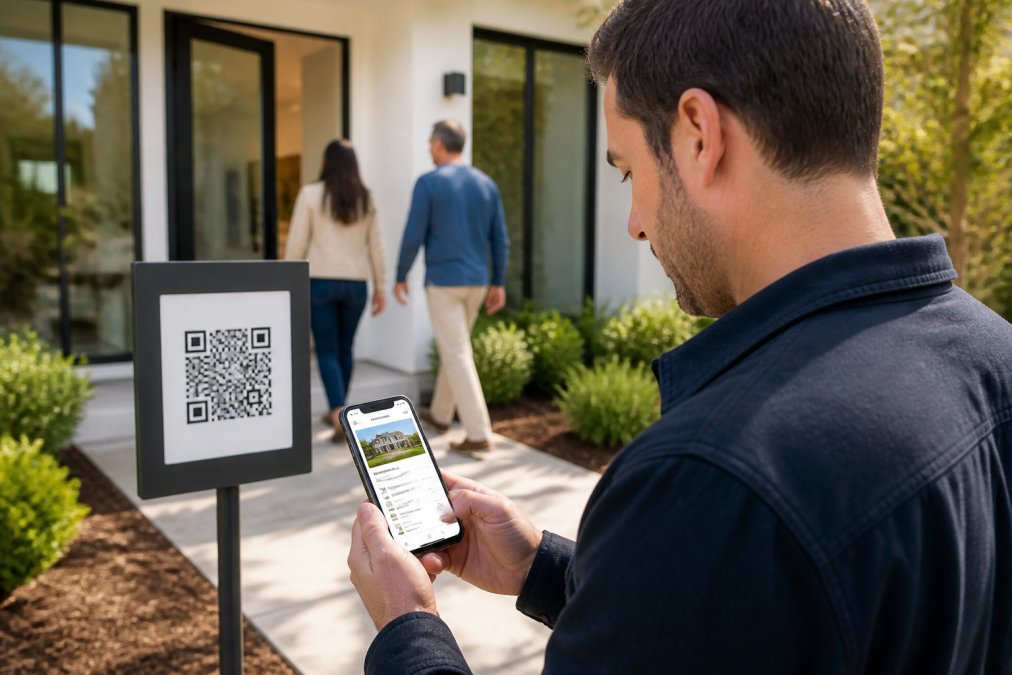
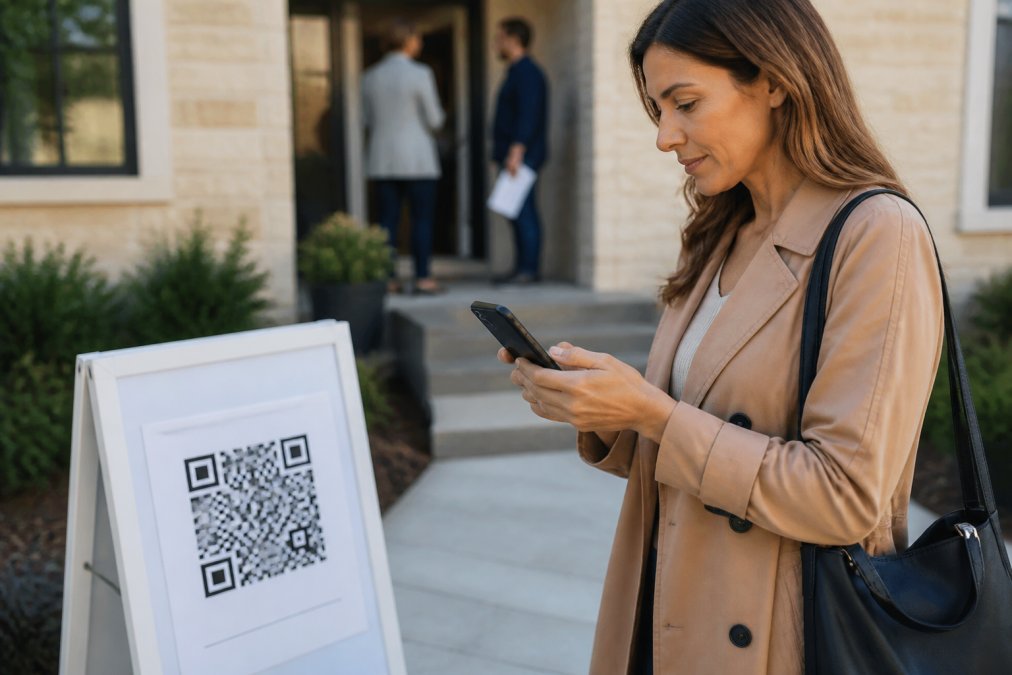
Digital alternatives solve these problems. A verified digital check-in system like ohACCESS replaces the paper sheet with a QR code visitors scan at the door. They fill out a short form on their own phone: name, email, phone, buying timeline, and any custom questions you add. The moment they submit, they receive two codewords: one by text and one by email. They tell a codeword to you at the door to enter, which proves the phone and email they entered are real and theirs.
This verification step eliminates fake entries, bounced emails, and disconnected phone numbers before they clog your CRM. You get a clean visitor log with verified contact information ready for immediate follow-up. The system also sends you an instant text and email alert for every sign-in. The form is available in 16 languages, and international visitors receive their codeword via WhatsApp, so language and geography aren't barriers to lead capture.
Open House Lead Conversion Scripts for Real Agents
The script you use at the door and during the tour shapes whether a visitor feels like a prospect or a number. Your goal is to build rapport, qualify intent, and move toward a next step without being pushy.
The Initial Greeting and Rapport Script
Your first 30 seconds set the tone. Greet visitors warmly, use their name (which you now have from digital check-in), and acknowledge something specific about their visit.
Script: "Hi [Name], thanks for coming by today. I see you're interested in the area, have you spent much time in the neighborhood before?"
This opens a conversation, not an interrogation. You're showing you've read their registration and care about their experience. Let them talk and listen for clues about motivation, timeline, and concerns. If they mention a specific draw, the school district, the commute, the price, anchor on it: "That's what a lot of buyers love about this area. The schools are really strong, and you're only 15 minutes from downtown."
The Qualification Script
Once rapport is established, move into gentle qualification.
Script: "So I'm curious, is this your first time looking in this neighborhood, or have you been exploring for a while? And when you're thinking about timing, what does your ideal move-in look like? Are you hoping to close by end of year, or is next spring more realistic?"
These questions feel conversational, not like a form. Slip in financial readiness naturally: "Have you had a chance to talk with a lender yet, or is that still on your to-do list?" If they're pre-approved, note it. If not, offer help: "I work with a great lender who can give you a quick pre-approval in a day or two if that's helpful."
The Closing and Follow-Up Script
As the tour winds down, move toward a clear next step.
Script: "I really enjoyed showing you the place. Before you go, I want to make sure I follow up with you in a way that's actually useful. What would be most helpful, a text with similar properties in the area, an email with market data, or a call this week to talk through next steps?"
This gives the visitor control and sets an expectation. If they seem hesitant: "Even if this property isn't the right fit, I'd love to stay in touch. Market conditions are shifting, and I'd rather you hear from me first when something matches what you're looking for."
Best Practices for Open House Lead Generation
Capturing and qualifying leads is only half the battle. The other half is making sure that data flows into your CRM instantly, stays clean, and triggers the right follow-up sequence.
Capturing Accurate Contact Information
Accuracy starts with the sign-in process. A verified digital form captures better data than paper because visitors are typing into their own phone. They're more likely to enter real information because they know they'll receive a codeword and the system verifies their contact details work.
Ask for phone and email, but also ask for a preferred contact method: "How should I reach you, text, email, or call?" For international visitors, capturing the correct phone format is critical. ohACCESS supports non-US and Canada phone numbers and delivers codewords via WhatsApp for international visitors.
Also capture one custom question specific to your property or market. Examples: "What's most important to you in a home, location, condition, or price?" or "Are you a first-time buyer or upgrading?" This custom data becomes your follow-up hook. You reference it in your first email or call, which makes the interaction feel personalized.
Automating Lead Delivery to Your CRM
The moment a visitor signs in, their data should flow into your CRM automatically. Manual data entry is slow, error-prone, and kills your follow-up speed. A verified digital system like ohACCESS delivers every sign-in into your CRM as a formatted lead automatically. This works with Follow Up Boss, BoldTrail/kvCORE, Lofty, Sierra Interactive, Real Geeks, CINC, Top Producer, Wise Agent, LionDesk, and other CRMs via Zapier webhook.
The lead arrives in your CRM with all verified contact information, buying timeline, and custom question responses already populated. No re-keying, no delays. You can start follow-up immediately. If you're managing a team, the system can forward every member's leads to a shared team CRM so your broker or team lead has visibility into all open house activity.
Post-Open House Follow-Up and Lead Nurturing
Speed matters. Send your first follow-up within two hours of the open house. A text is fastest: "Hi [Name], thanks for visiting [property address] today. I grabbed a few similar properties you might like, I'll email them over this afternoon."
Follow up with an email within 24 hours. Include photos of the property, comparable sales data, market insights, and 2-3 similar properties that match what they said they were looking for.
For 0-3 month buyers, follow up by phone within 48 hours. You want to catch them while they're still comparing. For 3-6 month buyers, add them to a weekly or bi-weekly nurture sequence with market updates and neighborhood highlights. For 12+ month buyers, move them to a monthly or quarterly sequence. When their timeline shifts, you want to be the first agent they think of.
Distinguishing Serious Buyers from Casual Visitors
Not all open house visitors are created equal. Serious buyers ask specific questions about square footage, lot size, property taxes, school ratings, HOA fees (peer-reviewed research). They compare it to other homes they've seen. They mention a timeline and a reason for moving.
Casual visitors make vague comments: "It's nice." They don't ask follow-up questions or take notes. They're browsing.
The digital sign-in form helps you distinguish these groups before the tour starts. A visitor who fills out the form carefully, provides real contact information, and selects a specific buying timeline is more likely to be serious than someone who rushes through or leaves fields blank. Use this information to adjust your tour. Spend more time with serious buyers. Show them features that match their stated priorities. For casual visitors, keep it brief and friendly.
Common Mistakes That Kill Open House Lead Quality
Most agents make predictable mistakes that tank their lead quality and conversion rates.
Mistake 1: Not asking the right questions. Agents ask for name, phone, and email, and nothing else. Without knowing buying timeline or motivation, your follow-up is generic and ineffective. Ask specific, structured questions that reveal readiness and fit.
Mistake 2: Trusting paper sign-in sheets. Visitors write fake names, invalid phone numbers, and unverifiable emails. You spend hours calling dead leads. A verified digital system eliminates this waste by confirming contact information is real before it enters your CRM.
Mistake 3: Delaying follow-up. Agents capture leads on Sunday, then don't follow up until Wednesday. By then, the visitor has seen five other properties and forgotten yours. Follow up within hours, not days.
Mistake 4: Not segmenting by timeline. Agents treat all leads the same. A 0-3 month buyer gets the same follow-up cadence as a 12+ month browser. Segment by timeline and adjust your follow-up intensity accordingly.
Mistake 5: Using generic follow-up templates. "Thanks for coming by today. Here are some properties you might like." This feels mass-produced. Reference something specific from your conversation. Personalization drives response rates.
Mistake 6: Not automating CRM entry. Agents manually type leads into their CRM hours after the open house. Data gets lost, duplicated, or entered incorrectly. Automate this step so leads flow into your CRM instantly with verified contact information.
Mistake 7: Mixing serious buyers with casual visitors. Agents treat everyone the same during the tour. They spend 20 minutes with someone who's just browsing and rush through with a serious buyer. Read the room and invest your time where it matters.
Qualifying open house leads effectively is the foundation of a productive lead generation system. The right questions, verified contact information, and fast follow-up separate agents who close deals from those who waste time chasing dead leads. A digital sign-in system like ohACCESS removes the friction of manual data entry and verification, so your leads arrive in your CRM clean and ready for immediate action. Combined with a clear qualification framework and a disciplined follow-up sequence, you'll convert more visitors into clients and spend less time on tire-kickers. Start with a free trial of ohACCESS, your first 25 sign-ins are free, with all features included. Get started at www.ohaccess.com and see how verified lead capture transforms your open house strategy.
Frequently Asked Questions
What's the best way to qualify a real estate lead at an open house?
Start by building rapport with genuine conversation before asking qualifying questions. Ask about their timeline (0-3, 3-6, 6-12, or 12+ months), pre-approval status, and what they're looking for in a property. Listen more than you talk, and focus on understanding their motivation. Verified digital sign-in tools capture accurate contact information automatically, so you can focus on the conversation instead of clipboard paperwork. Follow up within 24 hours with personalized next steps based on what you learned.
How can digital check-in tools improve lead quality?
Digital sign-in systems replace handwritten sheets that contain fake names, invalid phone numbers, and illegible entries. When visitors fill out a form on their own phone and receive instant verification codewords via text and email, you confirm their contact information is real and theirs. The system flags VoIP and burner numbers automatically, and delivers verified leads directly to your CRM. This eliminates manual data entry errors and fake leads, so your follow-up time focuses on genuine buyer prospects.
How do you distinguish between a serious buyer and a looky-loo?
Serious buyers mention a specific timeline, reference pre-approval or financing in place, ask detailed property questions, and discuss next steps. Looky-loos browse casually, avoid timeline questions, and show little urgency. Pay attention to body language: serious buyers take notes, ask about comparable properties, and want to know your process. Ask directly: 'Are you actively looking to buy in the next three to six months?' Honest answers separate qualified prospects from casual browsers. Verified sign-in data helps you track patterns over time.
What should I do if someone doesn't have a smartphone or won't scan a QR code?
Most open house visitors have smartphones, but older buyers or tech-averse prospects may hesitate. Offer to help them scan the QR code, or simply capture their contact information verbally and enter it into your CRM manually afterward. Don't let the tool get in the way of the relationship. The goal is accurate contact data and a qualified lead, whether it comes from a digital form or a conversation. A verified digital system is a backup, not a barrier to lead capture.
This article was written using GrandRanker
Frequently asked questions
What's the best way to qualify a real estate lead at an open house?
Start by building rapport with genuine conversation before asking qualifying questions. Ask about their timeline (0–3, 3–6, 6–12, or 12+ months), pre-approval status, and what they're looking for in a property. Listen more than you talk, and focus on understanding their motivation. Verified digital sign-in tools capture accurate contact information automatically, so you can focus on the conversation instead of clipboard paperwork. Follow up within 24 hours with personalized next steps based on what you learned.
How can digital check-in tools improve lead quality?
Digital sign-in systems replace handwritten sheets that contain fake names, invalid phone numbers, and illegible entries. When visitors fill out a form on their own phone and receive instant verification codewords via text and email, you confirm their contact information is real and theirs. The system flags VoIP and burner numbers automatically, and delivers verified leads directly to your CRM. This eliminates manual data entry errors and fake leads, so your follow-up time focuses on genuine buyer prospects.
How do you distinguish between a serious buyer and a looky-loo?
Serious buyers mention a specific timeline, reference pre-approval or financing in place, ask detailed property questions, and discuss next steps. Looky-loos browse casually, avoid timeline questions, and show little urgency. Pay attention to body language: serious buyers take notes, ask about comparable properties, and want to know your process. Ask directly: 'Are you actively looking to buy in the next three to six months?' Honest answers separate qualified prospects from casual browsers. Verified sign-in data helps you track patterns over time.
What should I do if someone doesn't have a smartphone or won't scan a QR code?
Most open house visitors have smartphones, but older buyers or tech-averse prospects may hesitate. Offer to help them scan the QR code, or simply capture their contact information verbally and enter it into your CRM manually afterward. Don't let the tool get in the way of the relationship. The goal is accurate contact data and a qualified lead—whether it comes from a digital form or a conversation. A verified digital system is a backup, not a barrier to lead capture.
Keep reading
Start free with 25 verified check-ins. No credit card required.
Start Free