Digital Open House Sign-In Apps: Benefits for Real Estate Agents
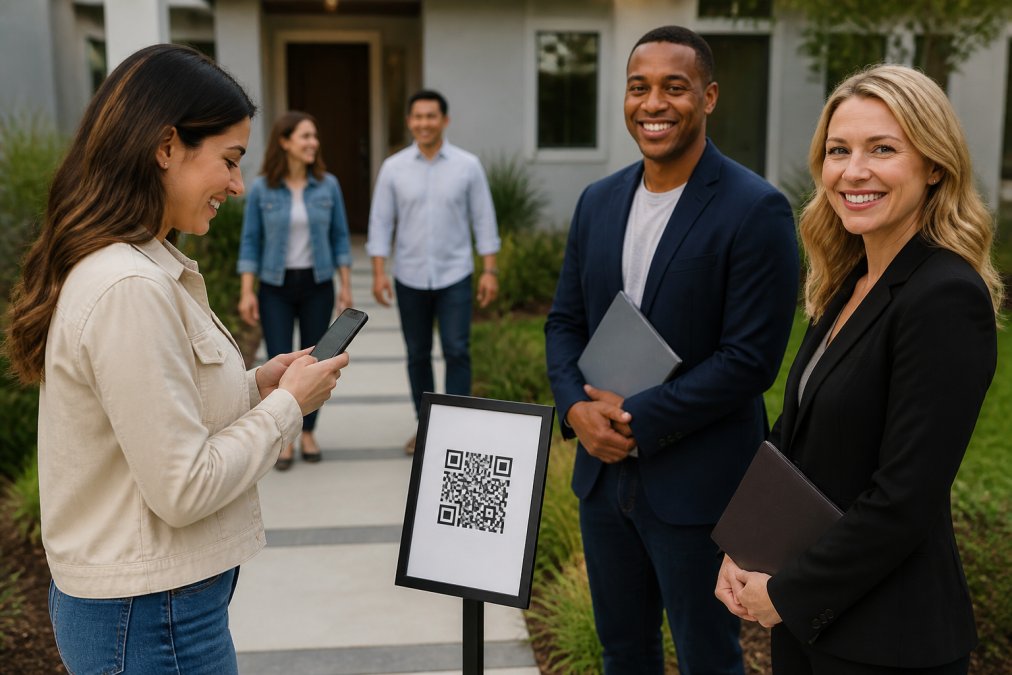
Table of Contents
- Why Digital Open House Sign-In Apps Matter
- How Digital Open House Sign-In Apps Verify Visitor Information
- Real Estate Open House Lead Capture Best Practices
- Automating Real Estate Lead Entry Into CRM Systems
- How to Follow Up With Open House Leads Efficiently
- Data Privacy and Security Compliance for Open House Visitors
- Seller Reports: Proving Open House Value to Your Clients
- Conclusion
Last Updated: August 27, 2026
Why Digital Open House Sign-In Apps Matter
Paper sign-in sheets have dominated real estate open houses for decades. They're cheap to print, require no setup, and agents have always used them. But they come with a critical problem: the data is unreliable. Visitors write fake names. Phone numbers don't work. Email addresses bounce. By the time an agent tries to follow up, half the leads are worthless.
Digital open house sign-in apps solve this by replacing paper with verified registration. Visitors scan a QR code at the door, fill out a form on their own phone, and instantly receive verification codewords to share with the host. This simple step, requiring visitors to prove their contact information is real, eliminates fake leads at the moment of entry. The agent gets an immediate alert by text and email, and every sign-in flows directly into their CRM.
The shift from paper to digital isn't just about convenience. It's about lead quality. Real estate agents working with verified visitor data close more deals because they're spending follow-up time on genuine prospects, not chasing dead numbers. Brokers managing teams see standardized data across all their agents. Listing clients get transparent proof of open house traffic and buyer interest within hours.
How Digital Open House Sign-In Apps Verify Visitor Information
The verification process works in real time. When a visitor arrives at the property, they scan a QR code posted on an a-frame sign or pedestal at the entrance. This opens a short registration form on their own smartphone. They enter their name, email, phone number, and buying timeline (0-3 months, 3-6 months, 6-12 months, or 12+ months). Many apps also allow agents to add one custom question to gather additional information relevant to the listing.
The moment the visitor submits the form, the system sends them two codewords, one by text message and one by email. For international visitors with non-US phone numbers, the text arrives via WhatsApp instead. The visitor then tells one of these codewords to the host agent at the door. The text codeword is primary; the email codeword serves as backup if the text message is delayed. The visitor never types anything into a system or app. They simply speak the codeword to the agent, who verifies it and lets them in.
This design accomplishes something paper sheets cannot: it proves the phone number and email address actually belong to the person who entered them. If a visitor provides a fake number, they won't receive the codeword and won't be able to enter. If they provide a working number but a fake email, the system flags it. The result is a verified visitor log with legitimate contact information.
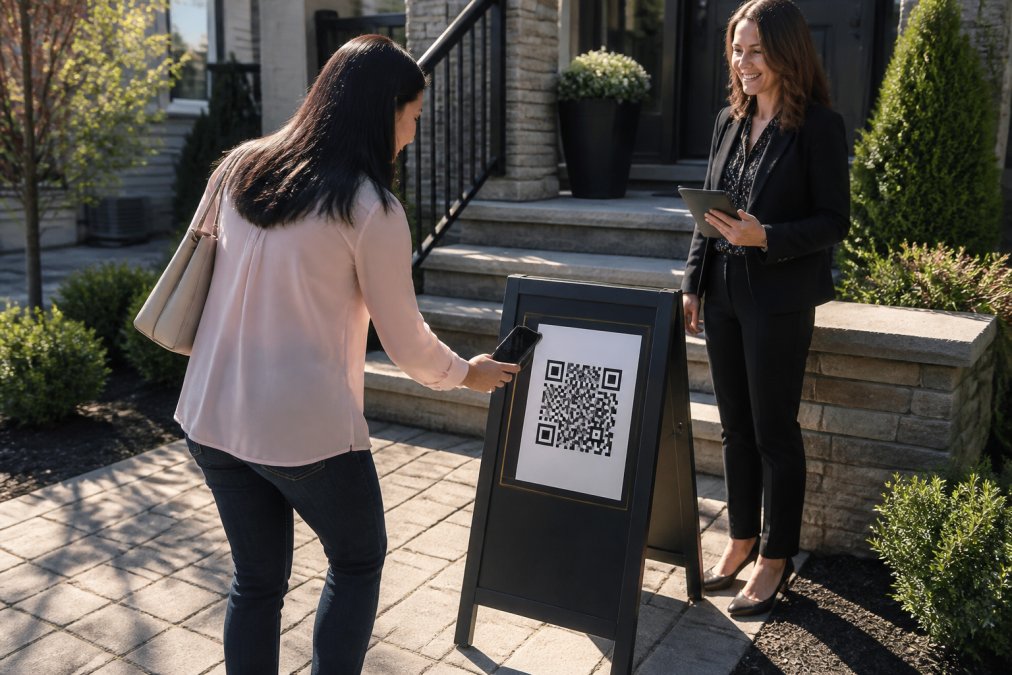
The entire verification happens in seconds. No app download. No account creation. No friction. Returning visitors are remembered for up to a year, so their information pre-fills on the next open house they attend, speeding up the check-in process even further.
Real Estate Open House Lead Capture Best Practices
Lead capture starts before the open house begins. Set your codewords in advance using the app's auto-generate button. Customize the sign-in form with one additional question specific to the property or your business, asking about financing, timeline urgency, or neighborhood interest helps you qualify prospects immediately.
Print a branded QR sign with your agency logo and place it prominently at the entrance. Position it at eye level on an a-frame stand so arriving visitors see it immediately. Include a simple instruction: "Scan to enter." No jargon. No lengthy explanation. Visitors understand what to do.
During the open house, monitor your text and email alerts in real time. Each sign-in triggers an instant notification with the visitor's name, phone, email, buying timeline, and any custom question responses. This gives you actionable intelligence while the visitor is still in the property. If someone indicates they're buying within 3 months, you know to prioritize them for follow-up. If they're a 12+ month timeline, you can nurture them differently.
Export your visitor data to CSV at any time for further analysis or manual review. Flag entries that show red flags, VoIP numbers, bounced emails, undeliverable texts, or opt-out requests. The system does this automatically, so you know which leads are worth pursuing and which to remove from your list.
| Best Practice | Purpose | Timing |
|---|---|---|
| Customize sign-in form | Capture qualifying details beyond contact info | Before open house |
| Print branded QR sign | Reduce friction and establish professionalism | Before open house |
| Monitor alerts in real time | Prioritize follow-up while visitor is on-site | During open house |
| Review flagged entries | Identify and remove bad data before follow-up | After open house |
| Export and analyze data | Understand traffic patterns and buyer profiles | Within 24 hours |
The goal is simple: capture verified contact information, identify qualified prospects, and act on that intelligence quickly.
Automating Real Estate Lead Entry Into CRM Systems
Manual data entry is a time killer. After an open house, agents typically spend 30 minutes or more typing visitor information into their CRM by hand (peer-reviewed research). Digital open house apps eliminate this step entirely by delivering leads automatically.
When a visitor completes their registration, the app sends a formatted lead email to your CRM's lead-intake address. Most modern CRM systems parse this email automatically and populate the fields, name, phone, email, buying timeline, and custom question responses, without any manual intervention. This works with Follow Up Boss, BoldTrail/kvCORE, Lofty, Sierra Interactive, Real Geeks, CINC, Top Producer, Wise Agent, LionDesk, and many others. Agents simply select their CRM from a dropdown during setup.
For CRMs not on the pre-built list, most digital open house apps offer Zapier integration. Zapier connects thousands of applications, so you can build a custom workflow that sends every open house sign-in directly into your system. This takes a few minutes to configure but requires no coding knowledge.
For team leaders and brokers managing multiple agents, some apps offer team CRM forwarding. This means a team lead can automatically receive copies of every member's leads into a shared team CRM, creating a centralized database of all open house traffic across all agents and all properties.
The key advantage is speed and accuracy. Leads arrive in your CRM within seconds of registration, formatted consistently, with zero typing errors. Your follow-up process can start immediately instead of waiting for manual data entry.
How to Follow Up With Open House Leads Efficiently
Open house leads are hottest in the first 24 hours (peer-reviewed research). The visitor just saw the property. They have questions. They's actively shopping. This is when follow-up matters most.
Set up an automated sequence in your CRM to send a thank-you email within hours of the open house. Acknowledge the visit, highlight key property features, and ask a qualifying question to move the conversation forward. Many CRMs allow you to segment leads by buying timeline, so your message can be tailored, urgent follow-up for 0-3 month buyers, softer nurturing for longer timelines.
Send a text message follow-up the next morning. Keep it brief and personal: "Hi [Name], thanks for visiting [Property Address] yesterday. Do you have any questions I can answer?" Text has a much higher response rate than email, especially in real estate (peer-reviewed research).
For leads indicating immediate interest (0-3 month timeline), call within 24 hours if they's responded to email or text. For 3-6 month buyers, schedule a call within 48 hours. For longer timelines, add them to a drip campaign that touches them monthly with new listings and market updates.
Use the custom question data from the sign-in form to personalize your follow-up. If someone indicated interest in the neighborhood, send them comparable sales data for that area. If they asked about schools, send school ratings and district information. This level of personalization shows you were paying attention and increases response rates.
The common mistake is treating all open house leads the same. Verified digital sign-in data lets you segment and prioritize. Use it.
Data Privacy and Security Compliance for Open House Visitors
Collecting phone numbers and emails at open houses creates compliance responsibilities. Visitors share their contact information with the expectation that you'll use it for real estate purposes, and that you'll protect it.
Most digital open house apps include privacy-focused features designed to meet regulatory expectations. Look for systems with attorney-reviewed Terms and Privacy Policies. Verify that the app honors opt-out requests globally, if a visitor texts STOP, they should never receive another message from anyone using that system.
The app should also maintain a forensic trail of every sign-in, including IP address, device type, and phone carrier information. This creates an audit record if questions arise about data integrity or visitor consent.
Understand your state's specific requirements around lead capture and contact information storage. Look for apps that offer automatic data purges, ideally after 3 years, data is deleted automatically unless the visitor became a client or the lead was actively pursued.
When sharing visitor data with your CRM or team members, ensure those systems also meet privacy standards. Digital open house apps should integrate cleanly with compliant CRM platforms, not force you to export data to unsecured locations.
Seller Reports: Proving Open House Value to Your Clients
Listing clients want to know if their open house was successful. Did people show up? Were they serious buyers? What's the feedback? Paper sign-in sheets make this hard to prove. Digital systems make it easy.
Most digital open house apps generate an automated seller report that you can share one-tap with the homeowner. This report shows aggregate data only, total registered visitors, how many plan to buy within 6 months, the breakdown of buying timelines (0-3 months, 3-6 months, 6-12 months, 12+ months), and the average visitor rating of the property on a 1-10 scale plus their price verdict (Too High, Reasonable, Too Low).
Importantly, the report does not include visitor names, phone numbers, emails, or arrival times. Visitors consented to share their information with you, the agent, not with the homeowner. This privacy-first design actually builds trust with both parties. Homeowners see proof of traffic and buyer sentiment without invading visitor privacy.
If you added a custom question to the sign-in form, the seller report includes aggregated answers to that question. For example, if you asked "What's most important to you in this home?" the report shows the most common themes without attributing answers to specific visitors.
This transparency is powerful. Homeowners see concrete evidence that their open house generated real interest. If the numbers are strong, it reinforces their confidence in your marketing. If the numbers are weak or feedback is negative, it gives you data to discuss next steps, price adjustment, staging improvements, or additional marketing.
Conclusion
Digital open house sign-in apps solve a fundamental problem with paper sheets: unverified, incomplete, or fraudulent visitor data. By requiring visitors to verify their contact information through codewords at the door, these systems deliver qualified leads directly into your CRM within seconds. You spend less time on data entry and bad follow-up, and more time converting genuine prospects into clients.
The shift from paper to digital also proves your professionalism to listing clients. Transparent, aggregate seller reports show traffic and buyer interest in real time. For brokers managing teams, standardized digital check-in creates consistent data across all agents and properties.
Start with ohACCESS's free trial, the first 25 visitor registrations include every feature, no credit card required. You'll see immediately how verified lead capture changes your open house workflow and follow-up quality.
Frequently Asked Questions
Q: Why should real estate agents use digital sign-in apps instead of paper?
A: Paper sign-in sheets capture illegible handwriting, fake names, and invalid phone numbers that waste follow-up time. Digital open house sign-in apps verify every visitor's phone and email instantly, eliminating bad data. Agents also receive real-time alerts and can export verified leads directly to their CRM without manual re-entry, saving hours of administrative work per week.
Q: How do digital open house sign-in apps improve lead quality?
A: These apps verify contact information at the moment of check-in. Visitors scan a QR code, fill a form on their own phone, and receive codewords that prove their phone and email are real and theirs. This two-step verification filters out tire-kickers and invalid entries. Agents also capture buying timelines (0-3 months, 3-6 months, 6-12 months, 12+ months) to prioritize follow-up on serious buyers.
Q: Do digital open house sign-in apps help with real estate lead follow-up?
A: Yes. Digital apps deliver verified visitor data directly into your CRM automatically, so leads are ready for immediate follow-up without manual data entry. You receive instant text and email alerts when visitors check in, and many apps support automated email sequences to nurture prospects after the open house. This speeds up response time and keeps leads warm while interest is high.
Q: Are digital open house sign-in apps secure for visitor data?
A: Reputable digital open house sign-in apps include attorney-reviewed privacy policies and use secure data transmission. Many feature automatic data purging (commonly after 3 years), encrypted storage, and flags for suspicious activity like VoIP or burner numbers. Seller reports show only aggregate data, visitor counts, buying timelines, and ratings, never individual names, phone numbers, or emails, protecting visitor privacy while proving open house value to sellers.
This article was written using GrandRanker
Frequently asked questions
Q: Why should real estate agents use digital sign-in apps instead of paper?
A: Paper sign-in sheets capture illegible handwriting, fake names, and invalid phone numbers that waste follow-up time. Digital open house sign-in apps verify every visitor's phone and email instantly, eliminating bad data. Agents also receive real-time alerts and can export verified leads directly to their CRM without manual re-entry, saving hours of administrative work per week.
Q: How do digital open house sign-in apps improve lead quality?
A: These apps verify contact information at the moment of check-in. Visitors scan a QR code, fill a form on their own phone, and receive codewords that prove their phone and email are real and theirs. This two-step verification filters out tire-kickers and invalid entries. Agents also capture buying timelines (0–3 months, 3–6 months, 6–12 months, 12+ months) to prioritize follow-up on serious buyers.
Q: Do digital open house sign-in apps help with real estate lead follow-up?
A: Yes. Digital apps deliver verified visitor data directly into your CRM automatically, so leads are ready for immediate follow-up without manual data entry. You receive instant text and email alerts when visitors check in, and many apps support automated email sequences to nurture prospects after the open house. This speeds up response time and keeps leads warm while interest is high.
Q: Are digital open house sign-in apps secure for visitor data?
A: Reputable digital open house sign-in apps include attorney-reviewed privacy policies and use secure data transmission. Many feature automatic data purging (commonly after 3 years), encrypted storage, and flags for suspicious activity like VoIP or burner numbers. Seller reports show only aggregate data—visitor counts, buying timelines, and ratings—never individual names, phone numbers, or emails, protecting visitor privacy while proving open house value to sellers.
Keep reading
Start free with 25 verified check-ins. No credit card required.
Start Free