Getting Verified Leads From Open Houses: A 2026 Guide
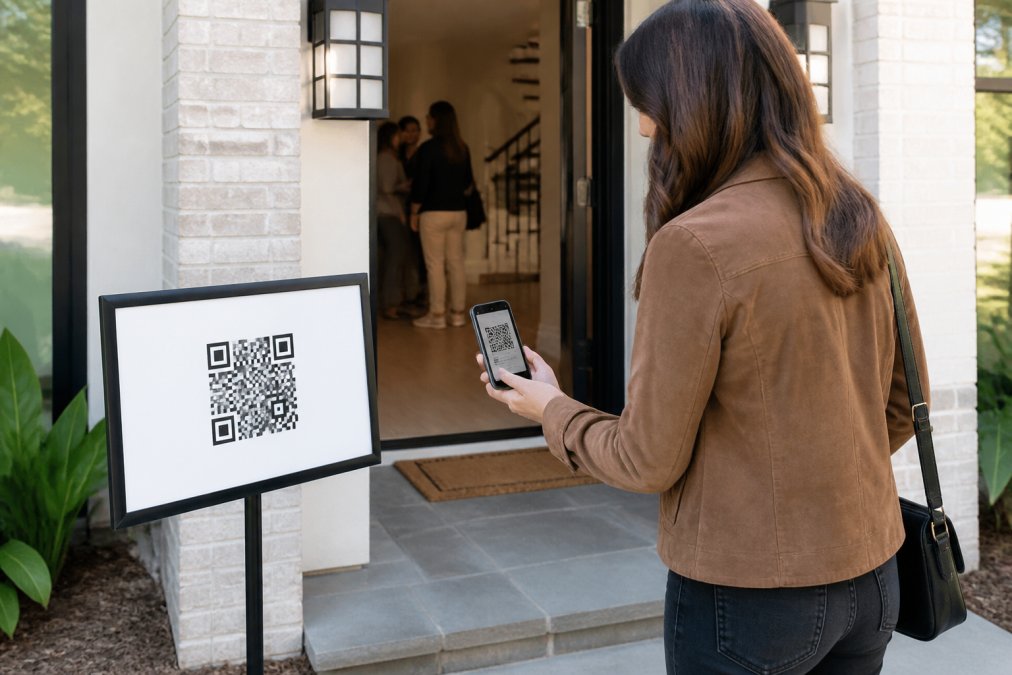
Table of Contents
- Why Verified Leads Matter at Open Houses
- Best Practices for Open House Lead Capture
- Digital Open House Sign-In Apps vs. Paper Sheets
- Qualifying Visitors With Real Estate Lead Generation Scripts
- Building Your Open House Follow-Up Strategy
- Converting Foot Traffic Into Qualified Leads
- Integrating Lead Data Into Your CRM
- Conclusion
Last Updated: August 10, 2026
Why Verified Leads Matter at Open Houses
Getting verified leads from open houses separates agents who waste time on dead ends from those who build sustainable pipelines. The difference isn't luck, it's process.
When a visitor scribbles a fake name and number on a paper sign-in sheet, you've captured nothing. You've wasted floor time. You'll spend hours chasing contacts that don't exist, calling disconnected numbers, sending emails to invalid addresses. That's not lead generation. That's friction.
Verified leads are different. They're people who've committed real contact information because they had to prove who they are to gain entry. At ohACCESS, this verification happens through a QR code system that sends visitors codewords by text and email, one of which they share with the host before stepping inside. No legitimate contact information, no codeword. No codeword, no access. This single friction point screens out bad actors before they reach the door.
The practical benefit is immediate: every contact in your follow-up pipeline is real. Every email address works. Every phone number connects to an actual person who was interested enough to scan, verify, and enter your property. Your conversion rates shift because you're no longer chasing ghosts.
Best Practices for Open House Lead Capture
The foundation of getting verified leads from open houses starts with how you structure the check-in moment itself. Most agents treat sign-in as an afterthought, a clipboard by the door. It should be the first touchpoint of your sales process.
Start with a clear value proposition at the entrance. Visitors need to understand why they're providing their information. "Sign in to access the property" is passive. "Enter your contact info to receive the property details and market analysis" gives them a reason. They know what they're trading their information for.
Position your QR sign where it's impossible to miss. The QR code should be at eye level on a professional sign or stand, not tucked beside the door. Make it the natural first step before entering. When visitors scan and receive their codeword instantly, the process feels modern and secure, not intrusive.
Qualify as you capture. Your sign-in process should collect more than just name and email. Ask whether they're a buyer, seller, investor, or just browsing. Ask their timeline. Ask what brought them to this property. These details separate hot leads from curious neighbors. A digital system like ohACCESS builds qualification into the verification flow — a buying-timeline question plus your own custom questions — so you're not asking twice.
Keep the process under 30 seconds. If verification takes longer than half a minute, visitors will abandon it. The faster the codeword arrives and the faster they can enter, the higher your completion rate. Friction kills capture rates.
Digital Open House Sign-In Apps vs. Paper Sheets
The choice between digital and paper sign-in isn't about preference. It's about lead quality and your time.
Paper sheets capture volume, not verified leads. Anyone can write anything. "Mickey Mouse" with the number "555-1234" takes up a line. You won't know it's fake until you've already spent 15 minutes trying to follow up. Paper also requires manual data entry, you're transcribing names and numbers into your CRM by hand, introducing typos and duplicates. If you're running three open houses a week, that's hours of data entry that could be spent on actual prospecting.
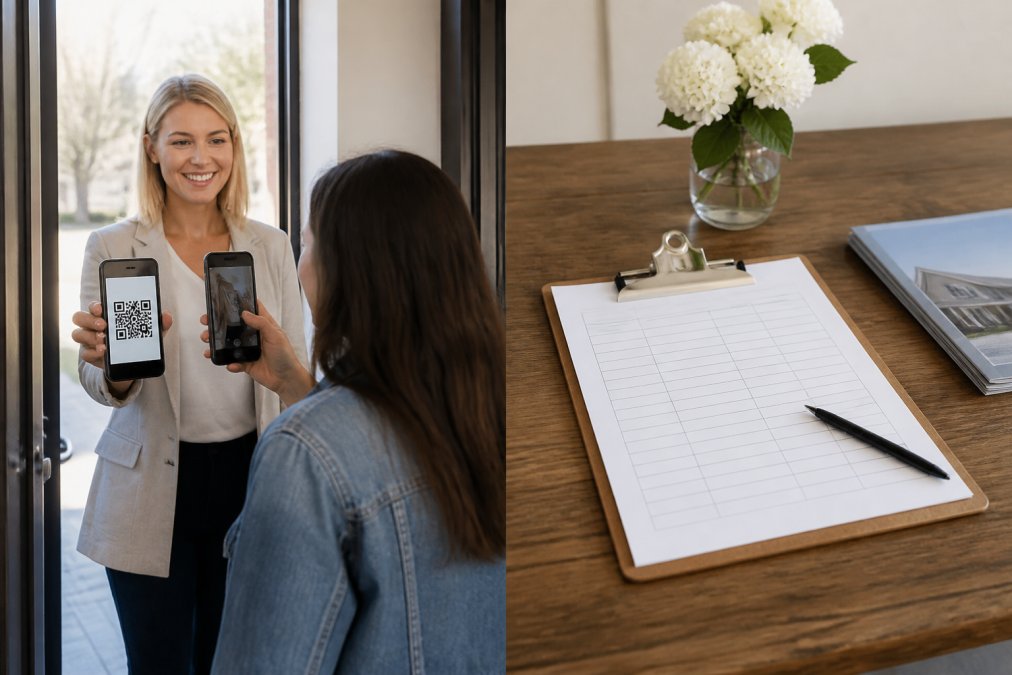
Digital sign-in apps eliminate these problems entirely. Every entry is verified because visitors must provide real contact information to proceed. The data syncs directly to your CRM, no manual entry, no typos, no duplicates. You get instant notifications when someone signs in, so you can engage them while they're still in the property or immediately after.
The best digital systems add another layer: they verify contact information in real time. When a visitor enters their phone number and email, the system sends the codewords straight to both. No real contact info, no codewords. No codeword, no entry. This isn't punitive, it's protective. It ensures every lead in your pipeline is legitimate.
Paper sign-in sheets cost almost nothing upfront. Digital systems require a subscription. But the ROI is clear: fewer hours chasing fake leads, more qualified prospects in your pipeline, and better data hygiene in your CRM. One closed deal from a verified lead pays for the tool many times over.
Qualifying Visitors With Real Estate Lead Generation Scripts
Not every person who walks through your open house is a viable lead. The agent who qualifies during the showing, not after, wins the follow-up game.
Your real estate lead generation scripts should be conversational, not robotic. The goal is to gather information naturally while the visitor is still engaged. Start with an open question: "What brings you to the property today?" Listen to their answer. Are they shopping for a primary residence? Considering an investment? Relocating to the area? Their response tells you everything about follow-up timing and messaging.
Follow with timeline questions: "Are you actively looking right now, or is this more exploratory?" This separates hot leads from curious neighbors. A buyer with a 30-day closing window needs immediate follow-up. Someone "just getting a feel for the market" goes into a longer nurture sequence.
Ask about their current situation: "Are you coming from another home in the area, or relocating?" "Do you currently own or rent?" These details shape your pitch. A seller who hasn't listed yet is a different prospect than a renter shopping for their first home.
The best systems capture these qualifying details automatically. When you use a digital open house sign-in app, qualifying questions are built into the verification flow. Visitors answer them to get their codeword. By the time they walk through the door, you've already qualified them. Your follow-up can be targeted, not generic.
Building Your Open House Follow-Up Strategy
The 24-hour rule is non-negotiable: contact every lead within 24 hours of the open house. This is when interest is highest. The longer you wait, the colder the lead becomes.
Your follow-up strategy should have three tiers based on qualification level.
Hot leads, buyers with active timelines, sellers considering listing, investors ready to move, get a phone call within 2 hours. Not a text, not an email. A conversation. You're confirming their interest, answering questions, and scheduling a private showing if they're serious.
Warm leads, people actively shopping but without urgent timelines, relocating to the area in the next few months, get an email within 24 hours with property details and market comparables. Follow with a phone call 48 hours later if they don't respond. Add them to a drip campaign that touches them weekly with new listings and market updates.
Cold leads, curious neighbors, distant investors, tire-kickers, go into a long-term nurture sequence. Monthly market reports, quarterly neighborhood updates, annual "just checking in" outreach. They may not be ready now, but they'll remember you when they are.

A CRM integrated with your open house sign-in system automates this tiering. The moment a visitor's data syncs from your digital check-in, the CRM can automatically assign them to the appropriate follow-up sequence based on their answers. Hot leads trigger immediate alerts. Warm leads enter a scheduled email drip. Cold leads go into long-term nurture. You're working smarter, not harder.
Converting Foot Traffic Into Qualified Leads
Foot traffic means nothing without conversion. An open house with 50 visitors and zero follow-up sales is just an open house. An open house with 15 verified leads and three follow-ups is a lead generation event.
Conversion starts before the open house. Your marketing should pre-qualify visitors. A Facebook ad targeting "people interested in homes in this neighborhood" attracts browsers. An ad targeting "people who've searched homes in this price range in the last 30 days" attracts buyers. The visitors who show up from the second ad are hotter leads. They're further along in their buying journey.
During the showing, your job is to move hot prospects toward a next step. This isn't pushy. It's helpful. "I'm showing three other properties this week that match your criteria. Would you like me to send you details?" "My office is doing a buyer consultation workshop next Thursday. I think it would help clarify your timeline." These are soft commitments that deepen engagement.
After the open house, your follow-up determines conversion. A generic email ("Thanks for visiting!") converts almost nobody. A personalized email ("You mentioned you're relocating in March, here's a timeline for getting pre-approved and what homes in your range are available now") converts prospects into consultations.
The agents who convert foot traffic into clients use data. They know who walked through their door, what they said, what they're looking for, and when they need it. They follow up with precision, not spray-and-pray outreach. This is why getting verified leads from open houses matters, you're not guessing who to follow up with. You're working from a verified database of real prospects.
Integrating Lead Data Into Your CRM
The moment a visitor verifies their contact information at your open house, that data should flow directly into your CRM. Manual data entry is a bottleneck that kills efficiency and introduces errors.
When you use a digital open house sign-in system like ohACCESS, integration is automatic. Visitor details land in your CRM in real time as a formatted lead email your CRM parses automatically — name, phone, email, buying timeline, and custom-question answers included — or flow through a Zapier webhook into thousands of other apps. You're not managing spreadsheets or manually entering contacts, the system is doing it for you.
This integration matters because it unlocks automation. Your CRM can trigger email sequences based on lead score. It can assign leads to team members based on territory or availability. It can schedule follow-up tasks automatically. It can flag hot leads for immediate phone calls. Without integration, you're managing everything manually. With it, your CRM becomes a lead processing machine.
The data also becomes historical. Six months from now, when a lead comes back to you and says "I saw your open house last spring," your CRM has the record. You know exactly what they saw, what questions they asked, where they were in their journey. This context makes you a better agent. You're not starting from scratch every time they contact you.
Set up your CRM fields before your open house. Know exactly what data you're capturing and where it's going. Map your qualifying questions to CRM fields. Test the integration with a small open house first. Once it's working smoothly, every open house feeds a clean, organized pipeline.
Conclusion
Getting verified leads from open houses is the foundation of a scalable real estate practice. It eliminates the time wasted on fake contacts, automates your follow-up process, and ensures every prospect in your pipeline is real.
The agents winning in today's market aren't the ones with the most foot traffic. They're the ones with the cleanest data and the fastest follow-up. ohACCESS delivers both. The verified QR-code system ensures every visitor provides legitimate contact information before entry. The instant notifications alert you to qualified prospects while they're still interested. The automatic CRM lead delivery means your lead data is organized and actionable from the moment they scan.
Start capturing verified leads at your next open house. Your follow-up efficiency, and your conversion rates, will tell you immediately why this matters.
Frequently Asked Questions
How do you ensure open house sign-in information is accurate?
Use a verification system that requires visitors to confirm their contact details before gaining entry. When visitors scan a QR code and submit their phone number and email, they receive codewords by text and email that prove the information is real. This eliminates fake names and invalid contact data at the source. Automated verification is faster and more reliable than manually checking paper sheets after the event.
What should your open house follow-up strategy include?
Start follow-up within 24 hours of the open house. Send a personalized email or text to each visitor, referencing something they asked about during the showing. Use your CRM to segment leads by interest level, then create drip campaigns for hot leads, warm leads, and cold leads. Schedule a second touchpoint within one week, then monthly check-ins for long-term prospects. Track which follow-up methods generate responses so you can refine your approach.
Should you use digital sign-in sheets for open houses?
Digital sign-in sheets are superior to paper for lead generation and data accuracy. They eliminate manual data entry, prevent fake contact information from entering your system, and provide instant notifications when visitors submit their details. Digital systems also sync directly to your CRM, making follow-up faster. The only drawback is that some older or tech-averse visitors may hesitate, but offering both options ensures you capture leads from all demographics.
How can you verify contact information during an open house?
Require visitors to enter their phone number and email, then validate both before they receive access. Send codewords to the phone number and email address they provide. Sharing a codeword with the host at the door confirms the information is legitimate. This method stops bad actors who use fake names or incorrect contact details. It takes seconds per visitor and eliminates the need to clean data after the event.
This article was written using GrandRanker
Frequently asked questions
How do you ensure open house sign-in information is accurate?
Use a verification system that requires visitors to confirm their contact details before gaining entry. When visitors scan a QR code and submit their phone number and email, they receive codewords by text and email that prove the information is real. This eliminates fake names and invalid contact data at the source. Automated verification is faster and more reliable than manually checking paper sheets after the event.
What should your open house follow-up strategy include?
Start follow-up within 24 hours of the open house. Send a personalized email or text to each visitor, referencing something they asked about during the showing. Use your CRM to segment leads by interest level, then create drip campaigns for hot leads, warm leads, and cold leads. Schedule a second touchpoint within one week, then monthly check-ins for long-term prospects. Track which follow-up methods generate responses so you can refine your approach.
Should you use digital sign-in sheets for open houses?
Digital sign-in sheets are superior to paper for lead generation and data accuracy. They eliminate manual data entry, prevent fake contact information from entering your system, and provide instant notifications when visitors submit their details. Digital systems also sync directly to your CRM, making follow-up faster. The only drawback is that some older or tech-averse visitors may hesitate, but offering both options ensures you capture leads from all demographics.
How can you verify contact information during an open house?
Require visitors to enter their phone number and email, then validate both before they receive access. Send codewords to the phone number and email address they provide. Sharing a codeword with the host at the door confirms the information is legitimate. This method stops bad actors who use fake names or incorrect contact details. It takes seconds per visitor and eliminates the need to clean data after the event.
Keep reading
Start free with 25 verified check-ins. No credit card required.
Start Free