Real Estate Automation: A 2026 Guide
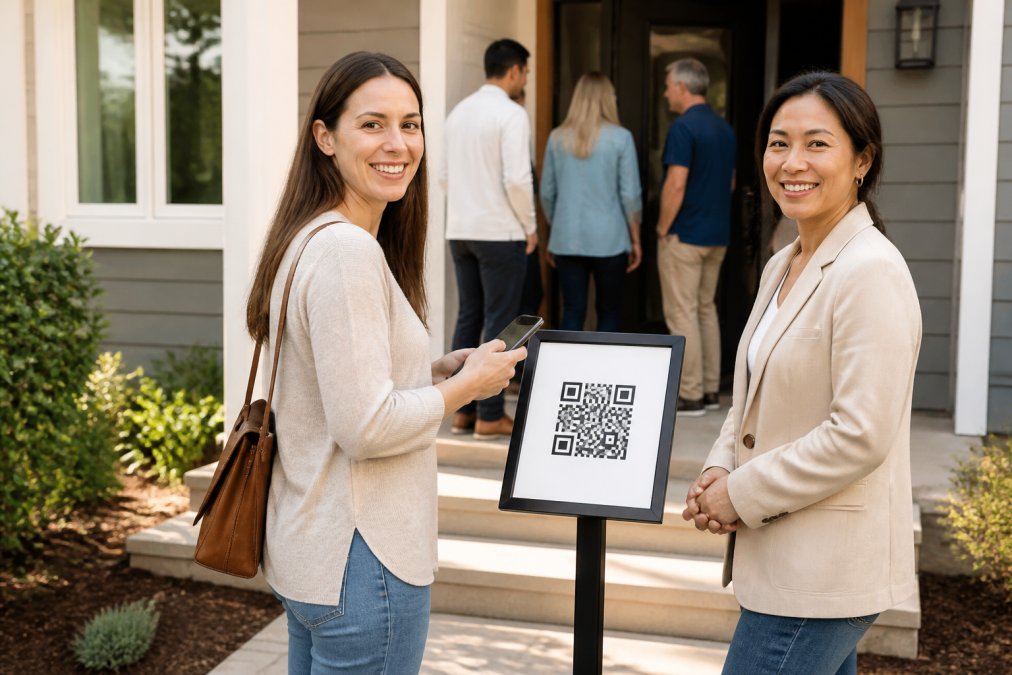
Table of Contents
- What Real Estate Automation Actually Solves
- Open House Sign-In Automation: From Paper to Verified Leads
- Real Estate Agent Safety Tools and Lead Protection
- CRM Lead Intake Automation: Getting Data Where It Belongs
- Automating Seller Reporting and Follow-Up
- Scaling Real Estate Automation Across Teams and Brokerages
- Implementation: Getting Started Without Disruption
- Conclusion
Last Updated: August 26, 2026
What Real Estate Automation Actually Solves
Real estate automation captures, organizes, and acts on lead data instantly. For agents managing multiple open houses weekly, the friction is real: paper sign-in sheets disappear, phone numbers get transcribed wrong, seller feedback arrives days late, and follow-up stalls because data entry backlogs pile up.
The core problem is volume. One open house monthly is manageable with paper. Three or four weekly across a team becomes a data nightmare. Leads get lost between systems, duplicates pile up, fake contact information wastes follow-up time, and sellers never learn how many qualified buyers actually showed up.
Real estate automation removes the human bottleneck. When visitor information flows directly from the sign-in form into your CRM, you're not transcribing. When an agent gets an instant alert that someone verified their phone and email, you're not guessing about lead quality. When a seller report generates automatically, you're not spending an hour building a spreadsheet.
The best tools focus on the highest-friction moment: the open house itself. That's where leads are born, verification happens, and data quality is decided. Tools that automate that moment well create a foundation for everything downstream: faster follow-up, cleaner databases, better seller communication, and higher conversion rates.
Open House Sign-In Automation: From Paper to Verified Leads
Digital check-in replaces the clipboard with a process that verifies phone numbers and email addresses in real time. Instead of collecting names on a sheet and hoping contact info is accurate, visitors register themselves on their own phones, and the system confirms both channels immediately.
Paper sign-in sheets capture whatever visitors write down. Some write fake names, wrong phone numbers, or illegible scribbles. By follow-up time, you've wasted effort sorting through invalid leads. A verified digital process means every lead has a confirmed phone number and email. The visitor proved it by receiving a codeword on both channels and sharing it with you at the door.
How Verified QR-Code Check-In Works
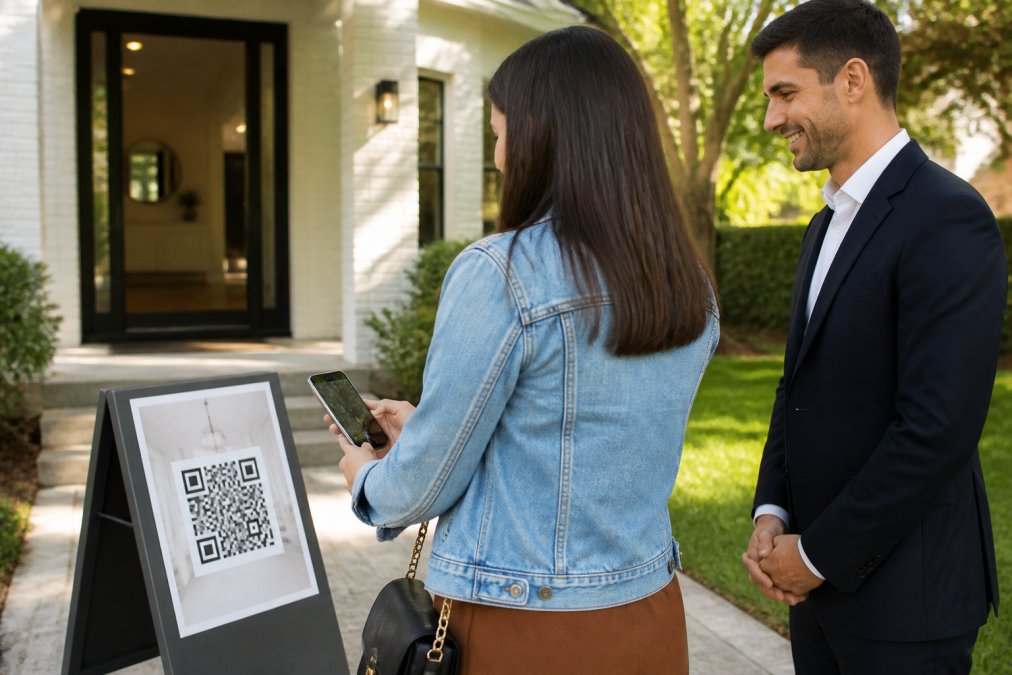
A visitor scans a printed QR code on a pedestal outside the home. This opens a short form on their phone where they enter their name, email, phone number, and buying timeline (0-3 / 3-6 / 6-12 / 12+ months). If the agent added a custom question, it appears too. The form is available in 16 languages.
The moment they submit, ohACCESS sends two codewords: one by text message and one by email, both, always, immediately. The text codeword is primary; the email codeword is the backup if the text is slow. The visitor tells a codeword to the host agent at the door to enter the property. They never enter the codeword into any app or system. The agent instantly receives a text and email alert with the visitor's name, phone, email, and timeline, plus a running log of everyone who's checked in.
Visitors with international phone numbers receive their codeword via WhatsApp instead of SMS. Returning visitors are remembered for a year and see their information pre-filled on the next visit. There's no app to download, no account to create, nothing to install. Visitors use their own phones and cellular data; the property's Wi-Fi doesn't matter.
Why Verification Matters for Lead Quality
Unverified leads waste time. You follow up with disconnected phone numbers, bounced emails, or obviously fake names. Verified leads are different. The visitor proved they own that phone number by receiving a text and that email by receiving a message there. When you call or email, the lead is real.
Sellers also trust verified numbers. When you share an open house report showing how many verified visitors attended, it's not a guess, it's a count of people who proved they were actually there. That credibility matters when justifying marketing spend or explaining buyer interest.
Real Estate Agent Safety Tools and Lead Protection
Open houses create safety vulnerabilities. Agents are alone in homes with strangers. Traditional paper sign-in sheets offer no protection; you don't know who's in the home until after they've entered. Verified digital check-in gives agents real-time visibility into who's present and proof of their identity.
When a visitor's phone number and email are verified before entry, the agent has confidence the person is who they claim to be. The agent also has an instant record of arrival time, contact information, and buying timeline. If anything goes wrong, there's a forensic trail: IP address, device type, phone carrier, and line type. Law enforcement can use that information if needed.
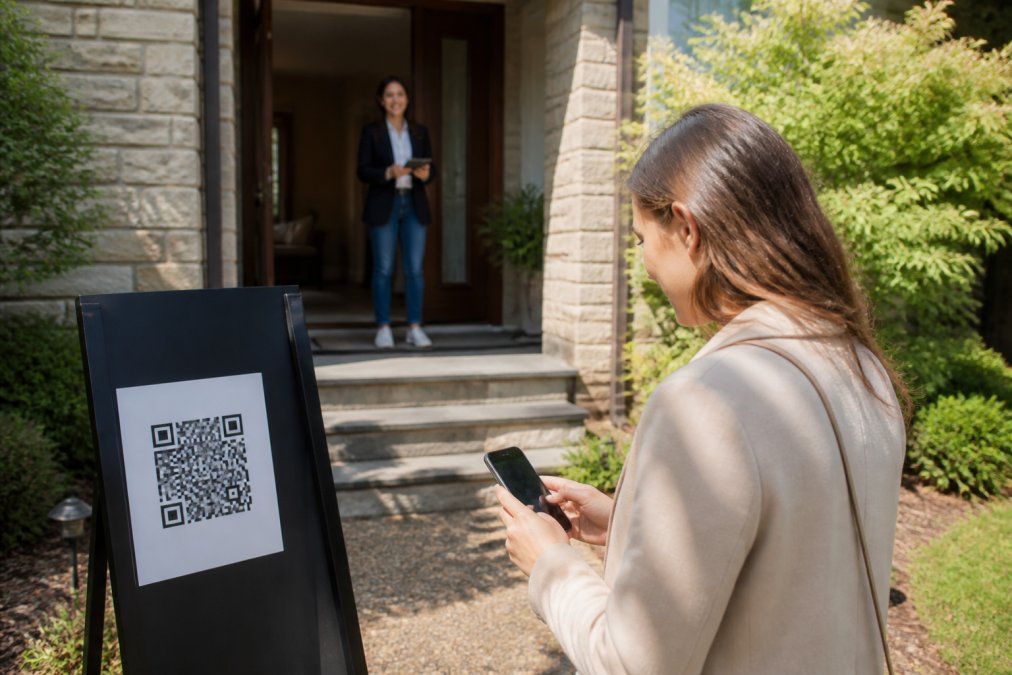
Automation also reduces time agents spend managing paperwork and chasing leads, meaning more time with visitors during the open house. When data entry isn't a burden, agents can focus on building rapport, answering questions, and qualifying buyers in real time.
CRM Lead Intake Automation: Getting Data Where It Belongs
A lead's value depends on how fast it reaches your CRM and how clean the data is. Manual transcription introduces errors and delays. Automated lead delivery means every sign-in is in your CRM within seconds, ready for follow-up.
Real estate automation platforms deliver leads into your CRM through multiple pathways. The most common is a formatted lead email sent to your CRM's lead-intake address. The CRM parses this email automatically and populates fields, name, phone, email, buying timeline, custom answers, without manual work. This method is verified to work with Follow Up Boss, BoldTrail/kvCORE, Lofty, Sierra Interactive, Real Geeks, CINC, Top Producer, Wise Agent, LionDesk, and other platforms.
For CRM systems not on that list, a Zapier webhook connects the automation platform to thousands of other apps. The webhook sends lead data in real time, and Zapier routes it to your system. For brokerages with multiple agents, team CRM forwarding allows a team lead to automatically copy every agent's leads to a shared team CRM, so management has visibility into all open house traffic across the office.
Leads arrive automatically, no copy-paste, no manual entry, no delays. Your follow-up workflow starts the moment the visitor submits their registration form.
Automating Seller Reporting and Follow-Up
Sellers want to know how many people showed up, whether those people are serious buyers, and proof that their agent is working hard. A manual report takes hours. An automated report generates in seconds.
After the open house closes, the agent can generate a one-tap seller report showing aggregate data: total registered visitors, how many plan to buy within 6 months, the breakdown of buying timelines, a scan-to-registration funnel, the average 1-10 visitor rating of the home, and the price verdict (Too High, Reasonable, or Too Low). Aggregated answers to custom questions appear too.
This report deliberately excludes visitor names, phone numbers, emails, and arrival times. Visitors consented to the agent having their information, not the seller. This privacy boundary protects visitor privacy and shows professionalism. The seller gets actionable insight without seeing PII.
Agents can also automate follow-up with visitors. Most platforms send an automatic thank-you email the morning after the open house, keeping the home top-of-mind. Some allow agents to create custom follow-up sequences triggered by visitor data, for example, a different message for buyers planning to purchase within 3 months versus those 12+ months out. Segmented follow-up outperforms generic broadcasts.
Scaling Real Estate Automation Across Teams and Brokerages
Solo agents benefit from automation. Teams benefit even more. When multiple agents run open houses across different properties, coordination challenges grow fast. Who's handling follow-up for which leads? Are duplicate leads being created? Is the team's database clean?
Automation enforces consistency. Every agent uses the same check-in process, so lead data is formatted the same way. Every agent's leads flow into the same CRM or shared database, so management has visibility. If the brokerage wants to standardize seller communication, one report template can be used by all agents. If the brokerage wants to enforce follow-up timelines, automation can trigger reminders.
For brokerages managing 11 to 100 agents, team dashboards provide visibility into which agents are running open houses, how many visitors each is capturing, and overall lead volume. Roster management tools let the brokerage assign agents to properties and track performance. Shared branding means the QR code sign and seller report reflect the brokerage's brand.
Sponsor co-branding is also available. Lenders, title companies, and inspectors can add their logo to the seller report or QR sign, providing value to the sponsor and creating a revenue opportunity for the brokerage. All sponsorships include required disclosures stating that sellers are not required to use the sponsor's services.
Implementation: Getting Started Without Disruption
The biggest barrier to adopting real estate automation isn't the technology, it's change management. Agents worry about learning something new and fear disruption during busy seasons.
Start small. If you're a solo agent, run one open house with the new check-in process. Print a QR code sign and place it outside the home. Most visitors will scan, smartphones are ubiquitous and a QR code is simpler than writing on a clipboard. You'll likely see 70-80% of walk-up traffic convert from scan to registration.
After that first open house, review the data. How many leads did you capture? How many were verified? Did any phone numbers or emails bounce? How quickly did leads reach your CRM? Use that feedback to refine your process. Maybe you'll add a custom question or adjust QR sign placement.
For teams, implementation is similar but coordinated. The brokerage selects a platform, sets up the CRM integration, and trains all agents on the check-in process. Agents don't need to learn anything complex; they just print QR signs and place them at open houses. Most agents can start using it within a day.
For brokerages, implementation includes roster setup, dashboard configuration, and sponsor branding if applicable. A dedicated support team typically handles onboarding, so agents aren't left figuring it out alone.
The key to smooth implementation is starting before you're desperate. Adopt automation when you have time to learn it, test it, and refine it. That way, when volume increases, the system is already in place.
Real estate automation isn't about replacing agents, it's about removing friction so agents can spend time on what matters: connecting with buyers, understanding their needs, and closing deals. When lead capture is verified, data entry is automatic, and follow-up is triggered by the system, agents have more time to sell.
At ohACCESS, we've built a platform designed specifically for the open house moment. Verified digital check-in eliminates fake leads, delivers data into your CRM automatically, and gives sellers proof of buyer interest instantly. The free trial covers your first 25 visitor registrations, no credit card required. That's enough to test the process on a few open houses and see the difference verified leads make. Get started with ohACCESS at www.ohaccess.com and eliminate the manual work that's slowing you down.
Frequently Asked Questions
How does real estate automation actually save time compared to manual processes?
Real estate automation eliminates repetitive data entry, manual follow-up scheduling, and lead organization. With open house sign-in automation, visitor information flows directly into your CRM the moment they register, removing the need to manually type names, emails, and phone numbers from paper sheets. Your team spends less time on administrative tasks and more time on actual lead nurturing and closing.
What happens if a visitor doesn't have a smartphone or refuses to scan a QR code?
Open house sign-in automation is designed for visitors with smartphones, which account for the vast majority of property buyers. Visitors scan a QR code on their own phone and fill out a short form. If someone genuinely cannot or will not participate, you retain the option to use traditional methods for those rare cases, but most modern buyers expect and prefer digital check-in over paper sheets.
How quickly can I get an open house report to send to my seller after the event?
Automated reporting delivers results the same day. After your open house ends, the system generates an aggregate report showing visitor count, buying timelines, average property ratings, and price verdicts, all without exposing individual visitor contact information. This privacy-safe approach lets you share meaningful insights with sellers immediately, demonstrating turnout and buyer sentiment without compromising visitor privacy.
Does real estate automation work for brokers managing multiple agents across different offices?
Yes. Team and brokerage-level automation platforms provide centralized dashboards where brokers can manage multiple agents, standardize open house procedures, and aggregate performance data across all offices. This ensures consistent lead capture, data quality, and compliance across your entire organization, while individual agents retain their own lead management workflows.
How does CRM lead intake automation prevent bad data from entering my system?
Verified digital check-in captures real phone numbers and emails because visitors submit their own information on their own devices. The system flags invalid entries (bounced emails, VoIP/burner numbers, undeliverable texts, and opt-out violations) automatically, so your CRM receives only validated leads. This is far more reliable than paper sheets, which often contain illegible handwriting, fake numbers, and incomplete information.
What's the difference between open house sign-in automation and other real estate automation tools?
Open house sign-in automation focuses specifically on verified lead capture at the property itself, eliminating fake contact information and manual data entry at the point of visitor arrival. It integrates directly with your existing CRM through automated lead delivery, so you get clean, verified data without requiring visitors to download an app or create an account. Other automation tools handle different workflows like follow-up sequences or document processing.
Is there a cost difference if I'm running multiple open houses per week versus just one?
No. Real estate automation pricing is flat and does not scale with the number of open houses or visitors you process. Whether you hold one open house per month or four per week, your subscription cost remains the same. This predictable pricing makes it easy to budget and removes any concern about surprise fees as your business grows.
This article was written using GrandRanker
Frequently asked questions
How does real estate automation actually save time compared to manual processes?
Real estate automation eliminates repetitive data entry, manual follow-up scheduling, and lead organization. With open house sign-in automation, visitor information flows directly into your CRM the moment they register, removing the need to manually type names, emails, and phone numbers from paper sheets. Your team spends less time on administrative tasks and more time on actual lead nurturing and closing.
What happens if a visitor doesn't have a smartphone or refuses to scan a QR code?
Open house sign-in automation is designed for visitors with smartphones, which account for the vast majority of property buyers. Visitors scan a QR code on their own phone and fill out a short form. If someone genuinely cannot or will not participate, you retain the option to use traditional methods for those rare cases, but most modern buyers expect and prefer digital check-in over paper sheets.
How quickly can I get an open house report to send to my seller after the event?
Automated reporting delivers results the same day. After your open house ends, the system generates an aggregate report showing visitor count, buying timelines, average property ratings, and price verdicts—all without exposing individual visitor contact information. This privacy-safe approach lets you share meaningful insights with sellers immediately, demonstrating turnout and buyer sentiment without compromising visitor privacy.
Does real estate automation work for brokers managing multiple agents across different offices?
Yes. Team and brokerage-level automation platforms provide centralized dashboards where brokers can manage multiple agents, standardize open house procedures, and aggregate performance data across all offices. This ensures consistent lead capture, data quality, and compliance across your entire organization, while individual agents retain their own lead management workflows.
How does CRM lead intake automation prevent bad data from entering my system?
Verified digital check-in captures real phone numbers and emails because visitors submit their own information on their own devices. The system flags invalid entries (bounced emails, VoIP/burner numbers, undeliverable texts, and opt-out violations) automatically, so your CRM receives only validated leads. This is far more reliable than paper sheets, which often contain illegible handwriting, fake numbers, and incomplete information.
What's the difference between open house sign-in automation and other real estate automation tools?
Open house sign-in automation focuses specifically on verified lead capture at the property itself, eliminating fake contact information and manual data entry at the point of visitor arrival. It integrates directly with your existing CRM through automated lead delivery, so you get clean, verified data without requiring visitors to download an app or create an account. Other automation tools handle different workflows like follow-up sequences or document processing.
Is there a cost difference if I'm running multiple open houses per week versus just one?
No. Real estate automation pricing is flat and does not scale with the number of open houses or visitors you process. Whether you hold one open house per month or four per week, your subscription cost remains the same. This predictable pricing makes it easy to budget and removes any concern about surprise fees as your business grows.
Keep reading
Start free with 25 verified check-ins. No credit card required.
Start Free