Managing Open House Teams for Brokers: 2026 Guide
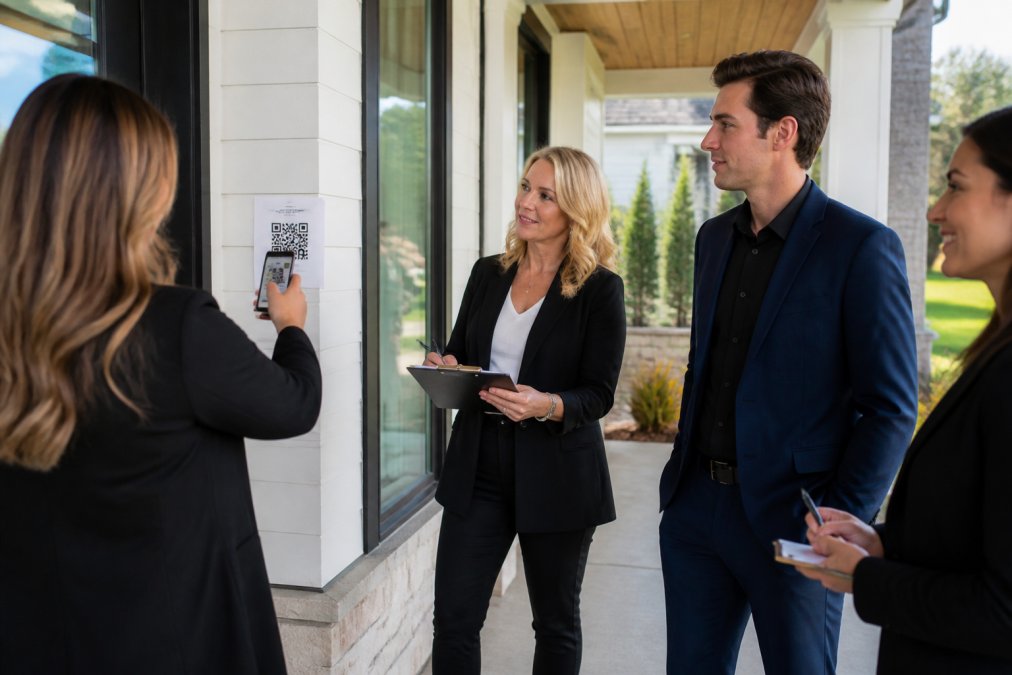
Table of Contents
- Why Brokers Struggle With Open House Team Management
- Building Your Open House Team Structure
- Real Estate Automation: Streamlining Lead Capture and Data Management
- Digital Open House Sign-In Sheets and Visitor Verification
- Open House Safety Protocols for Agents on Your Team
- Brokerage Open House Training Scripts and Agent Accountability
- Measuring Team Performance and Lead Conversion
- Conclusion: Scaling Your Open House Operations
Last Updated: August 19, 2026
Why Brokers Struggle With Open House Team Management
Most brokers manage open house operations the way their predecessors did thirty years ago: paper sign-in sheets, manual data entry, and a prayer that agents actually follow the process. The result is predictable. Lead data gets lost or corrupted. Fake contact information floods your CRM. Agents show up unprepared. Sellers never learn how many serious buyers actually visited their property.
The real problem isn't that managing open house teams is hard, it's that brokers approach it without systems. When you have five agents running open houses simultaneously across different properties, there's no accountability, no standardization, and no way to measure whether the time investment is generating qualified leads. Each agent operates independently, using whatever sign-in method they prefer, following their own follow-up cadence, and reporting results (if at all) weeks later.
At ohACCESS, we've worked with brokers who were losing qualified leads simply because visitor data never made it into their CRM. Others were spending hours manually transcribing contact information from paper sheets. Still others had no way to prove to sellers that their open house marketing was working. These aren't edge cases, they're the norm.
The good news: this is entirely fixable. Managing open house teams at scale requires three things: a standardized lead capture process, clear accountability metrics, and automation that removes friction. This guide walks through how to build each.
Building Your Open House Team Structure
Your team structure determines whether open house operations scale or collapse. A broker with three agents can get away with informal coordination. A broker with fifteen agents across multiple offices needs hierarchy, role clarity, and documented procedures.
Start by defining roles. You need a lead coordinator (the person responsible for ensuring visitor data reaches agents and gets entered into the CRM), designated open house agents (who staff specific properties), and a compliance officer (who ensures all data collection follows legal and safety protocols). The lead coordinator is critical, this person owns the follow-up sequence and holds agents accountable for conversion.
Assign properties strategically. Don't rotate agents randomly. Assign the same agent to the same property for consecutive open houses whenever possible. This builds continuity, lets the agent learn the property deeply, and makes it easier to track which agent generated which lead. When you rotate agents weekly, you lose institutional knowledge and accountability.
Create a standardized open house checklist that every agent follows. This checklist should include: arrival time (30 minutes early), property walkthrough, sign-in system setup, safety protocols, showing feedback capture, and departure procedures. Without this, agents will skip steps. With it, you have a repeatable process you can audit.
Document your Standard Operating Procedures in writing. This becomes your training foundation and your accountability tool. When an agent misses a step, you're not guessing about expectations, you're pointing to the SOP. This also protects your brokerage legally when disputes arise.

Real Estate Automation: simplifying Lead Capture and Data Management
Real estate automation isn't about replacing agents. It's about eliminating the busywork that prevents them from selling. Specifically, it's about removing manual data entry and creating instant visibility into what happened at each open house.
The most critical automation point is lead capture. Paper sign-in sheets require someone to transcribe data later. That's wasted time and error-prone. Digital sign-in systems eliminate transcription entirely, visitor data flows directly into your CRM the moment they submit their contact information. This means agents can follow up within hours, not days.
Integration with your CRM is non-negotiable. When visitor data arrives in your CRM automatically, agents don't have to wonder whether a lead was captured or where to find it. The system creates a record, tags it with the property and open house date, and makes it available for follow-up sequences. Without integration, automation becomes just another tool to manage.
Automation also handles follow-up sequences. You can set up email and SMS workflows that trigger automatically when a visitor submits their contact information. A visitor becomes a lead, and that lead gets contacted within hours with next-step information. This consistency drives conversion rates up, inconsistent follow-up is one of the biggest reasons open house leads go cold.
Create automation for seller reporting. After each open house, your system should generate a report showing how many visitors attended, their buying timelines, and their feedback on the home and its price. Agents can send this to sellers the same day. This proof of market activity is one of the most valuable things you can provide to listing clients.
Digital Open House Sign-In Sheets and Visitor Verification
The weakness of paper sign-in sheets is that they're unverified. Anyone can write any name and number. Fake contact information is so common that many brokers assume 30-40% of their sign-in data is garbage.
Digital sign-in sheets solve this by requiring verification. Here's how it works: visitors scan a QR code outside the property. They submit their phone number and email address. The system texts them one codeword and emails them another. They share a codeword with the host to prove their contact information is real and gain access. No codeword means no entry. This simple step eliminates fake leads instantly.
The verification requirement also protects agents. Bad actors who target real estate agents for theft or harassment won't submit real contact information. A system that requires verified contact information is a deterrent. Agents know that everyone who entered the property is a legitimate visitor.
From a data perspective, verified contact information transforms your lead quality. When every visitor in your CRM has a confirmed phone number and email address, your follow-up campaigns actually reach people. Your open rates improve. Your conversion rates improve. The entire pipeline becomes more reliable.

Digital sign-in systems also provide instant agent notifications. When a visitor completes their registration, the agent gets an alert immediately. This creates a feedback loop, the agent knows someone just expressed interest in the property while they're still there. They can use that information in conversations with other visitors.
Open House Safety Protocols for Agents on Your Team
Safety is non-negotiable. Real estate agents work alone with strangers in empty properties. This creates risk. Your brokerage has a legal and ethical obligation to implement safety protocols.
Start with the basics: agents should never open a house alone. At minimum, have a second agent present, or require agents to check in with a broker or team lead at regular intervals. Establish a buddy system where agents text each other when they arrive and leave.
Implement a visitor verification system that confirms identity before entry. When visitors submit legitimate contact information to gain access, you have a record of who entered the property. This is a deterrent to bad actors and provides documentation if an incident occurs.
Create a protocol for suspicious behavior. Train agents to recognize warning signs: visitors who ask unusual questions about security systems, who try to separate from the group, who seem more interested in the home's contents than the property itself. Agents should know when to politely end a showing and when to call for backup.
Document all incidents. If an agent feels uncomfortable during an open house, they should report it. Keep records. This creates a pattern database that helps you identify repeat problems and adjust protocols accordingly.
Establish communication protocols. Agents should have a way to signal distress if needed. Some brokerages use check-in calls. Others use apps that track agent location. Whatever system you choose, it should be simple enough that agents actually use it.
Brokerage Open House Training Scripts and Agent Accountability
Accountability starts with training. Agents need to know exactly what you expect and why. Generic training doesn't work. You need specific scripts for common scenarios.
Create a greeting script that agents use consistently. This should include: welcoming the visitor, asking about their real estate goals, and explaining the sign-in process. A consistent greeting creates a professional impression and ensures you capture the right information from every visitor.
Develop a closing script for when visitors are leaving. This is your chance to ask qualifying questions: Are they actively looking? What's their timeline? What's their budget range? These answers determine whether a lead is hot or cold. Without a closing script, agents wing it, and data quality suffers.
Create accountability metrics. Track how many open houses each agent staffed, how many visitors attended, and how many of those visitors became scheduled showings. These metrics should be visible to the agent and reviewed monthly. When agents know their performance is being tracked, they raise their game.
Establish consequences for non-compliance. If an agent doesn't follow the sign-in process, doesn't use the greeting script, or doesn't submit follow-up activity, that should result in a conversation. Accountability without consequences is just theater.
Use open house performance as a training tool. When one agent consistently generates more qualified leads from the same property as another agent, analyze why. Is it their greeting? Their closing? Their follow-up timing? Document what works and teach it to other agents.
Measuring Team Performance and Lead Conversion
What gets measured gets managed. If you're not tracking open house metrics, you have no visibility into what's working and what's not.
Track attendance first. How many visitors came to each open house? This is your baseline. If attendance is low, you have a marketing problem. If attendance is high but conversion is low, you have a follow-up problem.
Measure lead quality. Not all leads are equal. A lead from a pre-approved buyer actively searching for homes in the area is worth more than a lead from a casual looker. Create a simple qualification score: Is the visitor actively searching? Do they have financing? Are they in your target market? Tag leads accordingly so you can analyze conversion rates by quality tier.
Track follow-up activity. How quickly did agents follow up with visitors? Did they use the automated follow-up sequence or handle it manually? Did they schedule showings? Conversion rates drop dramatically when follow-up is delayed. If your agents are waiting three days to contact visitors, you're leaving deals on the table.
Monitor conversion rates by agent. Over a quarter, which agents converted the highest percentage of open house visitors into scheduled showings? Which agents are underperforming? Use this data to coach underperformers and recognize top performers.
Create a feedback loop from showings back to open houses. When an open house visitor schedules a showing, that's progress. When they make an offer, that's success. When they close, that's the ultimate metric. Track this full pipeline so agents see the connection between their open house performance and actual deals.
Use this data to improve your open house strategy. If one property consistently draws high-quality visitors while another draws mostly browsers, adjust your marketing approach. If one agent consistently converts better than others, document their process and teach it. Data-driven improvements compound over time.
Conclusion: Scaling Your Open House Operations
Managing open house teams for brokers comes down to removing friction and creating accountability. When you standardize your lead capture process, automate data flow into your CRM, and measure performance clearly, open houses become a reliable source of qualified leads instead of a time-consuming activity with unclear ROI.
The foundation is a digital sign-in system that verifies visitor contact information and integrates directly with your CRM. This eliminates fake leads, saves agents hours of manual data entry, and ensures follow-up happens immediately. ohACCESS provides exactly this, a verified QR-code check-in system that sends visitors a codeword to confirm their contact information, instantly notifies agents when visitors register, and delivers every sign-in into your CRM automatically. Agents get one-tap seller reports showing proof of market activity, and you get the accountability metrics you need to scale operations across multiple agents and offices.
Start with your team structure and SOPs. Add automation to remove manual work. Measure performance consistently. The brokers who do this see open house operations transform from a logistical headache into a predictable lead generation channel.
Frequently Asked Questions
What is the 3-3-3 rule for real estate open house follow-ups?
The 3-3-3 rule means following up with open house visitors within 3 hours, 3 days, and 3 weeks after the event. This cadence keeps buyer interest warm while preventing aggressive overreach. Brokers managing open house teams should enforce this follow-up sequence across all agents to maintain consistent lead nurturing and improve conversion rates from your buyer pipeline.
How can brokers automate the visitor registration process?
Digital open house sign-in sheets replace paper forms by capturing verified contact information automatically. Visitors scan a QR code, enter their phone and email, and receive codewords by text and email granting property access. This method eliminates fake contact information, removes manual data entry, and delivers visitor logs straight to your CRM. Brokers can instantly access reports showing visitor count, contact quality, and follow-up readiness without agent delays.
What metrics should brokers track to evaluate open house performance?
Track visitor count, lead quality (verified vs. invalid contacts), conversion rate from visitor to showing, days-on-market impact, and agent follow-up completion rate. Brokers should also measure showing feedback sentiment to understand buyer objections and market exposure. Real estate automation tools provide one-tap reporting that lets brokers compare performance across agents and properties, identifying which team members generate the highest-quality buyer pipeline.
How do you structure an open house team for maximum lead capture?
Assign roles: a listing agent managing the property, a greeter controlling entry and verification, and a follow-up specialist handling lead nurturing. Implement digital sign-in sheets to capture verified contact information instantly. Create Standard Operating Procedures (SOPs) that define greeter scripts, safety protocols, and follow-up timelines. Brokers should rotate agents through roles to build accountability and ensure consistent execution across all properties and showing activity.
What are the best safety protocols for agents hosting open houses alone?
Agents should verify visitor identity through digital sign-in before entry, maintain clear exit routes, keep personal belongings secured, and schedule a buddy check-in call before and after the event. Use visitor registration data to flag repeat visitors and suspicious activity. Brokers should establish a team communication protocol requiring agents to text a manager when visitors arrive and depart. Digital sign-in systems that require valid contact information deter bad actors targeting agents during open house events.
How can brokers ensure consistent branding across multiple open house teams?
Create written brokerage open house training scripts that all agents follow verbatim during visitor check-in and property tours. Standardize signage, greeting language, and follow-up messaging. Use a centralized CRM that syncs all visitor data and follow-up activity, so brokers can audit agent performance and consistency. Digital sign-in sheets ensure every property collects data the same way, making it easier to compare performance and enforce brand standards across your team.
What is the 80/20 rule for realtors?
The 80/20 rule states that 80% of your business comes from 20% of your effort or clients. For brokers managing open house teams, this means identifying which agents, properties, or follow-up methods generate the most qualified leads and conversions. Focus team resources and training on high-performing agents and proven tactics. Track lead quality metrics and showing activity to spot which team members and properties deserve more market exposure and listing period investment.
This article was written using GrandRanker
Frequently asked questions
What is the 3-3-3 rule for real estate open house follow-ups?
The 3-3-3 rule means following up with open house visitors within 3 hours, 3 days, and 3 weeks after the event. This cadence keeps buyer interest warm while preventing aggressive overreach. Brokers managing open house teams should enforce this follow-up sequence across all agents to maintain consistent lead nurturing and improve conversion rates from your buyer pipeline.
How can brokers automate the visitor registration process?
Digital open house sign-in sheets replace paper forms by capturing verified contact information automatically. Visitors scan a QR code, enter their phone and email, and receive codewords by text and email granting property access. This method eliminates fake contact information, removes manual data entry, and delivers visitor logs straight to your CRM. Brokers can instantly access reports showing visitor count, contact quality, and follow-up readiness without agent delays.
What metrics should brokers track to evaluate open house performance?
Track visitor count, lead quality (verified vs. invalid contacts), conversion rate from visitor to showing, days-on-market impact, and agent follow-up completion rate. Brokers should also measure showing feedback sentiment to understand buyer objections and market exposure. Real estate automation tools provide one-tap reporting that lets brokers compare performance across agents and properties, identifying which team members generate the highest-quality buyer pipeline.
How do you structure an open house team for maximum lead capture?
Assign roles: a listing agent managing the property, a greeter controlling entry and verification, and a follow-up specialist handling lead nurturing. Implement digital sign-in sheets to capture verified contact information instantly. Create Standard Operating Procedures (SOPs) that define greeter scripts, safety protocols, and follow-up timelines. Brokers should rotate agents through roles to build accountability and ensure consistent execution across all properties and showing activity.
What are the best safety protocols for agents hosting open houses alone?
Agents should verify visitor identity through digital sign-in before entry, maintain clear exit routes, keep personal belongings secured, and schedule a buddy check-in call before and after the event. Use visitor registration data to flag repeat visitors and suspicious activity. Brokers should establish a team communication protocol requiring agents to text a manager when visitors arrive and depart. Digital sign-in systems that require valid contact information deter bad actors targeting agents during open house events.
How can brokers ensure consistent branding across multiple open house teams?
Create written brokerage open house training scripts that all agents follow verbatim during visitor check-in and property tours. Standardize signage, greeting language, and follow-up messaging. Use a centralized CRM that syncs all visitor data and follow-up activity, so brokers can audit agent performance and consistency. Digital sign-in sheets ensure every property collects data the same way, making it easier to compare performance and enforce brand standards across your team.
What is the 80/20 rule for realtors?
The 80/20 rule states that 80% of your business comes from 20% of your effort or clients. For brokers managing open house teams, this means identifying which agents, properties, or follow-up methods generate the most qualified leads and conversions. Focus team resources and training on high-performing agents and proven tactics. Track lead quality metrics and showing activity to spot which team members and properties deserve more market exposure and listing period investment.
Keep reading
Start free with 25 verified check-ins. No credit card required.
Start Free