Open House Follow-Up: Best Practices for Real Estate Agents
Table of Contents
- Why Open House Follow-Up Timing Matters
- When to Follow Up After an Open House
- Open House Follow-Up Email Templates That Convert
- Open House Follow-Up Text Message Examples
- Open House Follow-Up Call Script and Techniques
- Segmenting Leads for Targeted Follow-Up
- Capturing Verified Visitor Data for Reliable Follow-Up
- Multichannel Follow-Up and Compliance
- Frequently Asked Questions
Last Updated: October 8, 2026
Why Open House Follow-Up Timing Matters
The difference between a qualified lead and a lost opportunity often comes down to speed. Interest peaks in the first 24 hours after a visitor leaves your open house; after that, competing properties and daily life pull their attention away.
A disorganized open house follow-up process, manual data entry, incomplete contact information, delayed alerts, kills momentum. Pairing a structured open house follow-up strategy with verified visitor data and immediate notifications converts more attendees into serious leads.
When to Follow Up After an Open House
The timing of your open house follow-up determines whether you're part of the conversation or an afterthought. A multi-layered cadence beats a single outreach, but only if each message arrives at the right moment.
The 24-Hour Window
The first follow-up should land within 24 hours, ideally within a few hours, while interest peaks and visitors are still comparing the property to others. Thank them for attending, reinforce key property details, and open the door for questions before their attention fragments.
For agents using verified digital check-in like ohACCESS, this becomes automatic.
One-Week and Monthly Cadence
By week one, serious buyers have typically scheduled a second showing or moved on. Your one-week follow-up should provide value, a neighborhood market update, comparable sales data, or answers to common questions from the open house.
For leads who aren't ready to buy immediately, a monthly check-in keeps you relevant without being aggressive, especially for buyers on a 6-12 month timeline. The rhythm of immediate, week-one, and monthly follow-ups respects their timeline while staying present.
Open House Follow-Up Email Templates That Convert
Email is the workhorse of open house follow-up: documented, searchable, and reviewable on the visitor's own time. A strong template balances warmth with clarity and makes the next step obvious.
Immediate Thank-You Email
Send this within 24 hours of the open house.
Subject line: "Thanks for visiting [Property Address] today"
"Hi [First Name],
Thanks so much for taking time to tour [Property Address] today.
The property features [1-2 key highlights from your conversation] and sits in a neighborhood with great schools and walkable amenities.
I'm attaching a neighborhood guide and the full property details. Looking forward to hearing from you.
Best, [Your Name]"
This template works because it references details from the actual conversation, makes follow-up easy, and delivers value immediately.
Personalized Follow-Up for Qualified Buyers
"Hi [First Name],
I wanted to follow up on something you mentioned during the tour, your interest in the home's foundation and inspection process.
Here's what I'd recommend: [specific next step based on their question].
The market for homes in this price range and location is moving quickly.
Let me know what works for your schedule.
[Your Name]"
Responding to what they actually said, rather than a generic template, builds credibility and moves serious buyers forward.
Nurture Sequence for Future Buyers
Week 1: "Thanks again for visiting [Property]. Here's a guide to [neighborhood/school district/market trends]."
Week 3: "New listing alert: [Property similar to what they asked about]. Thought of you immediately."
Week 6: "Market update: Homes in your target price range are selling in [X] days on average.
Month 2: "Checking in, how's your home search progressing? Any questions about the market I can answer?"
Each message delivers something useful rather than just saying hello.
Open House Follow-Up Text Message Examples
Text messages reach people faster than email and get opened within minutes. They're perfect for time-sensitive information and quick check-ins, but require brevity and respect for the recipient's attention.
Same-Day Text Check-In
Send this a few hours after the open house wraps.
"Hi [First Name], thanks so much for visiting [Property Address] today! Any immediate questions I can answer? Happy to chat., [Your Name]"
Short, friendly, and pressure-free: if they have a question, they can text back immediately; if not, you've still made contact.
Property-Specific Follow-Up Texts
If a visitor asked about something specific during the tour, a follow-up text with that information shows you were listening.
"[First Name], you asked about the roof age during the tour. I just confirmed it's 8 years old with 15+ years remaining.
Or: "Quick update on the property taxes you asked about, they're $[amount] annually. That's about [percentage] lower than comparable homes in the area."
These texts prove you're following through by solving problems they identified rather than sending generic outreach.
Open House Follow-Up Call Script and Techniques
Phone calls feel personal in a way email and text don't. For serious buyers, a call can clarify intent, answer complex questions, and build rapport.
Opening the Conversation
Start with a clear reason for calling and respect for their time.
"Hi [First Name], this is [Your Name] from [Brokerage]. I'm calling because you mentioned during the open house that you're looking to move within the next three months, and I wanted to make sure I'm keeping you updated on new listings that match what you're looking for.
This opening identifies you clearly, references something specific from your conversation, and asks permission to continue. People respect agents who don't waste their time.
Qualifying and Objection Handling
During the call, listen more than you talk. Ask open-ended questions to understand their timeline, budget, and priorities.
"What did you think of the property overall?"
"Is there anything that concerned you or that you'd want to see differently in your next home?"
"When are you hoping to make a move?"
If they express hesitation, don't push. Instead, acknowledge it and ask for specifics.
Visitor: "It's a nice property, but I'm not sure it's the right fit."
You: "I hear you. What would make it the right fit?
This approach turns objections into information.
Segmenting Leads for Targeted Follow-Up
Not every open house visitor is the same. Segmenting by buying intent lets you tailor your follow-up strategy and spend your energy where it converts.
Hot Leads: Serious Buyers Ready to Act
Hot leads showed clear buying signals: financing questions, inspection timelines, next steps, a specific move-in date, or urgency. Follow-up should be immediate and action-oriented: thank-you within hours, detailed property information, and a second-showing offer within days, every 2-3 days until they move forward or opt out.
Warm Leads: Interested but Not Ready
Warm leads asked good questions and seemed engaged, but mentioned a longer timeline (6-12 months) or said they're still exploring. Follow-up is more educational: an initial thank-you, then messages spaced a week or more apart, focused on market updates, neighborhood guides, and matching new listings, staying top-of-mind without feeling pushy.
Cold Leads: Future Prospects
Cold leads attended but showed minimal engagement, curious neighbors, browsers, or visitors on a 12+ month timeline. Follow-up is light-touch: a thank-you and maybe a market update or neighborhood guide, then let them initiate further contact. A monthly check-in is plenty.
Segmentation prevents wasted effort. You're not sending the same message to someone ready to buy next month and someone thinking about buying in two years, you're speaking to where they actually are.
Capturing Verified Visitor Data for Reliable Follow-Up
You can't follow up effectively without accurate contact information. Paper sign-in sheets invite errors, fake names, and incomplete data; verified digital check-in ensures every lead you capture is real and actionable.
Moving Beyond Paper Sign-In Sheets
Paper sheets are slow and unreliable: illegible handwriting, skipped fields, fake numbers and emails.
Digital check-in solves this.
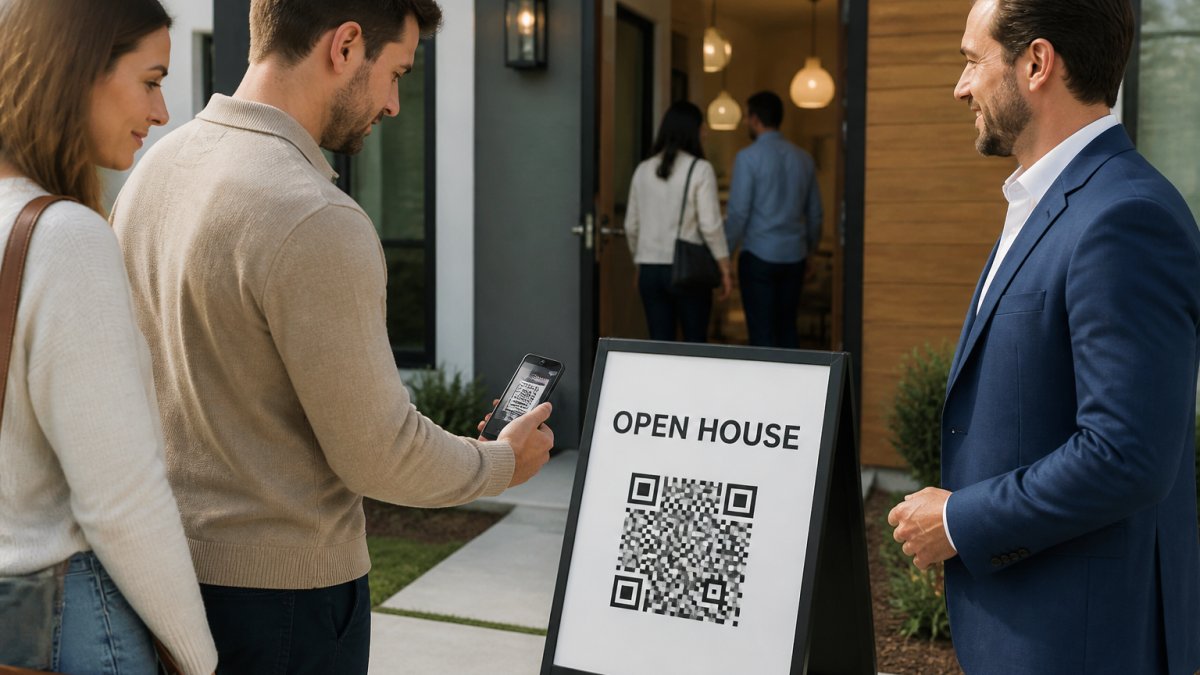
With ohACCESS, visitors scan a QR code at your open house entrance, complete the form on their phone, and instantly receive two codewords, one by text and one by email.
The form supports 16 languages, and returning visitors are remembered for a year, so their information pre-fills on their next visit.
Ensuring Data Accuracy and Deliverability
Verified data means your follow-up actually reaches people. A fake email bounces; a burner number never receives the text.
This verification layer is built into the ohACCESS check-in flow: because visitors must receive a codeword to enter, the system confirms both contact channels work, so you know immediately if there's an issue rather than discovering it days later.
Multichannel Follow-Up and Compliance
Effective open house follow-up combines email, text, and phone, but only with consent and respect for communication preferences. Compliance isn't just legal; it's good business. People who feel spammed stop responding.
Respecting Consent and Communication Preferences
Respect communication preferences too. Ask how they prefer to be contacted during your initial follow-up, then honor it, a visitor who gets three emails after asking for texts only will opt out of all communication.
The TCPA and CAN-SPAM Act set legal floors, but good practice goes further: maintain accurate opt-out records, honor STOP requests immediately, and don't contact people outside reasonable hours.
Integrating Follow-Up Into Your CRM Workflow
Your CRM should be the central hub for all follow-up activity.
When ohACCESS delivers visitor data to your CRM, it arrives as a complete lead record: name, phone, email, buying timeline, and any custom questions you asked.
This automation doesn't replace personal touch; it enables it. Your CRM handles the templated messages while you focus personal effort on the serious leads who need a phone call or a custom message.
Open house follow-up determines whether you convert visitors into clients or watch them drift to competing agents. Tools like ohACCESS remove friction by capturing verified visitor information automatically and delivering it to your CRM, so you can focus on the follow-up strategy itself.
Frequently Asked Questions
When should you follow up with open house visitors?
The most effective window is within 24 hours of the open house. Send an immediate thank-you message the same day or next morning, follow up again at one week with additional property details or similar listings, and then continue monthly for prospects still in their buying timeline. This cadence keeps your property top-of-mind without overwhelming prospects. Adjust frequency based on their stated buying timeline and engagement level.
What should you say in an open house follow-up email?
Start with a genuine thank-you for attending, reference something specific about their visit or questions they asked, and provide relevant next steps. For serious buyers, include details about scheduling a second showing or addressing concerns they raised. For future buyers, share information about the local market or similar properties matching their criteria. Keep the tone helpful rather than pushy, and always include a clear call to action, whether that's scheduling a call, viewing more listings, or getting market updates.
How many times should a real estate agent follow up after an open house?
Follow the 24-hour, one-week, and monthly cadence as a baseline, but adjust based on buyer intent. Hot leads may warrant additional touches if they've shown serious interest. Warm leads benefit from the standard schedule plus occasional market updates. Cold leads should receive monthly nurture messages until they indicate they're ready to buy or explicitly opt out. Always respect opt-out requests and communication preferences, multiple touches without engagement signal disrespect for the prospect's wishes.
What information should you collect from open house visitors?
Collect name, phone number, email, and buying timeline (0-3 months, 3-6 months, 6-12 months, or 12+ months). These essentials let you segment prospects and prioritize follow-up. Consider adding one custom question relevant to your property or market, such as what features matter most, whether they're selling a current home, or their price range. Verified contact information is critical; inaccurate or fake details waste follow-up time and hurt your conversion rate.
What are common open house follow-up mistakes to avoid?
Waiting too long to follow up (beyond 24 hours) reduces response rates significantly. Using generic, copy-paste messages makes prospects feel unvalued. Following up too frequently without permission causes opt-outs. Failing to segment leads means treating all prospects the same regardless of urgency or interest. Collecting unverified contact information wastes effort on invalid numbers or email addresses. Finally, ignoring opt-out requests or communication preferences creates legal and compliance risks. Focus on quality, timely, personalized outreach instead.
How do you follow up with open house visitors who are not ready to buy?
Position yourself as a helpful resource rather than a salesperson. Share monthly market updates, new listings matching their criteria, or neighborhood insights. Acknowledge their timeline explicitly: 'I know you're not ready for 6-12 months, but I'd love to keep you updated on the market and new inventory.' Send occasional check-in messages that add value, like rate updates, school district news, or local events, rather than constant sales pitches. This builds trust and keeps you top-of-mind when they do become ready to move.
Frequently asked questions
When should you follow up with open house visitors?
The most effective window is within 24 hours of the open house. Send an immediate thank-you message the same day or next morning, follow up again at one week with additional property details or similar listings, and then continue monthly for prospects still in their buying timeline. This cadence keeps your property top-of-mind without overwhelming prospects. Adjust frequency based on their stated buying timeline and engagement level.
What should you say in an open house follow-up email?
Start with a genuine thank-you for attending, reference something specific about their visit or questions they asked, and provide relevant next steps. For serious buyers, include details about scheduling a second showing or addressing concerns they raised. For future buyers, share information about the local market or similar properties matching their criteria. Keep the tone helpful rather than pushy, and always include a clear call to action—whether that's scheduling a call, viewing more listings, or getting market updates.
How many times should a real estate agent follow up after an open house?
Follow the 24-hour, one-week, and monthly cadence as a baseline, but adjust based on buyer intent. Hot leads may warrant additional touches if they've shown serious interest. Warm leads benefit from the standard schedule plus occasional market updates. Cold leads should receive monthly nurture messages until they indicate they're ready to buy or explicitly opt out. Always respect opt-out requests and communication preferences—multiple touches without engagement signal disrespect for the prospect's wishes.
What information should you collect from open house visitors?
Collect name, phone number, email, and buying timeline (0–3 months, 3–6 months, 6–12 months, or 12+ months). These essentials let you segment prospects and prioritize follow-up. Consider adding one custom question relevant to your property or market—such as what features matter most, whether they're selling a current home, or their price range. Verified contact information is critical; inaccurate or fake details waste follow-up time and hurt your conversion rate.
What are common open house follow-up mistakes to avoid?
Waiting too long to follow up (beyond 24 hours) reduces response rates significantly. Using generic, copy-paste messages makes prospects feel unvalued. Following up too frequently without permission causes opt-outs. Failing to segment leads means treating all prospects the same regardless of urgency or interest. Collecting unverified contact information wastes effort on invalid numbers or email addresses. Finally, ignoring opt-out requests or communication preferences creates legal and compliance risks. Focus on quality, timely, personalized outreach instead.
How do you follow up with open house visitors who are not ready to buy?
Position yourself as a helpful resource rather than a salesperson. Share monthly market updates, new listings matching their criteria, or neighborhood insights. Acknowledge their timeline explicitly: 'I know you're not ready for 6–12 months, but I'd love to keep you updated on the market and new inventory.' Send occasional check-in messages that add value—like rate updates, school district news, or local events—rather than constant sales pitches. This builds trust and keeps you top-of-mind when they do become ready to move.
Keep reading
Start free with 25 verified check-ins. No credit card required.
Start Free