What Is a High Quality Real Estate Lead? A 2026 Guide
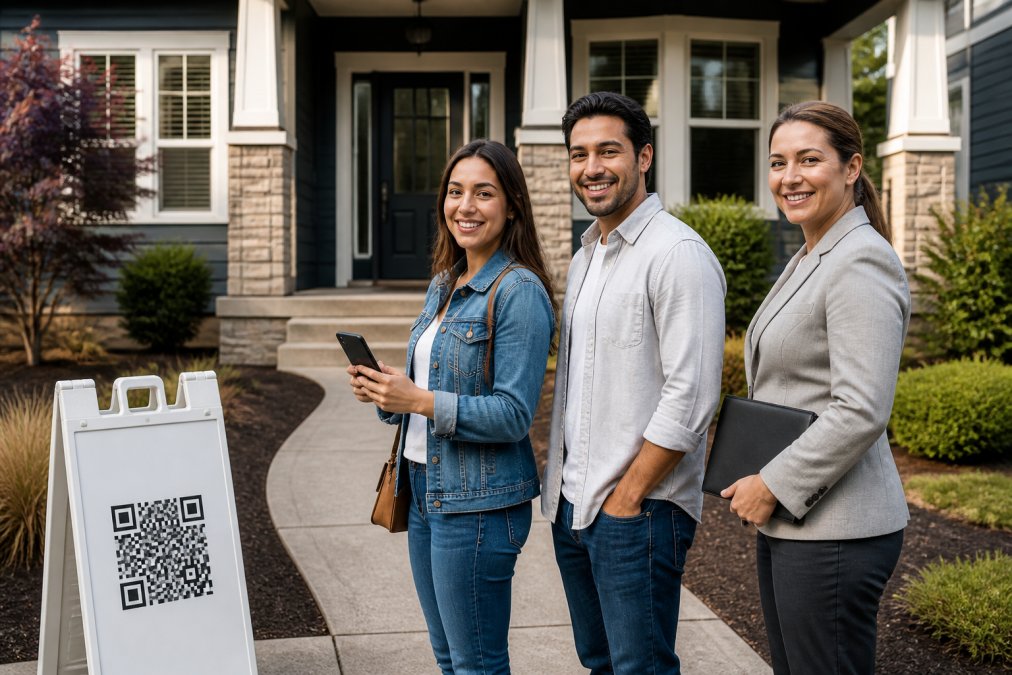
Table of Contents
- Defining a High Quality Real Estate Lead
- Real Estate Lead Qualification Criteria That Actually Predict Closings
- How to Verify Real Estate Leads Before You Waste a Single Call
- Open House Lead Management Strategies for Higher Intent Buyers
- Real Estate Lead Follow-Up Scripts That Convert Verified Contacts
- Data Privacy and Compliance When Collecting Real Estate Leads
- Conclusion: Stop Chasing Volume, Start Chasing Verification
- Frequently Asked Questions
Last Updated: September 22, 2026
Defining a High Quality Real Estate Lead
A high quality real estate lead is a contact whose identity, contact information, and buying or selling intent have been verified, so the agent knows the person is real, reachable, and actively in the market. That definition matters because the paper sign-in sheet has never been a reliable source of truth, anyone can write down a fake name and a disconnected number. This guide from ohACCESS breaks down the four signals that separate genuine prospects from casual browsers, how to score them, and how to follow up.
Most agents treat lead volume as the goal. It isn't. Twenty unverified names are worth less than three contacts you can actually reach.
The Four Signals That Separate Real Buyers from Browsers
Four signals reliably predict whether a lead will convert: verified contact information, stated buying timeline, engagement with the property, and willingness to take a next step. Contact verification is the foundation, an unverifiable phone number or email makes every other signal meaningless. Buying timeline comes second, because someone planning to purchase within three months behaves very differently from someone browsing with no deadline. Engagement, such as leaving feedback or asking a specific question, adds context. Transaction readiness, having spoken to a lender or having proof of funds, is the strongest signal of all.
When a lead clears all four, the follow-up conversation changes completely. You're no longer chasing a maybe.
Real Estate Lead Qualification Criteria That Actually Predict Closings
Lead qualification criteria only predict closings when they measure behavior, not demographics. Zip code, age, and income tell you little about whether someone will make an offer. What predicts a closing is verified reachability, buyer intent, and seller motivation, assessed together.
A common mistake is scoring leads on how enthusiastic they sounded at the door. Enthusiasm fades. A verified phone number and a stated 0-3 month timeline don't.
Building a Lead Quality Scoring Framework
A lead quality scoring framework assigns points across the signals that matter, then ranks each prospect so you know who to call first. Here's a practical version you can adapt:
| Signal | Points | How to Verify |
|---|---|---|
| Phone and email both verified | 30 | Codeword confirmed with the visitor at the door |
| Buying timeline of 0-3 months | 25 | Stated on the sign-in form |
| Timeline of 3-6 months | 15 | Stated on the sign-in form |
| Left after-tour feedback or rating | 15 | Submitted through the feedback form |
| Asked a specific property question | 10 | Custom question on the sign-in form |
| Already working with a lender | 20 | Asked directly during follow-up |
Anything scoring above 70 deserves a call within hours. Below 40, move them into a longer nurturing sequence rather than burning your afternoon on cold outreach.
How to Verify Real Estate Leads Before You Waste a Single Call
Verification is the step most agents skip, and it saves the most time. The fastest way to confirm a phone number and email are real is to require the visitor to prove they control both at sign-in, moving past the paper sheet and past web forms that accept any string of digits without checking whether a message can reach it.
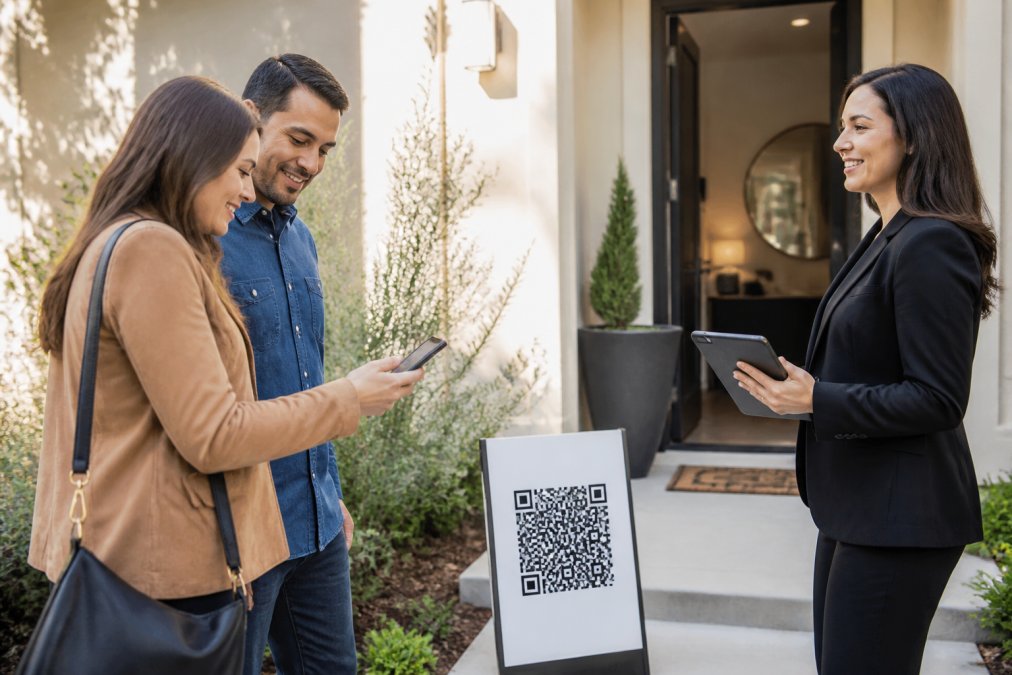
At ohACCESS, that's how the check-in flow works: a visitor scans a QR code at the door, fills out a short form on their own phone, and instantly receives two codewords, one by text message and one by email. They share a codeword with the host agent at the door to enter.
What Verification Actually Confirms, and What It Doesn't
Be precise about what a verified sign-in proves. A codeword delivered by text and email confirms the visitor controls both channels right now. It does not confirm income, creditworthiness, or pre-approval, those are follow-up questions, not door questions.
- Layer one, reachability. Can you actually contact this person? A verified phone and email answers this. Without it, every other signal is noise.
- Layer two, readiness. Is this person able to transact soon? Timeline, lender status, and engagement answer this.
Verification Signals You Can Capture at the Door
Beyond the codeword itself, a few concrete signals separate a real prospect from a casual browser:
- A working phone line type. ohACCESS flags VoIP and burner numbers, bounced emails, undeliverable texts, and STOP opt-outs, so you can see when a contact detail is technically valid but practically unreliable.
- A stated buying timeline. The sign-in form captures 0-3, 3-6, 6-12, or 12+ months, a commitment the visitor made, not a guess you made about them.
- A forensic trail. Every sign-in records IP, device, and phone carrier/line type, giving you a factual record if a lead later disputes ever visiting.
- A custom question answer. Up to one custom question on the sign-in form lets you capture something specific, like whether the visitor is already working with a lender.
A Quick Verification Triage Before You Dial
Before you spend an afternoon calling, run each new lead through a short triage:
- Did both a text and an email codeword arrive? If yes, the contact details are real.
- Is the phone line flagged as VoIP or a burner? If yes, treat the number as lower confidence and lead with email.
- Did the visitor state a timeline? If yes, that timeline drives your follow-up urgency.
- Did they leave feedback or ask a question? If yes, you have a specific hook for the first message.
Open House Lead Management Strategies for Higher Intent Buyers
The best open house lead management strategies do three things: capture verified data at the door, deliver it into your CRM immediately, and give the homeowner proof of turnout. Most agents handle the first and drop the other two.
Real Estate Lead Follow-Up Scripts That Convert Verified Contacts
The psychology is simple: a qualified prospect responds to relevance, not persistence. Reference their timeline, their feedback, or a matching listing, and the conversation moves forward.
Data Privacy and Compliance When Collecting Real Estate Leads
Collecting contact information at an open house creates real obligations. Under rules enforced by the California Consumer Privacy Act, consumers have the right to know what personal information a business collects and to request its deletion. Similar frameworks exist in other states, and the National Association of Realtors' guidance on data privacy outlines how member agents should handle client data responsibly.
The Consent Model Behind a Verified Sign-In
There's a meaningful difference between a lead who wrote their name on a clipboard and one who knowingly provided a real phone number and email. The first may not have understood what they were agreeing to; the second actively confirmed they control both channels and chose to share them with you.
What to Collect, and What to Leave Alone
The practical answer: collect only what you need, tell people why, and store it with a defined retention policy. At an open house, that means:
- Collect: name, email, phone, buying timeline, and at most one or two custom questions.
- Don't collect: Social Security numbers, financial account details, or anything you can't explain a use for.
- Tell them: what you'll do with the information and how they can opt out.
The Seller Report Problem Most Agents Get Wrong
Here's a compliance trap that catches agents at open houses: the homeowner wants to know who came through. It's a reasonable request and a privacy landmine, visitors consented to the agent having their information, not the seller.
Retention: Decide Before You Collect
A retention policy is only useful if it's automatic. Deciding case by case when to delete old leads never happens consistently. A defined window, ohACCESS uses three years, after which data is purged automatically, removes the judgment call.
Verification and compliance are the same project. A lead who knowingly provided a real phone number and email is a lead who consented to hear from you, which is the cleanest possible foundation for follow-up.
Conclusion: Stop Chasing Volume, Start Chasing Verification
The challenge isn't finding more leads. It's finding out which ones are real before you spend your week on the wrong calls. A verified contact list changes the math: fewer names, higher conversion rate, and follow-up built on people who actually answered.
Frequently Asked Questions
What makes a lead high quality?
A high quality real estate lead has four components: verified contact information, a defined buying timeline, financial readiness, and genuine engagement with your listings. A lead who gave a real phone number, plans to buy within 0-3 months, and has spoken with a lender is worth far more than a name collected at a busy open house with no follow-up potential.
How do you distinguish between a cold lead and a high quality lead?
Cold leads lack urgency and verified contact data. They may have signed in months ago, never responded to follow-up, or provided a phone number that bounces. High quality leads respond to outreach, have a buying timeline of 6 months or sooner, and show buyer intent through questions about specific properties or neighborhoods. Verification tools that confirm phone and email authenticity make this distinction measurable.
Why is lead verification critical for real estate agents?
Unverified leads waste time and inflate your pipeline with contacts who will never convert. A verified lead has a working phone number and email, which means your follow-up strategy reaches a real person. Verification also protects you from compliance risk since you can prove consent was given for the contact information you store.
What are the best ways to capture verified leads at open houses?
Digital check-in systems that send a codeword to the visitor's phone and email confirm both channels are real before they enter the property. The visitor tells the codeword to the host agent at the door, proving they own the phone number they entered. This approach eliminates fake names and invalid contact information without requiring an app download or slowing down the sign-in process.
Frequently asked questions
What makes a lead high quality?
A high quality real estate lead has four components: verified contact information, a defined buying timeline, financial readiness, and genuine engagement with your listings. A lead who gave a real phone number, plans to buy within 0-3 months, and has spoken with a lender is worth far more than a name collected at a busy open house with no follow-up potential.
How do you distinguish between a cold lead and a high quality lead?
Cold leads lack urgency and verified contact data. They may have signed in months ago, never responded to follow-up, or provided a phone number that bounces. High quality leads respond to outreach, have a buying timeline of 6 months or sooner, and show buyer intent through questions about specific properties or neighborhoods. Verification tools that confirm phone and email authenticity make this distinction measurable.
Why is lead verification critical for real estate agents?
Unverified leads waste time and inflate your pipeline with contacts who will never convert. A verified lead has a working phone number and email, which means your follow-up strategy reaches a real person. Verification also protects you from compliance risk since you can prove consent was given for the contact information you store.
What are the best ways to capture verified leads at open houses?
Digital check-in systems that send a codeword to the visitor's phone and email confirm both channels are real before they enter the property. The visitor tells the codeword to the host agent at the door, proving they own the phone number they entered. This approach eliminates fake names and invalid contact information without requiring an app download or slowing down the sign-in process.
Keep reading
Start free with 25 verified check-ins. No credit card required.
Start Free