Converting Open House Visitors Into Clients: 7 Proven Tips
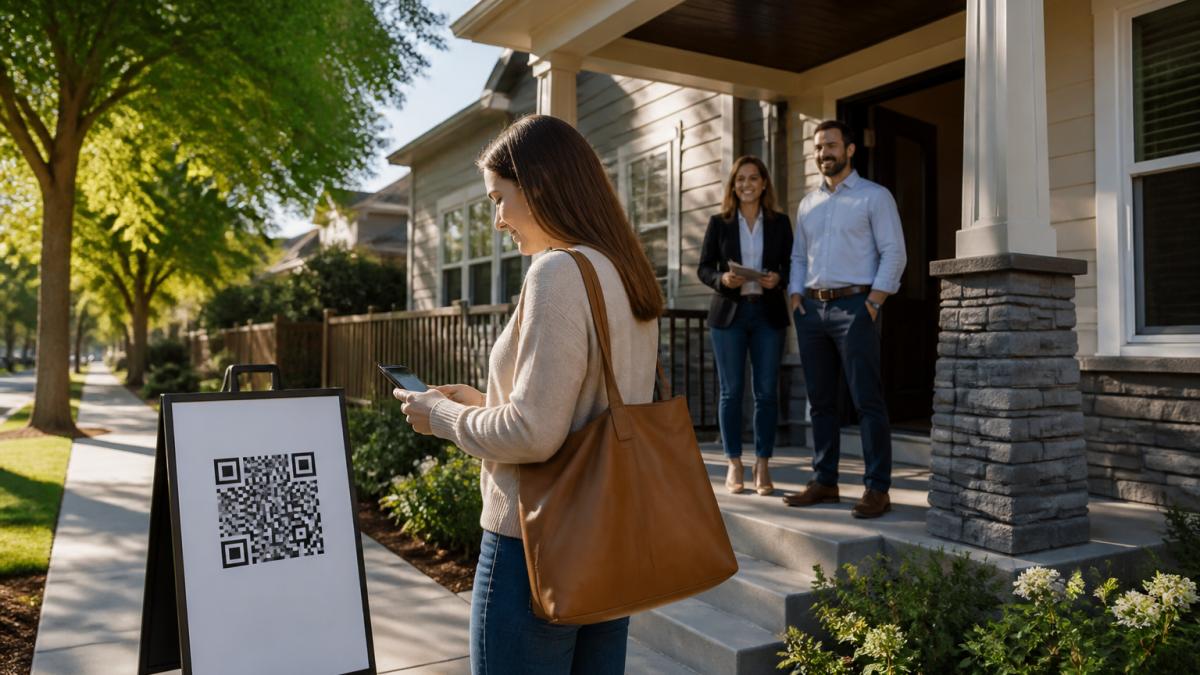
Table of Contents
- Capture Verified Visitor Information From the Start
- Questions to Ask Open House Visitors That Qualify Leads
- How to Qualify Real Estate Leads During the Tour
- Open House Follow-Up Scripts That Drive Responses
- Crafting Your Open House Visitor Follow-Up Email Strategy
- Building Relationships Without the Hard Sales Pitch
- Measuring Your Conversion Results and Reporting to Sellers
- Frequently Asked Questions
Last Updated: October 4, 2026
Capture Verified Visitor Information From the Start
Converting open house visitors into clients starts with reliable data capture. Paper sign-in sheets create problems: fake names, invalid phone numbers, and no verification until days later, by which time you've wasted follow-up effort on bogus leads.
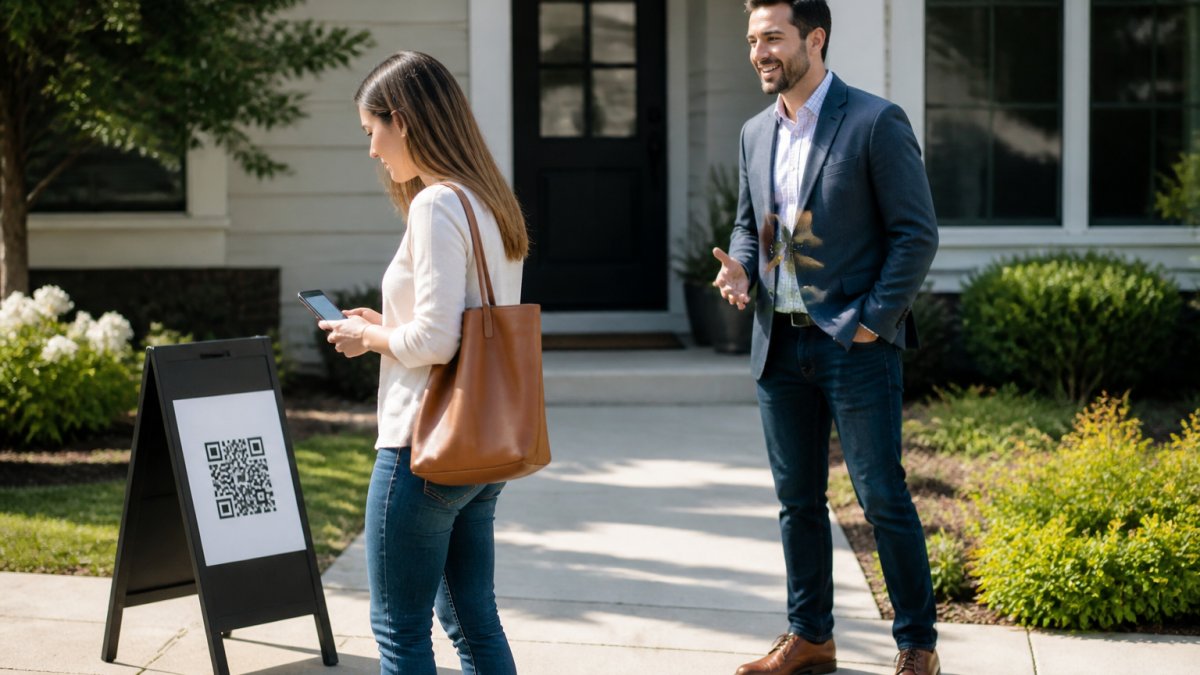
The solution is verified digital check-in. When visitors scan a QR code at your open house door and fill out a short form on their own phone, they instantly receive two codewords, one by text and one by email. They tell a codeword to you at the door to enter. This simple step proves their phone number and email are real and belong to them.
Verified contact info eliminates the guessing game and lets you start follow-up with confidence on real leads only.
The form itself collects what you need to qualify leads: name, email, phone, and buying timeline (0-3 months, 3-6 months, 6-12 months, or 12+ months). You can add one custom question, like "Are you working with an agent?" or "What's your budget range?", to gather intel during the tour itself.
Once they submit, you get an instant text and email alert with their details. No manual data entry. No waiting. This immediate notification lets you engage warm leads while they're still in the property.
Questions to Ask Open House Visitors That Qualify Leads
Asking the right questions separates serious buyers from browsers: Are they ready to buy? Do they fit your market? Are they already represented?
Start with timeline. Visitors planning to buy within 3-6 months are hotter than those 12+ months out, and this question is already built into your sign-in form.
Ask about their current situation: "Are you working with an agent?" and "What brought you in today, are you looking to move soon or exploring?" This reveals if they're serious or just curious.
Dig into fit: "What are you looking for in a home?" If they want a 4-bedroom ranch and you're showing a 2-bedroom condo, you know early this isn't the right fit, but you know where to send them next.
Ask about obstacles: "Is there anything holding you back?" Answers like "We need to sell first" or "Waiting on a job transfer" tell you when to follow up and what to focus on.
Ask permission to follow up: "Can I send you homes matching what you're looking for?" Those who say no save you wasted effort.
How to Qualify Real Estate Leads During the Tour
Qualification happens in real time during the tour. You're gathering information with every conversation, not just at the start.
Watch body language. Engaged visitors ask specific questions about the property, neighborhood, or market. Browsers make small talk.
Ask about their home search: "How long have you been looking?" Longer searches suggest picky buyers or constraints; short searches mean motivation. "Found anything you liked?" reveals why they haven't moved.
Dig into motivation. "Are you relocating for work, or is this a lifestyle move?" Work relocations often have firm timelines. Lifestyle moves can drag. "Do you have kids in school?" This matters for timing and neighborhood priorities. "What's your commute look like from here?" If they hate it, they won't come back.
Test seriousness: "If you loved this home, what's your next step?" Serious buyers name concrete steps; browsers say "I don't know." You now know who to prioritize.
Ask about their current home: "Are you selling?" If yes, that's a contingency and timeline constraint. If no, they have more flexibility.
End the tour with a clear ask. "I'd love to send you a list of homes that match what you're looking for. Is email or text better for you?" This confirms their contact preference and gives you permission to reach out.
Open House Follow-Up Scripts That Drive Responses
Your follow-up script sets the tone for the relationship. Avoid the hard sell. Instead, position yourself as a helpful resource who listened during the tour.
Text hot leads same-day: "Hi [Name], thanks for visiting [Property]! I found a few homes that match what you're looking for, details by email tomorrow."
Send your first email within 24 hours. Subject line: "Homes matching what you shared today." Keep it short.
"Hi [Name],
Thanks again for visiting [Property] on [Date]. I really enjoyed our conversation about your home search.
Based on what you told me, your timeline, budget, and must-haves, I found three homes I think you should see. Here's the first one:
[Property address, price, 2-3 key features matching their criteria]
Does this feel like a direction worth exploring? Let me know, and I can set up a private showing or answer any questions.
Best, [Your name]"
For leads working with an agent: "I respect that. If you want a second opinion or find something outside their focus, I'm here to help."
For buyers 6-12 months out, send monthly check-ins: "I'm seeing great inventory this month and will keep an eye out for homes matching what you described."
If they don't respond after one week, try a different angle: "I know open house day is busy. Just wanted to make sure you got my email. Any questions?"
After two follow-ups with no response, move them to monthly nurture. Stay visible without being pushy.
Crafting Your Open House Visitor Follow-Up Email Strategy
Segment by timeline: 0-3 months = weekly emails; 3-6 months = twice-monthly; 6-12 months = monthly; 12+ months = quarterly nurture.
Rotate messages: Week 1 = listings; Week 2 = timeline check-in; Week 3 = market update; Week 4 = client success story. This keeps you visible without repetition.
Include a clear CTA in every email: "Reply with your top 3 neighborhoods" or "Schedule a call to discuss budget." Generic CTAs get ignored.
Track which emails get opened and which get replies. If your "market update" emails get more opens than "new listings" emails, send more market updates. Your audience is telling you what they care about.
For leads who don't engage after 3-4 emails, try a different channel. Send a text: "I noticed you might be taking your time with this decision, totally normal. Just wanted to check in and see if you have any questions about the homes I sent. Happy to help anytime." Text feels more personal and gets higher response rates than email.
Building Relationships Without the Hard Sales Pitch
The best agents don't sell homes, they solve problems. Visitors come to open houses with questions and concerns. Your job is to address them honestly, not to close a deal on day one.
Listen more than you talk. When a visitor mentions they're worried about the commute, don't launch into why the commute is actually fine.
Share relevant information without pushing. If they mention they're first-time buyers, offer: "A lot of first-time buyers don't realize you can often negotiate closing costs. I can connect you with a lender who explains all your options." This is helpful, not salesy.
Be honest about the property's weaknesses. If they ask about the roof and it's 15 years old, don't deflect. "The roof is 15 years old, so that's something to factor into your offer.
Ask about their life, not just their home search. "What brings you to this area?" or "What do you do for work?" or "Do you have kids?" These questions show you see them as people, not transactions.
Offer value without expecting anything in return. "I noticed you're interested in walkable neighborhoods.
Don't pressure them to decide. "Take your time. This is a big decision. I'm here whenever you're ready to talk through next steps." Visitors who feel rushed often go to another agent. Visitors who feel respected come back to you.
Measuring Your Conversion Results and Reporting to Sellers
You can't improve what you don't measure. Track your open house performance so you know what's working and what isn't.
Start with the basics: How many people signed in? Of those, how many are qualified leads (serious timeline + real contact info)? What percentage of sign-ins became appointments? What percentage of appointments became offers?
Use your visitor data to build a seller report. Share aggregate numbers with homeowners: "We had 34 registered visitors. 18 plan to buy within 6 months. The average visitor rating was 8.2 out of 10. Most said the price is reasonable for the market."
This report proves the value of your open house. Sellers see turnout and buyer interest in real numbers, not guesses.
Track your follow-up performance. Of the leads you contacted within 24 hours, how many replied? Of those who replied, how many scheduled a showing? This tells you if your follow-up is working.
Compare your conversion rates across open houses. Which properties converted the highest percentage of visitors to leads? Which neighborhoods? Which times of day? Use these patterns to improve your next event.
Measure your email engagement. Which subject lines get opened most? Which messages get replies? Which calls-to-action work best? Adjust your strategy based on what your audience responds to.
Most importantly, track which open house visitors actually became clients. Did they buy with you? Did they refer you to a friend? This is your true conversion metric. Everything else is just a step along the way.
Converting open house visitors into clients requires three things: verified contact information from the start, real qualification during the tour, and consistent follow-up that builds trust. Paper sign-in sheets fail at step one.
Frequently Asked Questions
How soon should you follow up after an open house?
Contact visitors within 24 hours while the property is fresh in their mind. Send an automated thank-you email the next morning, then follow up with a personalized call or message within 2-3 days. Early contact signals professionalism and captures leads before competing agents reach them. Using a tool that delivers visitor contact information to your CRM immediately ensures you never miss this window.
What should you include in an open house follow-up message?
Reference specific details from your conversation (the kitchen they liked, questions they asked) to show genuine engagement. Include one clear next step: scheduling a showing, sending comparable sales data, or answering a question about the property or their timeline. Keep it brief and personal rather than generic. Avoid overwhelming them with property links or too many options, one focused call to action performs better.
How do you convert open house visitors into clients without being pushy?
Focus on understanding their needs rather than selling the property. Ask about their timeline, what they're looking for, and any concerns. Listen more than you talk. Position yourself as a resource who can help them find the right home, not someone pressuring them to buy this one. Respect their buying process and stay in touch with valuable information, market updates, new listings, price changes, that keeps you top of mind without aggression.
What happens if an open house visitor doesn't have a smartphone or refuses to scan a QR code?
Digital check-in captures verified phone and email instantly, eliminating fake contact information and manual data entry. Most buyers expect digital options, and offering this method maintains data quality for the leads you capture digitally.
Frequently asked questions
How soon should you follow up after an open house?
Contact visitors within 24 hours while the property is fresh in their mind. Send an automated thank-you email the next morning, then follow up with a personalized call or message within 2-3 days. Early contact signals professionalism and captures leads before competing agents reach them. Using a tool that delivers visitor contact information to your CRM immediately ensures you never miss this window.
What should you include in an open house follow-up message?
Reference specific details from your conversation (the kitchen they liked, questions they asked) to show genuine engagement. Include one clear next step: scheduling a showing, sending comparable sales data, or answering a question about the property or their timeline. Keep it brief and personal rather than generic. Avoid overwhelming them with property links or too many options—one focused call to action performs better.
How do you convert open house visitors into clients without being pushy?
Focus on understanding their needs rather than selling the property. Ask about their timeline, what they're looking for, and any concerns. Listen more than you talk. Position yourself as a resource who can help them find the right home, not someone pressuring them to buy this one. Respect their buying process and stay in touch with valuable information—market updates, new listings, price changes—that keeps you top of mind without aggression.
What happens if an open house visitor doesn't have a smartphone or refuses to scan a QR code?
Digital check-in captures verified phone and email instantly, eliminating fake contact information and manual data entry. Most buyers expect digital options, and offering this method maintains data quality for the leads you capture digitally.
Keep reading
Start free with 25 verified check-ins. No credit card required.
Start Free