Managing Visitor Privacy During Residential Property Tours
Last Updated: November 5, 2026
Quick Summary
Managing visitor privacy during residential property tours means collecting only the minimum information needed, disclosing what you collect and who sees it, and keeping visitor details away from sellers. Post a short privacy notice before sign-in, control access to records, and set a retention period. Visitor privacy also requires disclosing any cameras or recording devices before the tour begins.
- An open house privacy notice should cover what you collect, why, who sees it, retention, and how to opt out.
- Never collect ID data at an open house, and never ask questions touching on protected characteristics under the Fair Housing Act.
- ohACCESS purges visitor data automatically after three years, giving agents a built-in retention backstop.
- Treat audio recording as all-party consent everywhere and disclose it, since state consent rules differ.
- Seller reports should show aggregate data only, with no visitor names, emails, or arrival times.
Table of Contents
- Why Visitor Privacy Is a Real Estate Liability Issue
- What Your Open House Privacy Notice Must Say
- Designing an Open House Sign-In Form That Collects Less
- Real Estate Data Privacy Best Practices for Agents and Teams
- Recording Devices, Consent, and Visitor Privacy Rights
- The Open House Seller Report: Aggregate Data, Not Visitor Details
- A Privacy-First Residential Tour Checklist
- Set Up a Verified, Privacy-Safe Sign-In for Your Next Open House
- Frequently Asked Questions
Why Visitor Privacy Is a Real Estate Liability Issue
A paper sign-in sheet left on a kitchen counter exposes every visitor's name, phone number, and email to anyone who walks past it.
Visitors hand over personal information at an open house on trust. That trust creates a duty.
The risk compounds fast:
- Sheets get photographed by other visitors
- Completed forms sit in a car trunk for weeks
- Sellers see names they were never meant to see
- Old lead lists get sold or shared without consent
Security guidance for visitor management systems stresses keeping visitor data private as a core design goal, not an afterthought (EXTERNAL_LINK: Avigilon visitor management strategy tips | avigilon.com).
ohACCESS is built around a simple rule: collect less, prove more. Below, we break down what a privacy notice must say, how to design a leaner sign-in form, and how to protect both visitors and sellers.
What Your Open House Privacy Notice Must Say
An open house privacy notice is a short, plain-language statement that tells visitors what you collect, why you collect it, who sees it, and how long you keep it. It should be visible before anyone signs in, not buried in a folder.
Most agents skip this step entirely. That's the mistake.
A workable notice covers five points:
- What you collect, name, email, phone, buying timeline
- Why you collect it, to verify identity and follow up on interest
- Who sees it, the hosting agent and their brokerage, not the seller
- How long you keep it, state a retention period and stick to it
- How to opt out, a contact method for removal requests
Keep it under 100 words and post it next to the QR code or sign-in sheet. Visitors who understand the trade are far more willing to give real details.
That last point matters. Fake entries usually come from visitors who don't know why you're asking. Transparency cuts the fakes.
Designing an Open House Sign-In Form That Collects Less
The best open house sign-in form asks for the minimum needed to verify a person and follow up. Every extra field raises friction and raises your liability.
Here's the field-by-field logic we recommend:
| Field | Keep It? | Why |
|---|---|---|
| Name | Yes | Identifies the lead |
| Yes | Follow-up channel | |
| Phone | Yes | Verification and texting |
| Buying timeline | Yes | Qualifies intent |
| Home address | No | Not needed at sign-in |
| Driver's license | No | Creates ID-scanning risk |
| Employer | No | Irrelevant to the tour |
| Income range | No | Invites fair housing problems |
Two rules carry most of the weight. First, never collect ID data at an open house. Second, never ask questions that touch on protected characteristics under the Fair Housing Act.
A short form also gets finished. Long forms get abandoned or filled with junk.
Best practices for open house digital sign-in sheets go deeper on field selection and form wording if you want the full walkthrough.
Real Estate Data Privacy Best Practices for Agents and Teams
Real estate data privacy best practices come down to controlling access, limiting retention, and documenting consent. Teams that standardize these three things sleep better.
Start with access control. Only people who need a lead should be able to see it.
Then set a retention rule.
Next, document consent. Keep a record of what visitors agreed to and when. If a complaint ever lands, that record is your defense.
Finally, train the team. A common mistake is assuming everyone knows not to forward a sign-in sheet. They don't. Write the rule down.
For a deeper guide on handling personal information as an agent, see our breakdown of data privacy best practices for real estate agents.
Recording Devices, Consent, and Visitor Privacy Rights
Cameras and smart doorbells raise a question most agents never address: does the visitor know they're being recorded?
Start with the legal lay of the land.
A practical disclosure framework looks like this:
- Video only, common areas: disclose in the privacy notice and with a small sign at the entry. Low risk in most states.
- Video plus audio: disclose in writing, get an affirmative acknowledgment before the tour, and confirm the state's consent rule. Higher risk; default to disclosure.
- Smart-home devices that log motion or voice: treat these the same as cameras. A voice assistant that logs commands is capturing audio even if no one thinks of it as a recorder.
- Doorbell cameras: sellers often have them running during a showing. That's their right, but the agent should flag it in the notice and at the door.
Role responsibilities differ. The seller controls the devices in their home and must disclose what's active.
Visitor expectations matter as much as legal minimums. Most visitors assume a home tour is not being recorded unless told otherwise.
The same logic applies to smart-home devices that log motion or voice. Mention them, and you stay on the right side of the line.
The Open House Seller Report: Aggregate Data, Not Visitor Details
A seller report should prove turnout and buyer interest without exposing a single visitor's identity. Aggregate data does that job better than a name list ever could.
Sellers want to know three things: how many people came, how serious they were, and what they thought of the price. None of that requires a phone number.
A privacy-safe seller report includes:
- Total registered visitors
- How many plan to buy within six months
- The buying-timeline breakdown
- Average home rating and price verdict
- Aggregated answers to custom questions
Visitors consented to the agent having their information. They did not consent to the seller having it. Respecting that distinction protects the agent and the visitor at once.
ohACCESS can generate this report in one tap, and it contains no visitor names, emails, or arrival times. How to provide seller reports without sharing visitor data walks through the full process.
A Privacy-First Residential Tour Checklist
Run this checklist before every tour and you'll cover the basics that most agents miss. It's organized by role and by tour type, because a hosted open house, a private showing, and a self-guided tour put the privacy obligations in different hands.
Before the tour, seller and listing agent
- Walk the home and inventory every camera, doorbell, and smart device that records or logs
- Confirm in writing which devices are active during showings and whether any capture audio
- Post the privacy notice where visitors see it before signing in, at the door, not on the kitchen counter
- Confirm the sign-in form collects only name, email, phone, and buying timeline
- Brief the seller that the report they receive is aggregate only, with no visitor names or contact details
- Remove personal documents, mail, prescriptions, and family photos from sightlines before visitors arrive
- Set a retention period and note where records are stored and who can access them
During the tour, hosting agent
- Point cameras at entries and valuables, not at the sign-in table
- Keep the sign-in process in view so no visitor photographs another visitor's information
- Don't ask questions that touch on protected characteristics under the Fair Housing Act
- Honor any visitor who declines to sign in, offer a minimal-data alternative rather than turning them away
After the tour, agent and team
- Remove paper sheets from the property at the end of the day
- Confirm opt-out requests are honored across all lists, including the CRM
- Delete any records past the retention period
- Never forward a sign-in sheet or visitor list to the seller, a lender, or another agent without consent
Variations by tour type
- Hosted open house: the agent owns disclosure, sign-in, and post-tour data handling. The checklist above applies in full.
- Private showing: the agent is present, so verbal disclosure plus the written notice covers most of it. Confirm the seller's devices are disclosed before the buyer arrives.
- Self-guided tour: no agent is on site, so the disclosure has to live in the access instructions or app, and the sign-in must be completed before entry. The access provider, not the seller, owns retention and opt-out handling.
- Tenant-occupied property: consult the tenant before disclosing or adding any recording, and keep the tenant's own privacy interest in mind when preparing the home.
Accessibility and privacy-conscious alternatives
Not every visitor can or will use a standard registration process.
Pair this with a full open house checklist for agents so nothing else slips through the cracks on the day.
Set Up a Verified, Privacy-Safe Sign-In for Your Next Open House
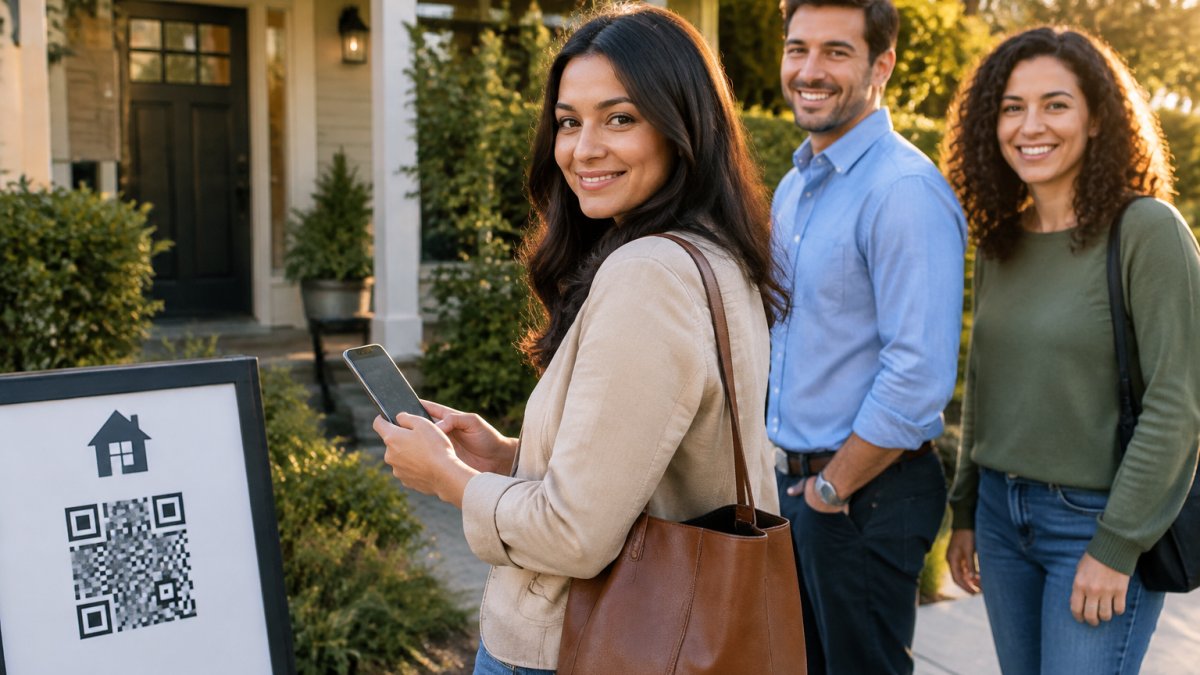
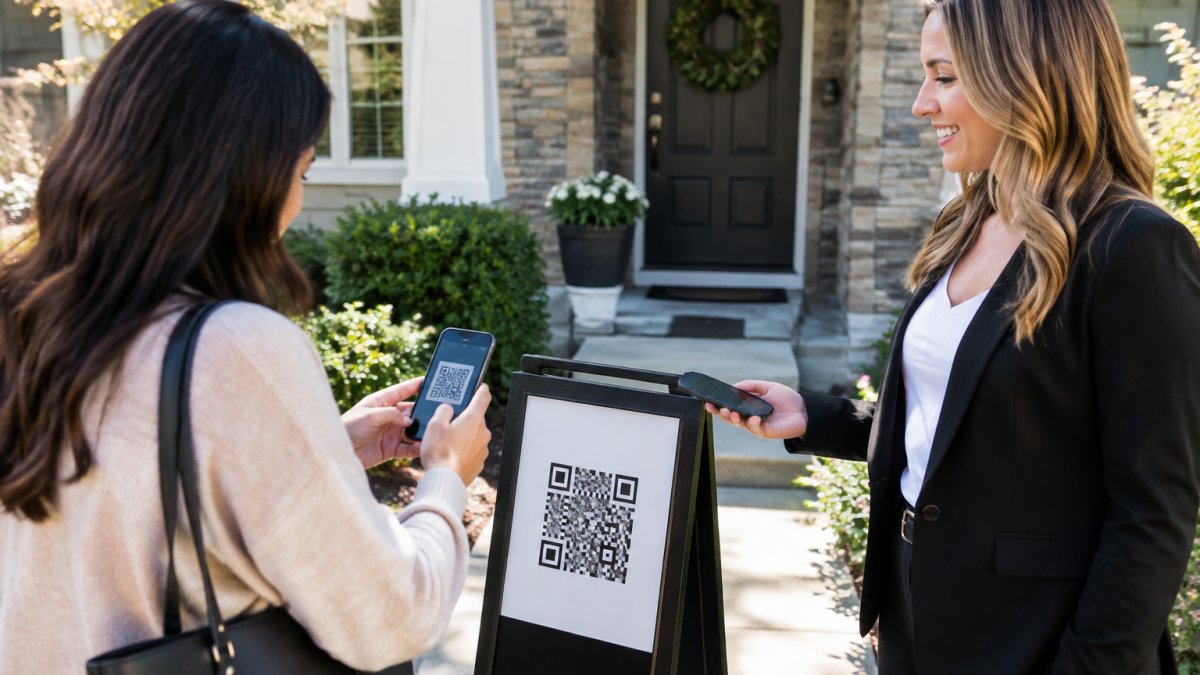
Verified check-in solves the privacy problem and the fake-lead problem at the same time. The visitor scans a QR code, fills a short form on their own phone, and instantly receives two codewords, one by text and one by email. They tell a codeword to the host agent at the door to enter.
The agent gets an instant text and email alert for every sign-in, plus a verified visitor log. Leads land in your CRM automatically through a formatted lead email or a Zapier webhook.
ohACCESS is Patent Pending.
Frequently Asked Questions
How should real estate agents collect visitor information at an open house?
Collect only what you will actually use: name, email, phone, and buying timeline. A digital tool like ohACCESS lets visitors scan a QR code and fill out a short form on their own phone in 16 languages. They receive two codewords, one by text and one by email, and tell one to the host agent at the door, which proves the contact details are real. The agent gets an instant text and email alert. This replaces the paper sheet and gives you a verified visitor log without collecting extra personal information.
Can a home seller see who attended an open house?
They should not see names, phone numbers, emails, or arrival times. Visitors consented to the agent holding their information, not the seller. An open house seller report should show aggregate data only: registered-visitor count, buying-timeline breakdown, how many plan to buy within 6 months, the average 1-10 home rating, and the price verdict. ohACCESS builds the report this way by design, so you can share turnout and buyer interest with your seller without exposing anyone's personal information.
What should an open house privacy notice include?
State what you collect, why you collect it, who sees it, and how long you keep it. Name the specific fields on your open house sign-in form, say that data goes to your CRM for follow-up, and confirm that sellers receive aggregate figures only. Add how a visitor can opt out or ask for deletion, and note any recording devices on site. Keep it short enough to read at the door and post it next to the QR code so visitors see it before they register.
How long should agents keep open-house visitor information?
Keep it only as long as you are actively following up, then delete it. Many agents work on a 12-to-24-month window because that matches typical buying timelines. Write the retention period into your privacy notice so visitors know. ohACCESS automatically purges data after 3 years, which gives you a backstop, but you can export a CSV and remove records sooner. Never leave old sign-in sheets or spreadsheets sitting in a shared drive indefinitely.
Visitor privacy during a home tour isn't a compliance chore. It's a trust signal that turns cautious browsers into real leads. If you want check-in that verifies every visitor without overcollecting, see the open house sign-in app built for agents and get your next tour running the right way. Get started with ohACCESS and protect every visitor's data from the first scan.

Frequently asked questions
How should real estate agents collect visitor information at an open house?
Collect only what you will actually use: name, email, phone, and buying timeline. A digital tool like ohACCESS lets visitors scan a QR code and fill out a short form on their own phone in 16 languages. They receive two codewords, one by text and one by email, and tell one to the host agent at the door, which proves the contact details are real. The agent gets an instant text and email alert. This replaces the paper sheet and gives you a verified visitor log without collecting extra personal information.
Can a home seller see who attended an open house?
They should not see names, phone numbers, emails, or arrival times. Visitors consented to the agent holding their information, not the seller. An open house seller report should show aggregate data only: registered-visitor count, buying-timeline breakdown, how many plan to buy within 6 months, the average 1-10 home rating, and the price verdict. ohACCESS builds the report this way by design, so you can share turnout and buyer interest with your seller without exposing anyone's personal information.
What should an open house privacy notice include?
State what you collect, why you collect it, who sees it, and how long you keep it. Name the specific fields on your open house sign-in form, say that data goes to your CRM for follow-up, and confirm that sellers receive aggregate figures only. Add how a visitor can opt out or ask for deletion, and note any recording devices on site. Keep it short enough to read at the door and post it next to the QR code so visitors see it before they register.
How long should agents keep open-house visitor information?
Keep it only as long as you are actively following up, then delete it. Many agents work on a 12-to-24-month window because that matches typical buying timelines. Write the retention period into your privacy notice so visitors know. ohACCESS automatically purges data after 3 years, which gives you a backstop, but you can export a CSV and remove records sooner. Never leave old sign-in sheets or spreadsheets sitting in a shared drive indefinitely.
Keep reading
Start free with 25 verified check-ins. No credit card required.
Start Free