Real Estate Open House Checklist for Agents: 2026 Guide
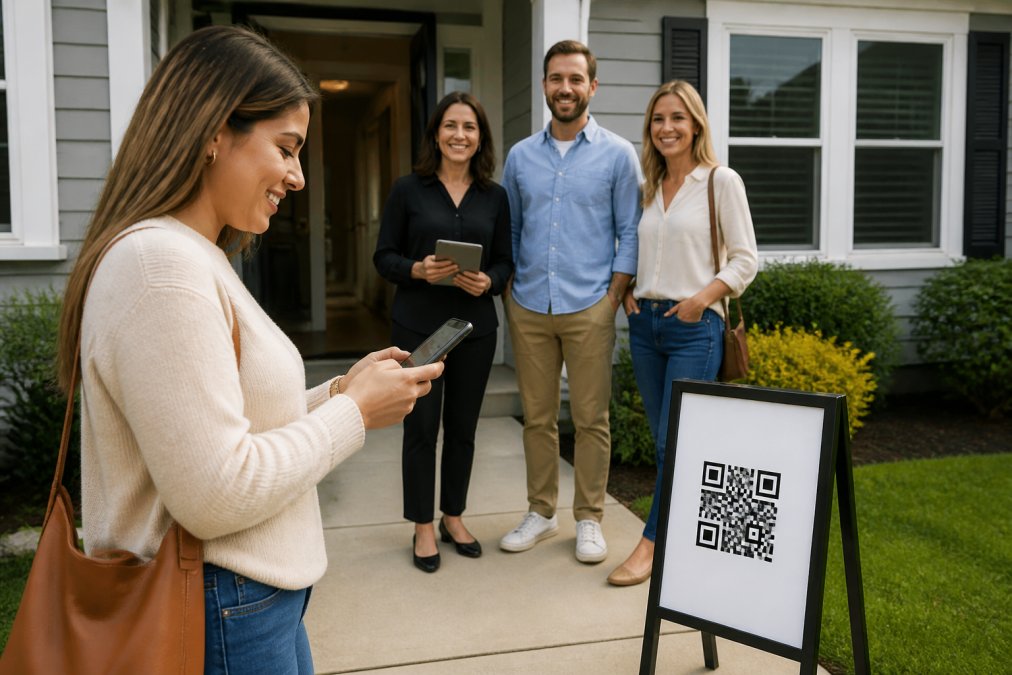
Table of Contents
- How to Host a Successful Open House: The Pre-Event Checklist
- Digital Open House Check-In: Replacing the Paper Sign-In Sheet
- Open House Safety Tips for Realtors: Protecting Yourself and the Property
- Open House Follow Up Scripts That Turn Visitors Into Clients
- Post-Event Analytics: The Seller Report and Buyer Feedback
- Legal and Liability Disclosures for Open House Visitors
- Frequently Asked Questions
Last Updated: September 10, 2026
How to Host a Successful Open House: The Pre-Event Checklist
An open house checklist for agents is only as good as the preparation behind it. This guide from ohACCESS breaks the process into the steps that actually move leads, from property prep to post-event analytics, and shows where a digital check-in replaces the paper sheet entirely.
The pre-event window is where most open houses are won or lost. A cluttered entryway, a dark living room, or a sign nobody can read from the street all cost you the same thing: qualified buyers who walk away before they ever say hello. Work through the checklist below in order to remove the friction that kills conversion before it starts.
National Association of Realtors guidance on open house preparation
Property Prep: Staging, Decluttering, and Curb Appeal
Curb appeal and first impressions decide whether a visitor walks in already sold on the exterior. Trim the lawn, clear the walkway, and make sure the house number is visible from the street. Inside, decluttering matters more than decorating: remove personal photos, thin out furniture, and let natural light do the work. Staging is not about adding things, it is about removing the distractions that stop a buyer from picturing themselves in the space.
- Lawn trimmed, walkway swept, entry clear
- Personal photos and clutter removed
- Counters cleared in kitchen and bathrooms
- Closets and storage organized, not stuffed
- Property disclosures and property history packet ready
Signage, Lighting, and the Welcome Station Setup
Open house signage should guide a buyer from the street to the door without a single wrong turn. Place directional signs at the nearest intersection, and make sure the main sign is readable from a moving car. Inside, turn on every light, open the blinds, and set the temperature a few degrees cooler than feels normal, because a warm room full of people gets uncomfortable fast.
The welcome station is where the open house checklist and the lead capture meet. Set a pedestal or A-frame sign at the door with your QR code, a stack of property brochures, and your digital flyers. This is where the paper sign-in sheet used to sit, and where most agents lose data quality.
Digital Open House Check-In: Replacing the Paper Sign-In Sheet
Paper sign-in sheets collect fake names, illegible handwriting, and phone numbers that belong to nobody. Digital open house check-in fixes that by verifying contact information before the visitor ever reaches your welcome station: instead of trusting what someone writes down, you confirm the phone number and email they entered are real and theirs.
How Verified QR Check-In Works at the Door
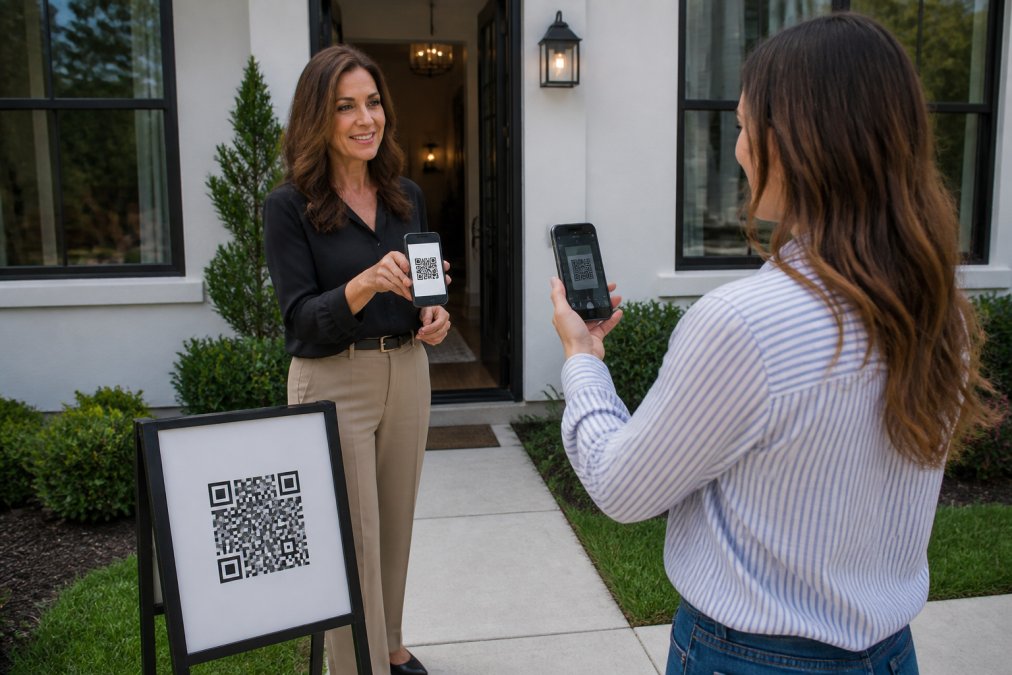
The visitor scans a QR code posted at the door and fills out a short form on their own phone: name, email, phone, and buying timeline. The moment they submit, ohACCESS sends two codewords, one by text message and one by email, both immediately. The visitor tells a codeword to the host agent at the door to get in, the text codeword is primary, the email codeword the backup if the text is slow. Nothing is ever typed back into a system, and there is no app to download.
That single step separates a verified lead from a guess: because the codeword only arrives on a working phone and a working inbox, the contact information on your list is real. The agent gets an instant text and email alert with each visitor's details, and the verified visitor log builds itself in the background. For a team, leads arrive in the shared CRM automatically through a formatted lead email or a Zapier webhook.
Open House Safety Tips for Realtors: Protecting Yourself and the Property
Open house safety tips for realtors start with knowing who is actually in the house. A verified check-in gives you a name, a working phone, and a timestamp before a stranger crosses the threshold, a layer of protection a paper sheet never provided. Beyond that, keep your phone charged, park where you are not blocked in, and tell a colleague where you are and when you expect to finish.
The deeper problem is that most safety advice stops at "be careful." A checklist you can actually run looks like this:
- Confirm each visitor through the verified visitor log before entry
- Keep valuables, medications, and firearms secured by the seller before doors open
- Stay near the door or in common areas, never in a closed room alone with a visitor
- Watch for VoIP and burner number flags on the check-in log
- Have an exit plan and a check-in contact who expects your call
- Walk the property at the end of the event and confirm every room is empty
What a Verified Log Changes About Safety
A paper sign-in sheet tells you what someone chose to write down. A verified check-in tells you whether the phone number and email they entered are real and theirs, because the codeword only arrives on a working phone and a working inbox. At the door, you are greeting a person whose contact information has already been confirmed, not a name that may be invented.
ohACCESS also builds a forensic trail on every sign-in, IP address, device, and phone carrier and line type. If a number is flagged as VoIP or a burner, you see it on the log before you decide how to handle the visit. Bounced emails, undeliverable texts, and STOP opt-outs are flagged too, and opt-outs are honored globally. None of that replaces your judgment, but it gives you information a clipboard never could.
Protecting the Seller's Property
Ask the seller to remove or lock away jewelry, cash, medications, firearms, and small electronics before the first visitor arrives. Prescription bottles and mail on the counter are two of the most overlooked exposures. If the seller keeps a home office, close and lock it, and confirm the security-system code with the seller so you are not the one who sets off the alarm mid-tour.
For your own protection, share your schedule with a colleague or your brokerage, keep your car keys on you rather than in a bag you set down, and never announce on social media that you are hosting alone. If your brokerage has a lone-worker policy, follow it and note the check-in time.
Safety for Teams and Brokerages
If you run a team, the same verified log works across every agent. A team lead can see whose open house generated which sign-in, and shared branding means visitors see a consistent presence rather than a rotating cast of individual agents, a safety and trust factor in itself.
Open House Follow Up Scripts That Turn Visitors Into Clients
Follow-up is where open house leads either become clients or go cold. The agents who win send a same-day message while the visit is still fresh, then a second touch within 48 hours. Because ohACCESS delivers every sign-in to your CRM automatically, the lead is already in your pipeline before you pack up the brochures.
Here are two open house follow up scripts you can adapt:
Same-day text: "Hi [Name], thanks for stopping by [Address] today. You mentioned a [3-6 month] timeline. I pulled two other listings that match what you're looking for. Want me to send them over?"
48-hour email: "Hi [Name], following up on your visit to [Address]. A few buyers asked about [property feature], so I put together a quick market analysis for the neighborhood. Happy to walk you through it whenever works for you."
Keep the first touch short, reference something specific from their visit, and give them one clear next step. Generic blasts get ignored. Specific, timely messages get replies.
Post-Event Analytics: The Seller Report and Buyer Feedback
Sellers want proof, not reassurance. A one-tap seller report turns your open house into a clear picture of buyer interest: registered-visitor count, how many plan to buy within six months, the buying-timeline breakdown, and the average 1-10 rating with a price verdict of Too High, Reasonable, or Too Low, plus aggregated answers to your custom questions and a scan-to-registration funnel.
The report is deliberately aggregate-only. It contains no visitor names, phone numbers, emails, or arrival times, because visitors consented to you having their information, not the seller. That privacy design protects you as much as it protects them, and it is worth explaining to your client up front.
Legal and Liability Disclosures for Open House Visitors
Legal and liability disclosures protect both you and the seller, and they belong in the open house checklist, not an afterthought. The risks fall into four buckets: property disclosures, fair housing, visitor privacy, and premises liability.
Property Disclosures
Confirm the seller has completed the required property disclosures for your state, and have them available at the welcome station for any buyer who asks. Common categories include known defects, lead-based paint (for homes built before 1978), and any state-specific seller disclosure form. Keep a printed copy and a digital copy. If a buyer asks a question you cannot answer, write it down and follow up rather than guessing, an off-the-cuff answer about a defect can become a liability problem later.
Fair Housing
Follow fair housing rules in every conversation. Never steer a buyer based on protected characteristics, and never make assumptions about what a buyer can afford or where they "should" live. The U.S. Department of Housing and Urban Development publishes fair housing guidance that is worth reviewing before your first open house of the year.
U.S. Department of Housing and Urban Development fair housing information
A practical habit: keep your questions about the property, not the person. "What are you looking for in a home?" is fine. Questions that probe family status, national origin, or disability are not.
Visitor Privacy
For agents collecting visitor contact information, the privacy side matters too. Visitors are handing you their name, email, phone, and buying timeline. How you store, use, and eventually delete that data is a compliance question, not just a courtesy.
ohACCESS uses an attorney-reviewed Terms and Privacy Policy, honors opt-outs globally, and purges data automatically after three years. If a visitor signs a touring agreement before entry, ohACCESS handles the e-signature and emails the signed PDF to both parties without storing it. That keeps your compliance footprint clean and your focus on the buyer in front of you.
Premises Liability
Premises liability is the risk most agents never think about until something happens. If a visitor slips on a wet walkway, trips on a loose stair, or is injured by a pet, the question becomes who knew what and when. Practical steps:
- Walk the property before doors open and note any hazards (loose railings, uneven steps, wet floors)
- Ask the seller to secure pets or remove them from the property during the event
- Confirm the seller's homeowner's insurance is active and ask whether it covers open house events
- Keep a first-aid kit and a charged phone on you at all times
- Document any incident in writing the same day, with times and names
The Disclosure Table You Can Reuse
| Disclosure Type | What to Prepare | Where It Lives |
|---|---|---|
| Property disclosures | State-required seller forms, lead-based paint (pre-1978) | Printed + digital at welcome station |
| Fair housing | No steering, no protected-class questions | Your conversation, every time |
| Visitor privacy | Attorney-reviewed Terms and Privacy Policy, opt-out honoring, 3-year purge | ohACCESS handles it |
| Premises liability | Hazard walk-through, pet removal, insurance check | Pre-event checklist |
None of this is glamorous, and none of it shows up in a pretty listing photo. But it is the difference between an open house that runs clean and one that creates a problem you spend months untangling.
Frequently Asked Questions
What is the best way to collect visitor contact information at an open house?
Use a digital open house check-in tool that verifies phone numbers and emails at the door. ohACCESS sends two codewords, one by text and one by email, the moment a visitor submits the form. The visitor tells a codeword to the host agent to enter, which proves the contact details are real. This eliminates fake names and invalid numbers that plague paper sign-in sheets, and every lead arrives in your CRM automatically for fast follow-up.
How can real estate agents improve open house safety?
Start with verified check-in so you know exactly who is in the home. ohACCESS gives you an instant text and email alert for every sign-in, plus a forensic trail showing IP address, device, and phone carrier type. It also flags VoIP and burner numbers. Beyond the tool, keep your phone charged, position yourself near an exit, avoid being alone in closed rooms with visitors, and tell a colleague your schedule before the event begins.
How do I follow up with open house leads effectively?
Speed matters most. Because ohACCESS delivers every verified lead to your CRM automatically as a formatted email or through a Zapier webhook, your follow-up can start the same day. Use a script that references something specific from their visit, like the kitchen renovation or the price verdict they gave. ohACCESS also sends visitors an automatic next-morning thank-you email, so your personal follow-up lands after they have already heard from you once.
What should be included in a seller report after an open house?
A strong seller report shows aggregate data only: total registered visitors, how many plan to buy within six months, the buying-timeline breakdown, and the average visitor rating with a price verdict of Too High, Reasonable, or Too Low. ohACCESS generates this as a one-tap report you can share with the homeowner. It deliberately excludes visitor names, phone numbers, emails, and arrival times, because visitors consented to the agent having their information, not the seller.
What happens if a visitor does not have a smartphone or does not want to scan a QR code?
ohACCESS is designed for visitors to sign in on their own phone, so a smartphone is required for the standard flow. There is no tablet or kiosk mode and no agent-side manual entry. For visitors who are uncomfortable, you can explain that the form takes under a minute, is available in 16 languages, and that their information goes only to you, not the seller. Most hesitation disappears once visitors understand the privacy design.
Frequently asked questions
What is the best way to collect visitor contact information at an open house?
Use a digital open house check-in tool that verifies phone numbers and emails at the door. ohACCESS sends two codewords, one by text and one by email, the moment a visitor submits the form. The visitor tells a codeword to the host agent to enter, which proves the contact details are real. This eliminates fake names and invalid numbers that plague paper sign-in sheets, and every lead arrives in your CRM automatically for fast follow-up.
How can real estate agents improve open house safety?
Start with verified check-in so you know exactly who is in the home. ohACCESS gives you an instant text and email alert for every sign-in, plus a forensic trail showing IP address, device, and phone carrier type. It also flags VoIP and burner numbers. Beyond the tool, keep your phone charged, position yourself near an exit, avoid being alone in closed rooms with visitors, and tell a colleague your schedule before the event begins.
How do I follow up with open house leads effectively?
Speed matters most. Because ohACCESS delivers every verified lead to your CRM automatically as a formatted email or through a Zapier webhook, your follow-up can start the same day. Use a script that references something specific from their visit, like the kitchen renovation or the price verdict they gave. ohACCESS also sends visitors an automatic next-morning thank-you email, so your personal follow-up lands after they have already heard from you once.
What should be included in a seller report after an open house?
A strong seller report shows aggregate data only: total registered visitors, how many plan to buy within six months, the buying-timeline breakdown, and the average visitor rating with a price verdict of Too High, Reasonable, or Too Low. ohACCESS generates this as a one-tap report you can share with the homeowner. It deliberately excludes visitor names, phone numbers, emails, and arrival times, because visitors consented to the agent having their information, not the seller.
What happens if a visitor does not have a smartphone or does not want to scan a QR code?
ohACCESS is designed for visitors to sign in on their own phone, so a smartphone is required for the standard flow. There is no tablet or kiosk mode and no agent-side manual entry. For visitors who are uncomfortable, you can explain that the form takes under a minute, is available in 16 languages, and that their information goes only to you, not the seller. Most hesitation disappears once visitors understand the privacy design.
Keep reading
Start free with 25 verified check-ins — no credit card required.
Start Free