How to Impress Sellers at Open Houses: A 2026 Agent Guide
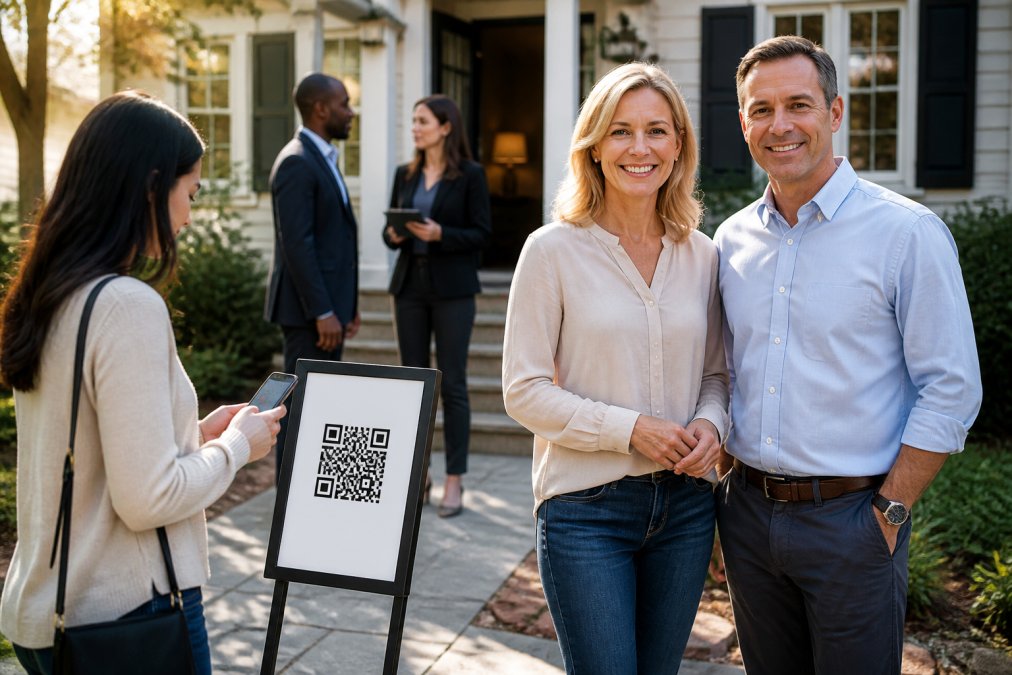
Table of Contents
- Before the Open House: What Sellers Actually Worry About
- Open House Visitor Management That Sellers Can Trust
- How to Present Open House Feedback to Sellers Without Overwhelming Them
- Agent Safety at Open Houses: Protecting Yourself and the Seller's Home
- Real Estate Automation That Proves Your Value After the Open House
- Common Mistakes Agents Make When Trying to Impress Sellers
- Mistake 1: Going Silent for a Week After the Event
- Mistake 2: Reporting Raw Lead Counts With No Context
- Mistake 3: Sharing Visitor Contact Details With the Homeowner
- Mistake 4: Skipping the Price Verdict
- Mistake 5: Overpromising on Traffic Before the Event
- Mistake 6: Treating the Open House as the Finish Line
- Conclusion: Turn Every Open House Into a Listing Presentation
- Frequently Asked Questions
Last Updated: September 13, 2026
Before the Open House: What Sellers Actually Worry About
Sellers do not lose sleep over flyers. They worry about whether you will protect their home, their privacy, and their time. This guide from ohACCESS covers how to impress sellers at open houses by treating the appointment as a listing presentation, not a traffic exercise.
The Three Questions Every Seller Asks Themselves
Before the first visitor arrives, most sellers are quietly running three questions:
- Will strangers wander through my house unsupervised?
- Will I hear anything back, or will this be three hours of silence?
- Is my agent actually working for me, or just collecting names?
Answer those well and you win the listing relationship for years.
Open House Visitor Management That Sellers Can Trust
Open house visitor management is the process of capturing, verifying, and organizing every person who walks through a listed property. Done well, it produces a clean lead list and a defensible record of who entered the home.
Paper sign-in sheets fail that test. Anyone can write "John Smith" and a disconnected number, opening the seller's home to an unverified stranger with nothing usable to follow up on.
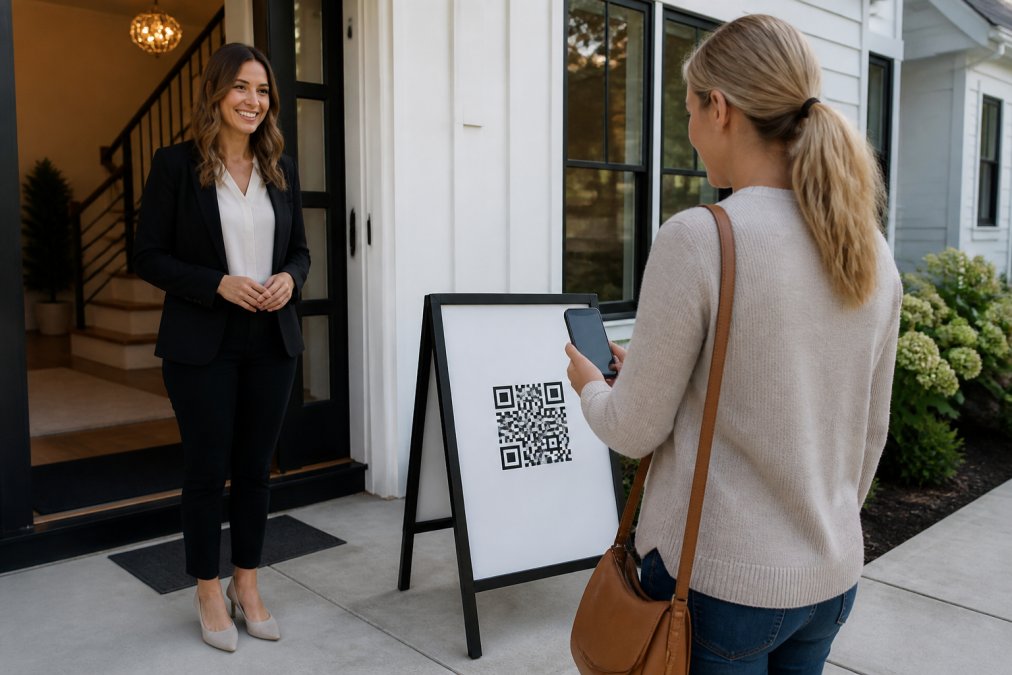
Verified digital check-in fixes this. With ohACCESS, a visitor scans a QR code at the door and fills a short form on their own phone: name, email, phone, and buying timeline. They instantly receive two codewords, one by text and one by email, and they tell one to you at the door. That proves the phone and email are real and theirs. You get an instant text and email alert for every sign-in.
Why Paper Sign-In Sheets Undermine Your Credibility
Handing a seller a smudged sheet of handwriting signals that the process was casual. Handing them a verified log signals that you run a professional operation.
The National Association of Realtors code of ethics sets expectations around honest dealing and protecting client interests. A verified visitor record supports both. It also gives you a forensic trail on every sign-in, including IP, device, and phone line type, which matters if anything goes wrong.
How to Present Open House Feedback to Sellers Without Overwhelming Them
Sellers want the truth about their price and their traffic, delivered in a form they can absorb in two minutes. Dumping raw visitor rows on them does the opposite.
Most agents overcorrect: they send nothing, or a wall of names and numbers the seller never asked for. The better approach is aggregate reporting.
The One-Tap Seller Report: Aggregate Data, Zero Privacy Risk
ohACCESS generates a one-tap Seller Report page you can share directly with the homeowner. It shows registered-visitor count, how many plan to buy within six months, the buying-timeline breakdown, a scan-to-registration funnel, the average 1-10 visitor rating, the price verdict (Too High, Reasonable, or Too Low), and aggregated answers to your custom questions.
What it excludes matters just as much: no visitor names, phone numbers, emails, arrival times, or per-visitor rows. Visitors consented to you holding their information, not the seller. That privacy design protects you from a liability conversation and gives the seller exactly the market feedback they need.
| Report Element | What the Seller Sees | What Stays Private |
|---|---|---|
| Visitor count | Total registered | Individual identities |
| Buying timeline | 0-3 / 3-6 / 6-12 / 12+ months | Names and contact details |
| Buyer sentiment | Average 1-10 rating | Who said what |
| Price verdict | Too High / Reasonable / Too Low | Per-visitor opinions |
| Custom questions | Aggregated answers | Individual responses |
Agent Safety at Open Houses: Protecting Yourself and the Seller's Home
Agent safety at open houses comes down to two jobs: knowing who is inside the home, and being able to prove it afterward. Sellers rarely say this out loud, but it sits underneath every other question they ask. They handed you the keys to their largest asset, and how you handle the front door tells them how you will handle the transaction.
Most safety advice is written for the agent alone, park in the street, tell someone where you are, keep your phone charged. That answers the wrong question. The seller is asking whether their home, belongings, and privacy are safe while strangers walk through it.
The Security Conversation to Have Before the First Sign Goes Up
Experienced listing agents run a short, structured walkthrough with the seller two or three days before the event, covering four things:
- Valuables and medications. Ask the seller to lock jewelry, firearms, prescription medication, cash, and small electronics in a safe or remove them. This is the single most common post-open-house complaint.
- Personal documents. Mail, bills, tax paperwork, and anything with a Social Security or account number should be out of sight.
- Prescription and identity items in bathrooms. Medicine cabinets are a classic target; ask the seller to empty anything sensitive.
- What stays and what goes. Confirm which closets, rooms, or outbuildings will be locked, and whether any room is off-limits entirely.
Write this list down and hand it to the seller. A written checklist reads as professionalism; a verbal reminder reads as an afterthought.
How Verified Check-In Changes the Liability Picture
Here is the part most agents never explain to a seller, and it is the part that wins the listing conversation.
With a paper sign-in sheet, anyone can write "John Smith" and a disconnected phone number. If something goes missing, you have a sheet of handwriting and no way to confirm a single entry is real, a liability exposure the seller did not agree to.
Verified digital check-in closes that gap. With ohACCESS, a visitor scans a QR code posted at the door and fills a short form on their own phone: name, email, phone, and buying timeline. The moment they submit, ohACCESS sends two codewords, one by text message and one by email, both, always, immediately. The visitor tells one codeword to you at the door to get in. Because the codeword arrived on a device the visitor controls, it proves the phone number and email they entered are real and theirs. Nothing is typed into an app or a screen; the codeword is simply spoken to the human host.
Every sign-in also carries a forensic trail, IP address, device information, and phone carrier and line type, so if anything goes wrong, you have a defensible record of who was in the home and when they registered. ohACCESS also flags VoIP and burner numbers, bounced emails, undeliverable texts, and STOP opt-outs automatically.
The On-Site Protocol That Protects Everyone
Verification handles the front door. The rest of the event still needs a protocol:
- Position yourself at the entry, not in the kitchen. You cannot verify a codeword from across the house.
- Walk the property at the midpoint and again at the end. Check that locked rooms are still locked and nothing has moved.
- Keep your phone on you, not on a counter. Alerts arrive by text and email for every sign-in.
- Check in with a colleague or your brokerage at set intervals. A text at the start, midpoint, and end creates an external record of the timeline.
- Never leave a visitor alone in the home while you step outside. This is the most common way valuables disappear.
What to Tell the Seller When They Ask About Privacy
Sellers sometimes worry a digital check-in system means their personal information is floating around. Address it directly: visitors register with you, not with the seller. The seller never sees visitor names, phone numbers, emails, or arrival times, only aggregate data. That separation is not a limitation; it is the reason the process is defensible. Visitors consented to you holding their information, not the homeowner.
Explain that distinction in one sentence and you have answered the seller's real question: Is my home being protected, and is my privacy being protected too?
Real Estate Automation That Proves Your Value After the Open House
Real estate automation is the use of software to handle repetitive tasks, like lead capture and delivery, so the agent can focus on relationships. The right automation shows the seller measurable proof of effort.
Here is where most agents lose the listing. They run a solid open house, then let the leads sit in a notebook for four days. By the time they follow up, the buyer has moved on, and the seller has no evidence anything happened.
ohACCESS delivers every sign-in into your CRM automatically as a formatted lead email, or through a Zapier webhook if you use a different stack. Team leads can forward every member's leads to a shared team CRM. Speed is the whole point: the seller's next question is always "what happened with those people," and automation means you can answer it the same day.
Common Mistakes Agents Make When Trying to Impress Sellers
Trying too hard backfires. Sellers read desperation, not diligence. But the mistakes that cost you the listing are quieter than most agents expect, communication failures, not effort failures.
Mistake 1: Going Silent for a Week After the Event
This is the mistake that ends listing relationships. The agent runs a solid open house, then lets the leads sit in a notebook for four days. By the time they follow up, the buyer has moved on, and the seller has no evidence anything happened. From the seller's side, silence reads as "nothing happened."
The fix is a communication cadence, not a bigger effort:
- Same evening: a short text or call to the seller with the headline number, how many registered, how many are actively looking, and one sentence on the general mood. No report yet, just the headline.
- Next morning: the full Seller Report, shared as a link the seller can open on their phone.
- Day three: a follow-up note on what you have done with the leads, who you called, who you texted, who asked for a second showing.
- Day seven: a status update on any offers, second showings, or price feedback trends.
Four short touches in a week. That cadence separates an agent who "ran an open house" from one who is "working the listing."
Mistake 2: Reporting Raw Lead Counts With No Context
"Twenty-two people came through" tells the seller nothing. Twenty-two unqualified lookers is a bad open house. Twenty-two registered visitors with fourteen planning to buy within six months is a strong one. Always pair the count with the buying-timeline breakdown and the price verdict. The number alone is noise.
Mistake 3: Sharing Visitor Contact Details With the Homeowner
This one feels helpful and is actually a liability. The seller did not ask for a list of names and phone numbers, and handing one over creates a privacy problem you did not need. Visitors consented to you holding their information, not the seller. Keep the report aggregate: registered-visitor count, buying-timeline breakdown, average 1-10 rating, price verdict, and aggregated answers to your custom questions. No names, phone numbers, emails, arrival times, or per-visitor rows.
That privacy design is a selling point, not a limitation. When a seller asks why they cannot see who came through, the answer is simple: the visitors agreed to share their information with your agent, not with you, and that same protection applies to you when you are the one selling.
Mistake 4: Skipping the Price Verdict
The data point sellers care about most is whether buyers think the home is priced right. If your report shows traffic and sentiment but no price verdict, you have skipped the headline. ohACCESS collects a Too High / Reasonable / Too Low verdict as part of After Tour feedback, put it at the top of the conversation, not the bottom.
Mistake 5: Overpromising on Traffic Before the Event
Telling a seller to expect "a huge turnout" sets you up to fail. A better pre-event conversation sets expectations around quality, not quantity: We are looking for a small number of serious buyers, not a crowd. Here is how I will verify who comes through, and here is what I will send you the next morning.
Mistake 6: Treating the Open House as the Finish Line
The open house is the middle of the listing relationship, not the end. The seller's next question is always "what happened with those people," and the answer should be ready the same day. ohACCESS delivers every sign-in into your CRM automatically as a formatted lead email, or through a Zapier webhook if you use a different stack, and team leads can forward every member's leads to a shared team CRM. Follow-up starts the moment the event ends, not four days later.
Conclusion: Turn Every Open House Into a Listing Presentation
Every open house is a chance to prove you are worth the commission, and most agents waste it on logistics instead of communication. Sellers want verified turnout, honest market feedback, and a report they can read in two minutes. ohACCESS gives you all three: verified QR-code check-in that confirms every phone and email, a one-tap seller report with aggregate data and zero privacy exposure, and automatic lead delivery into your CRM so nothing sits in a notebook. Start Free and turn your next open house into a listing presentation the seller will remember.
Frequently Asked Questions
How can I prove my value to a seller during an open house?
Show the seller concrete evidence of buyer interest. Use a verified visitor registration system that captures real names, phone numbers, and buying timelines, then share a same-day report with aggregate data: visitor count, how many plan to buy within six months, and average price sentiment. This proves you attracted qualified traffic, not just foot traffic. Sellers care about serious buyers, and verified data separates you from agents who only offer vague updates.
What data should I provide to sellers after an open house?
Provide aggregate metrics that respect visitor privacy: total registered visitors, buying-timeline breakdown, average home rating on a 1-10 scale, price verdict (Too High, Reasonable, or Too Low), and a scan-to-registration funnel showing how many people engaged. Never share visitor names, phone numbers, or arrival times. Sellers need to understand market sentiment and traffic volume, not individual identities. A one-tap report page makes this easy to deliver the same day.
How do I maintain professional security while hosting an open house?
Verify every visitor before they enter. Use a digital check-in system that sends a codeword to the visitor's phone and email, which they share with you at the door. This confirms their contact information is real and creates a forensic trail including IP address and device type. Keep your phone charged, position yourself near an exit, and never block a visitor's path. For seller peace of mind, explain that you maintain a verified log of everyone who toured the home.
What is the best way to handle visitor registration without paper sheets?
Use a QR-code check-in system where visitors scan a code at the door and fill out a short form on their own phone. The system instantly sends them two codewords, one by text and one by email, which they tell you at the door. This verifies their phone and email are real. You receive an instant alert with their details, and the lead is delivered automatically to your CRM. No app download is required for visitors.
Frequently asked questions
How can I prove my value to a seller during an open house?
Show the seller concrete evidence of buyer interest. Use a verified visitor registration system that captures real names, phone numbers, and buying timelines, then share a same-day report with aggregate data: visitor count, how many plan to buy within six months, and average price sentiment. This proves you attracted qualified traffic, not just foot traffic. Sellers care about serious buyers, and verified data separates you from agents who only offer vague updates.
What data should I provide to sellers after an open house?
Provide aggregate metrics that respect visitor privacy: total registered visitors, buying-timeline breakdown, average home rating on a 1-10 scale, price verdict (Too High, Reasonable, or Too Low), and a scan-to-registration funnel showing how many people engaged. Never share visitor names, phone numbers, or arrival times. Sellers need to understand market sentiment and traffic volume, not individual identities. A one-tap report page makes this easy to deliver the same day.
How do I maintain professional security while hosting an open house?
Verify every visitor before they enter. Use a digital check-in system that sends a codeword to the visitor's phone and email, which they share with you at the door. This confirms their contact information is real and creates a forensic trail including IP address and device type. Keep your phone charged, position yourself near an exit, and never block a visitor's path. For seller peace of mind, explain that you maintain a verified log of everyone who toured the home.
What is the best way to handle visitor registration without paper sheets?
Use a QR-code check-in system where visitors scan a code at the door and fill out a short form on their own phone. The system instantly sends them two codewords, one by text and one by email, which they tell you at the door. This verifies their phone and email are real. You receive an instant alert with their details, and the lead is delivered automatically to your CRM. No app download is required for visitors.
Keep reading
Start free with 25 verified check-ins. No credit card required.
Start Free