Open House Sign-In Solutions: 2026 Pricing & Features
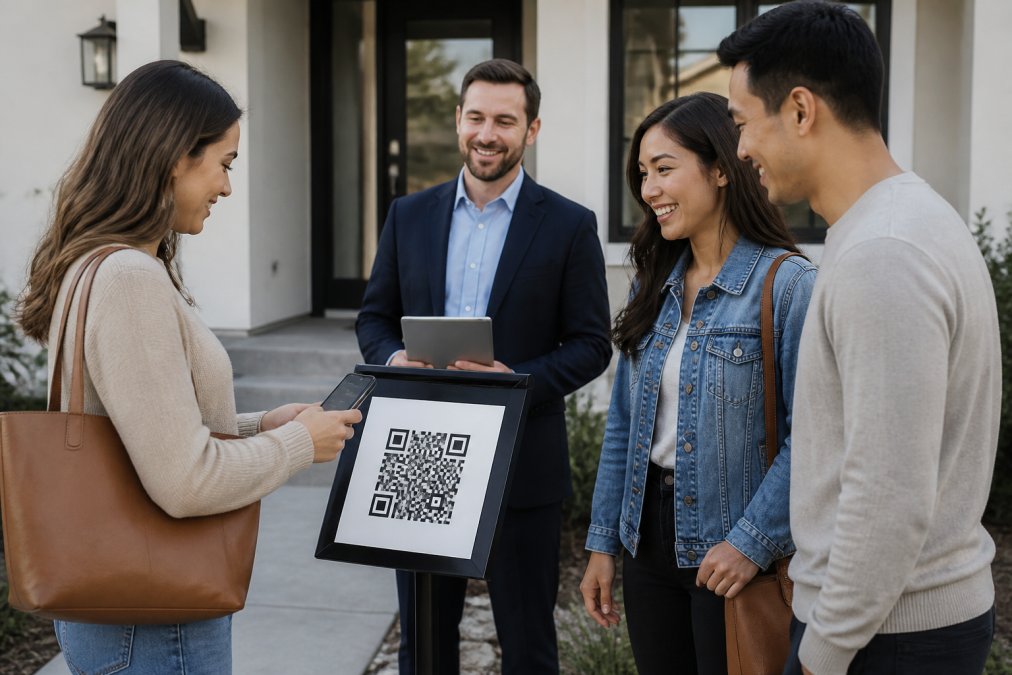
Table of Contents
- Why Open House Sign-In Tools Matter for Real Estate Agents
- Digital Open House Sign-In Sheet Fundamentals
- Pricing Models: What Solo Agents and Teams Actually Pay
- CRM Lead Intake for Real Estate: Integration and Automation
- Open House Visitor Privacy Standards and Compliance
- Best Open House Apps for Agents: Feature Comparison
- Making the Switch: Total Cost of Ownership and Migration
- Conclusion: Choosing the Right Open House Solution
- Frequently Asked Questions
Last Updated: September 1, 2026
Why Open House Sign-In Tools Matter for Real Estate Agents
Open house sign-in solutions have become essential infrastructure for real estate professionals. A visitor walks through the door, you capture their contact information, and moments later you know whether they're a serious buyer or just browsing. But here's what most agents miss: the quality of that data determines everything that comes next.
Paper sign-in sheets fail in obvious ways. Visitors write illegible names, fake phone numbers, or skip the form entirely. You're left with a pile of unusable leads and no way to follow up with the people who actually showed genuine interest. This guide from ohACCESS covers how modern digital open house sign-in solutions solve this problem, and what separates a tool that genuinely verifies visitor information from one that just collects it.
The best open house sign-in solutions eliminate fake entries at the door, deliver verified lead data directly into your CRM, and give you instant proof of turnout to show your sellers. Below, we'll compare the top platforms, break down what you'll actually pay, and show you exactly how to evaluate whether a switch makes sense for your workflow.
Digital Open House Sign-In Sheet Fundamentals
A digital open house sign-in sheet replaces the clipboard with a QR code visitors scan on their own phones. The visitor fills a short form, name, email, phone, and buying timeline, and instantly receives verification codewords by text and email. They tell one codeword to you at the door, which proves the phone number and email they entered are real and belong to them.
The verification flow works like this: visitor scans QR code → fills form on their phone → receives two codewords immediately (one text, one email) → tells a codeword to the agent → agent gets instant text and email alert with visitor details. The text codeword is primary; email is backup if the text is slow. Nothing is ever typed back into an app or system. Codewords are set per open house by the agent and don't expire on a timer.
This solves three critical problems at once. First, you eliminate fake entries because the visitor must have a real phone number and email to receive the codewords. Second, you get instant alerts so you know who walked through the door while the property is still showing. Third, the verified data flows directly into your workflow, no manual entry, no transcription errors, no spreadsheet chaos.
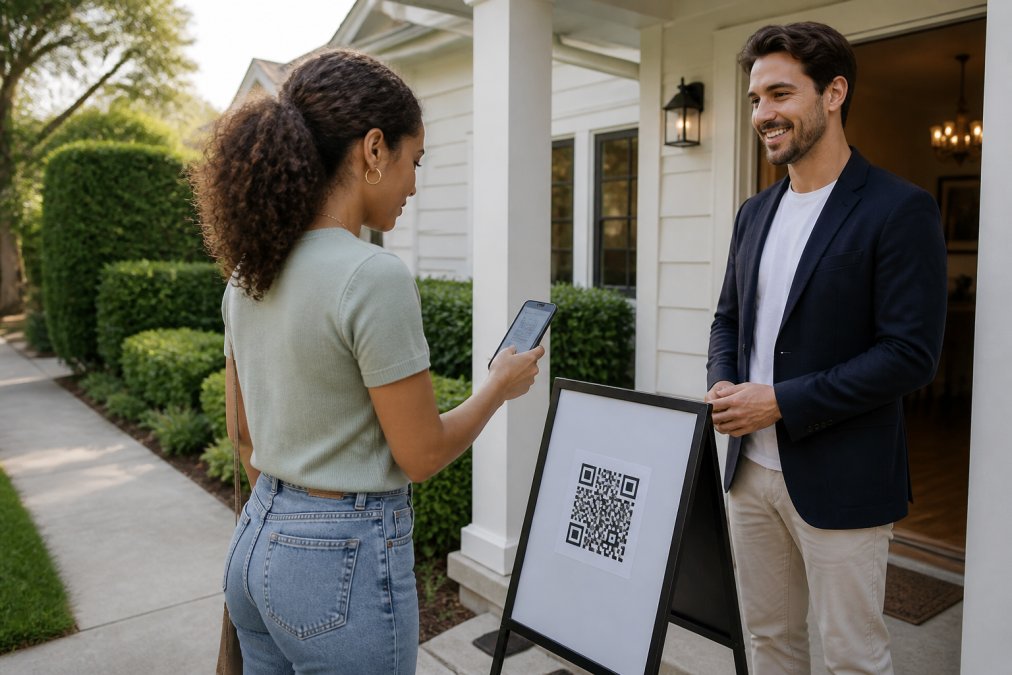
For agents managing multiple open houses per week, the time savings alone justify the switch. You're not typing names into a CRM at 10 p.m. You're not calling phone numbers that don't work. You're not wondering whether the person who seemed interested actually left their real contact info.
Pricing Models: What Solo Agents and Teams Actually Pay
Pricing for open house sign-in solutions breaks down into three tiers: free trials for testing, monthly subscriptions for solo agents, and flat team rates for brokerages.
ohACCESS offers a free trial of the first 25 visitor registrations, all features included, no credit card required. After you hit 25 sign-ins, the account locks until you subscribe. This is a free trial, not an ongoing free plan. For solo agents, the Pro plan runs $15 per month, with annual options at $150 per year or $240 for two years. If you're running 3-4 open houses per week, pricing stays flat, there are no volume discounts or usage-based charges. You pay the same whether you capture 50 visitors per month or 500.
Teams of 2-10 agents pay a flat $120 per month, regardless of how many open houses the team holds or how many visitors you register. Brokerages with 11-100 agents pay $11 per agent per month, self-serve. This flat-rate model means your costs are predictable. You don't wake up to a surprise bill because you held extra open houses in a hot market.
The pricing philosophy behind this matters. Many SaaS tools charge per user, per transaction, or per feature tier. That creates friction when you want to scale or experiment. Flat pricing removes that barrier. If you're a solo agent curious about whether this tool fits your workflow, the free trial lets you test it on 25 real visitors before spending a dollar.
| Plan | Monthly Cost | Annual Cost | Best For |
|---|---|---|---|
| Free Trial | Free | Free | Testing (25 sign-ins) |
| Pro (Solo) | $15 | $150 | Independent agents |
| Team (2-10) | $120/month flat | N/A | Small teams |
| Brokerage (11-100) | $11 per agent | N/A | Multi-agent offices |
CRM Lead Intake for Real Estate: Integration and Automation
The real value of a digital open house sign-in solution emerges when visitor data flows automatically into your CRM. Manual data entry kills the speed advantage. You need every verified sign-in to land in your Follow Up Boss, kvCORE, or whatever system you're using, instantly, without you typing a thing.
ohACCESS delivers leads into your CRM through three mechanisms. First, a formatted lead email goes to your CRM's lead-intake address, and the CRM parses it automatically into fields. This works with Follow Up Boss, BoldTrail/kvCORE, Lofty, Sierra Interactive, Real Geeks, CINC, Top Producer, Wise Agent, LionDesk, and others. Second, a Zapier webhook connects to thousands of apps if your CRM isn't on the native list. Third, team leads can forward every member's leads to a shared team CRM.
What this integration does NOT do matters as much as what it does. There's no native API sync, field mapping, automatic tagging, or lead scoring. The system sends every sign-in as a formatted lead; your CRM handles the rest. This is actually an advantage. You're not locked into one vendor's ecosystem. If you switch CRMs in two years, your open house sign-in tool still works.
The workflow looks like this: visitor submits form → agent gets instant text and email alert → lead email arrives in CRM inbox → CRM parses it automatically into your lead database → you follow up. No delays. No manual steps. No excuses for losing a hot lead because the data was stuck in a spreadsheet.
Open House Visitor Privacy Standards and Compliance
Visitors consent to share their contact information with you, the agent. They do not consent to share it with the seller, the listing broker, or the world. This distinction matters legally and ethically.
When you share a Seller Report with the homeowner, they see aggregate data only: how many visitors registered, the buying-timeline breakdown, how many plan to buy within 6 months, the average visitor rating of the home (1-10 scale), and the price verdict (Too High, Reasonable, Too Low). The report deliberately excludes visitor names, phone numbers, email addresses, arrival times, or any per-visitor details.
This privacy-first design is a selling point, not a limitation. Sellers get the proof of turnout they want. Visitors know their personal information stays with you. You avoid the liability of exposing PII to someone who didn't consent to receive it.
ohACCESS includes flags for VoIP numbers, burner phones, bounced emails, and undeliverable texts. If a visitor opts out of future contact (STOP), that opt-out is honored globally. The system maintains a forensic trail of every sign-in, IP address, device type, phone carrier, so you have documentation if questions arise later. Data is automatically purged after three years.
Best Open House Apps for Agents: Feature Comparison
The market for open house sign-in solutions has grown, but not all tools solve the same problem the same way. Here's how the leading options compare.
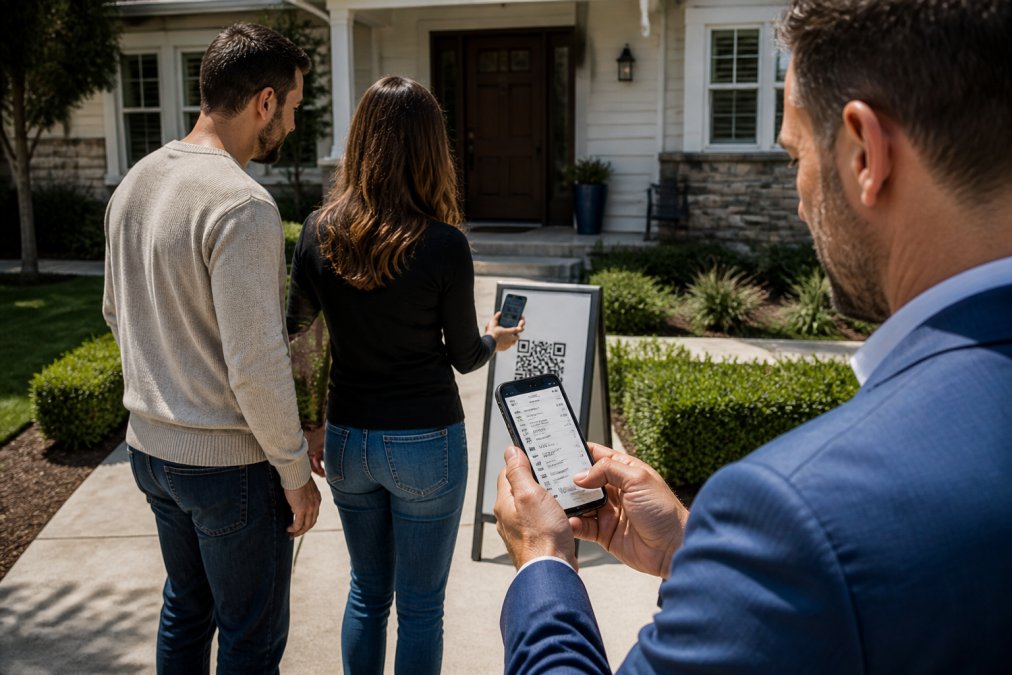
ohACCESS leads with verified QR-code check-in and two-way codeword verification (text + email). Visitors scan the code, fill a short form on their phone, and receive two codewords instantly, one by text, one by email. They tell a codeword to you at the door; nothing is entered into any app. The agent gets an instant text and email alert with the visitor's details. CRM integration happens automatically via formatted lead email or Zapier. The seller report is aggregate-only, protecting visitor privacy. The free trial covers 25 sign-ins, all features included. Pro pricing is $15/month for solo agents, $120/month flat for teams of 2-10 agents.
Other platforms in this space focus on different pain points. Some emphasize tablet-based check-in at the property. Others highlight demographic data collection or visitor flow tracking. Some bundle open house tools with broader CRM platforms. The trade-off is usually between simplicity and feature breadth. A tool that does one thing well, verify visitor contact info and deliver it to your CRM, wins for agents who just want clean leads. A platform that tries to do everything often does nothing exceptionally well.
The best choice depends on your workflow. If you're a solo agent holding 2-3 open houses per month and your CRM is already set up, a focused tool like ohACCESS handles the job. If you're managing a team of 15 agents across multiple offices and you need centralized reporting, you might need a broader platform. If you're comfortable with manual data entry and paper sheets, you're paying in time instead of money, which is a real cost, just not one you see on a monthly invoice.
Making the Switch: Total Cost of Ownership and Migration
Switching from paper sign-in sheets to a digital solution costs more than just the monthly subscription. There's setup time, training, potential CRM configuration, and the effort of moving your team to a new workflow.
Setup typically takes 15 minutes. You create an account, customize your QR code with your branding, print it on an a-frame sign or post it permanently on your website, and you're live. No IT involvement. No API keys or technical configuration. The free trial lets you test this with real visitors before committing.
Training is minimal. Visitors scan a QR code on their phone, they already know how to do that. Your job is to show them where the QR code is and tell them to fill out the form. Agents just need to know which codeword to listen for at the door and how to check the verified visitor log. That's a five-minute conversation.
The real cost is changing habit. If you've been using paper sheets for five years, the first two open houses with a new tool feel awkward. By the third open house, it's automatic. Most agents report the shift takes a week or two to feel natural.
The payoff compounds. Every verified lead that lands in your CRM is a lead you can actually follow up with. No dead phone numbers. No fake emails. No time spent typing data. Over a year, that adds up to dozens of hours saved and dozens of leads that would have been lost to bad data. That's the total cost of ownership: the small upfront effort to switch, offset by months of cleaner leads and faster follow-up.
Conclusion: Choosing the Right Open House Solution
The open house sign-in tool you choose should verify visitor contact information at the door, deliver that data directly into your CRM without manual entry, and protect visitor privacy when you report results to sellers.
ohACCESS does all three. Start with the free trial, 25 visitor registrations, all features included, no credit card required. Test it on your next open house. If clean, verified leads landing in your CRM in real time feel like a win, the Pro plan at $15/month pays for itself the first month you close a deal you would have lost to a fake phone number.
Frequently Asked Questions
How does a digital open house sign-in sheet verify visitor information?
Visitors scan a QR code at the property entrance and complete a short form on their own phone with name, email, phone number, and buying timeline. The system instantly sends two codewords, one via text and one via email, to prove both channels are real and belong to that person. The visitor shares a codeword with the host agent at the door to enter. This verification prevents fake names, invalid emails, and burner phone numbers from cluttering your lead database.
What's the difference between a free trial and a free plan for open house apps?
A free trial gives you full access to all features for a limited number of sign-ins, then requires a subscription. A free plan offers basic features indefinitely with no time limit. ohACCESS offers a free trial covering the first 25 visitor registrations with every feature included and no credit card required. After 25 sign-ins, your account locks until you subscribe. This is different from an ongoing free tier.
How do CRM lead intake systems work with open house sign-in apps?
When a visitor completes the sign-in form, their information is automatically delivered to your CRM through formatted lead emails sent to your CRM's intake address or via Zapier webhooks that connect to thousands of apps. The CRM parses the data into the correct fields automatically. This eliminates manual data entry and ensures every qualified lead reaches your follow-up system immediately, keeping your workflow seamless.
What open house visitor privacy standards should I look for?
Look for tools that collect only essential information (name, contact details, buying timeline) and honor visitor consent carefully. Verify the platform has attorney-reviewed privacy policies, handles opt-outs globally, and never shares visitor contact details with sellers without explicit consent. Seller reports should show only aggregate data, visitor counts, timeline breakdowns, and ratings, never individual names, phone numbers, or arrival times. This protects your visitors and reduces your liability.
This article was written using GrandRanker
Frequently asked questions
How does a digital open house sign-in sheet verify visitor information?
Visitors scan a QR code at the property entrance and complete a short form on their own phone with name, email, phone number, and buying timeline. The system instantly sends two codewords—one via text and one via email—to prove both channels are real and belong to that person. The visitor shares a codeword with the host agent at the door to enter. This verification prevents fake names, invalid emails, and burner phone numbers from cluttering your lead database.
What's the difference between a free trial and a free plan for open house apps?
A free trial gives you full access to all features for a limited number of sign-ins, then requires a subscription. A free plan offers basic features indefinitely with no time limit. ohACCESS offers a free trial covering the first 25 visitor registrations with every feature included and no credit card required. After 25 sign-ins, your account locks until you subscribe. This is different from an ongoing free tier.
How do CRM lead intake systems work with open house sign-in apps?
When a visitor completes the sign-in form, their information is automatically delivered to your CRM through formatted lead emails sent to your CRM's intake address or via Zapier webhooks that connect to thousands of apps. The CRM parses the data into the correct fields automatically. This eliminates manual data entry and ensures every qualified lead reaches your follow-up system immediately, keeping your workflow seamless.
What open house visitor privacy standards should I look for?
Look for tools that collect only essential information (name, contact details, buying timeline) and honor visitor consent carefully. Verify the platform has attorney-reviewed privacy policies, handles opt-outs globally, and never shares visitor contact details with sellers without explicit consent. Seller reports should show only aggregate data—visitor counts, timeline breakdowns, and ratings—never individual names, phone numbers, or arrival times. This protects your visitors and reduces your liability.
Start free with 25 verified check-ins. No credit card required.
Start Free