Free vs. Paid Open House Apps: Which Fits Your Business

Table of Contents
- Why Free vs. Paid Open House Apps Matter
- Understanding Free Trial vs. Free Plan Models
- Digital Open House Sign-In Sheet: Free Options and Limitations
- CRM Integration for Realtors: What You Actually Get
- Best Practices for Open House Follow-Up: Free vs. Paid Workflows
- Open House Sign-In Templates and Customization
- ROI and Pricing: When Paid Apps Pay for Themselves
- Conclusion
- Frequently Asked Questions
Last Updated: August 30, 2026
Why Free vs. Paid Open House Apps Matter
Paper sign-in sheets don't verify anything. A visitor writes "John Smith" and a number they half-remember, and you're left with unusable data. A digital open house sign-in sheet replaces paper with a mobile-first form: visitors scan a QR code, fill out their information on their own phone, and you get instant verification that the phone number and email are real.
The choice between free and paid open house apps isn't just about cost. It's about whether you're solving the core problem, getting qualified, verified leads into your CRM fast, or managing a tool that adds friction to your workflow. Some free options work for low-volume agents. Others lock you out after a trial period. Paid solutions scale differently depending on whether you're a solo agent or managing a team.
This guide breaks down what you actually get with each tier and when the investment in a paid app pays for itself through better lead quality and faster follow-up.
Understanding Free Trial vs. Free Plan Models
Not all "free" offerings are the same. The distinction between a free trial and a free plan matters.
A free trial is time-limited or registration-limited access to the full feature set. Once the limit expires, you must subscribe to keep using the tool. ohACCESS offers a free trial covering the first 25 visitor registrations across all features, no credit card required. After those 25 sign-ins, your account locks until you choose a paid plan.
A free plan is an ongoing tier with permanent free access, usually with reduced features or capacity limits. Some real estate apps offer free plans that stay active indefinitely, though they cap the number of contacts, open houses per month, or CRM integrations available.
The strategic difference: free trials let you test whether the tool solves your problem before asking for money. Free plans hook you with limited functionality, hoping you'll upgrade when you hit the ceiling. For most independent agents, a free trial is more honest. You get 25 registrations to see if the workflow fits. If it does, you subscribe. If not, you've lost nothing.
Digital Open House Sign-In Sheet: Free Options and Limitations
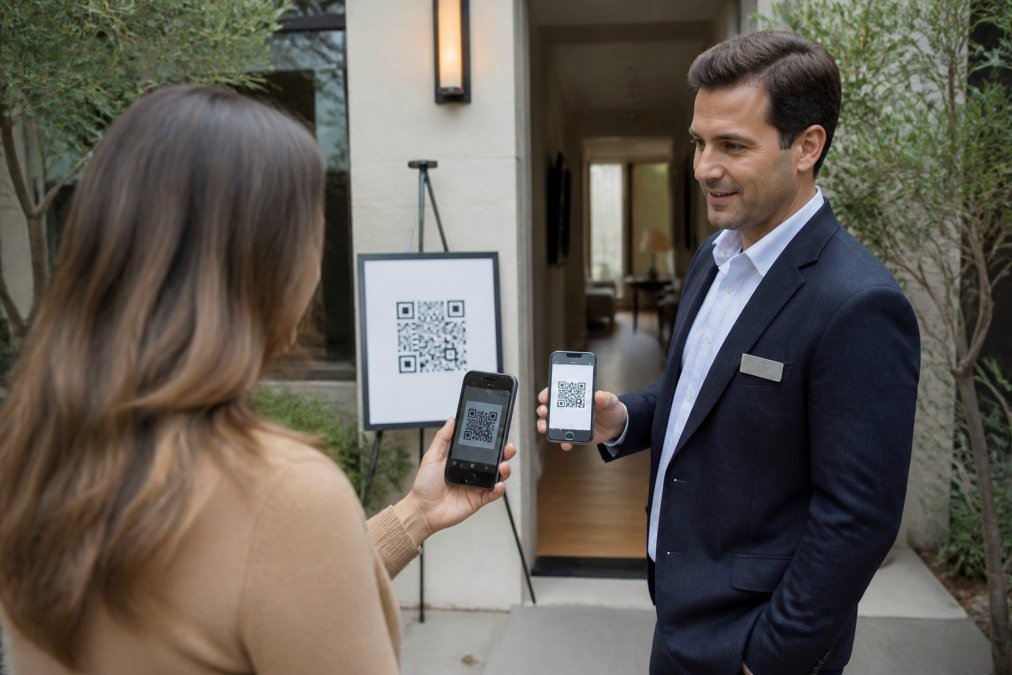
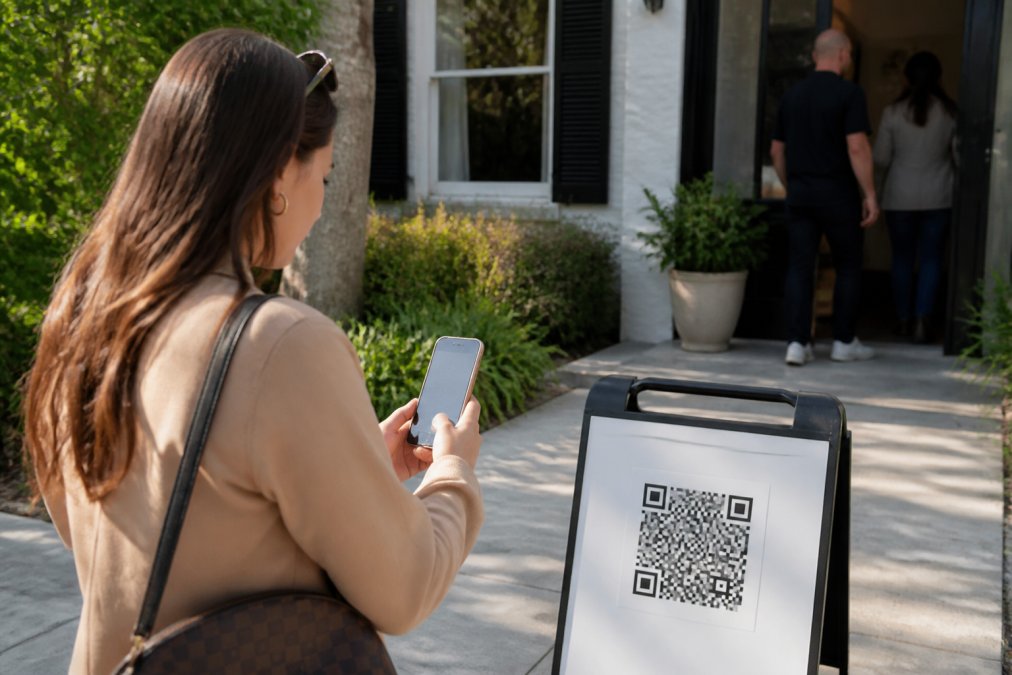
A digital open house sign-in sheet replaces paper with a mobile-first form. Visitors scan a QR code at your property's entrance, fill out their information on their own phone, and you get an instant notification. No clipboard. No illegible handwriting. No fake numbers.
Free versions typically work like this: visitors complete the form, their data lands in a basic contact list or spreadsheet export, and you handle follow-up manually. There's no verification step, no CRM sync, and no automated seller reporting.
The limitations show up quickly. Free tools often don't verify phone numbers or emails. A visitor can enter a burner number or a typo, and you won't know until you try to call them days later. Free sign-in sheets also rarely integrate with your CRM automatically. You're exporting a CSV file and manually importing it, or re-typing contact information. For agents doing one or two open houses per month, this friction is tolerable. For anyone doing more, it becomes a time sink.
Free tools also lack visitor verification. When someone fills out a form on their phone, there's no proof they actually own that phone number or email. Paid solutions add a verification step: after the visitor submits their information, they receive two codewords, one by text message and one by email, which they share with you at the door. That codeword proves they control both channels. It eliminates a huge category of fake leads.
Another gap in free tools: seller reporting. Many free sign-in sheets give you the raw data and nothing else. Creating a report for the home seller, showing how many people registered, their buying timeline, and their price feedback, requires manual work. Paid tools often generate one-tap seller reports with aggregate data, visitor count, timeline breakdown, price verdict, which you can share immediately after the open house. Sellers see proof of buyer interest without seeing individual visitor contact information.
The free option works if you're willing to accept incomplete data, manual CRM entry, and extra admin time. Most agents find the trade-off stops being acceptable around three or four open houses per month.
CRM Integration for Realtors: What You Actually Get
Your CRM is your source of truth for leads and follow-up. If your open house sign-in tool doesn't feed data into it automatically, you're creating extra work and losing speed.
Free tools rarely offer CRM integration. You export a CSV or manually copy contact details into your CRM. This process introduces errors, delays follow-up, and gives you no way to track which leads came from which open house.
Paid tools deliver leads into your CRM automatically through formatted lead emails sent to your CRM's intake address, Zapier webhooks that connect to thousands of apps, or team CRM forwarding. When a visitor completes your sign-in form, their data arrives in your CRM within seconds, ready for follow-up. The major real estate CRMs, Follow Up Boss, kvCORE, Lofty, Sierra Interactive, Real Geeks, CINC, Top Producer, Wise Agent, LionDesk, are supported.
The value isn't just speed. Automatic integration ensures data consistency. There's no chance of typos or missing fields. Every lead has the same structure: name, phone, email, buying timeline, and any custom questions you added. Your CRM can immediately segment leads by timeline and run reports showing which open houses generated the most qualified leads.
Manual CRM entry also creates liability. Every time you type a phone number, you risk entering it wrong. A transposed digit means a lead you can't reach. Automatic integration eliminates that risk.
For solo agents, this matters less if you're doing one open house per month. For agents doing multiple open houses weekly, or for brokers managing teams, automatic CRM integration stops being a nice-to-have and becomes essential. It's the difference between spending two hours per week on data entry and spending ten minutes on follow-up strategy.
Best Practices for Open House Follow-Up: Free vs. Paid Workflows
How fast you follow up with an open house lead determines whether you close the deal. Agents who contact a lead within 24 hours have significantly higher conversion rates than those who wait a week. The tool you choose either enables fast follow-up or makes it harder.
Free sign-in tools create friction. You collect data on Saturday at an open house. You spend Sunday entering it into your CRM. You start calling on Monday. By then, the lead has already been contacted by two other agents.
Paid tools collapse this timeline. A visitor completes the sign-in form at your open house. Within seconds, their information is in your CRM and you've received a text alert with their name and phone number. You can call them from the property or send an immediate text: "Thanks for coming by the open house. I'll send you the listing details and some comparable homes in the area."
The follow-up workflow also depends on what information you capture. Free tools often collect only name, phone, and email. Paid tools let you ask custom questions: "What's your timeline for buying?" or "What's most important in your next home?" These answers let you segment leads and personalize follow-up.
Automation matters too. Free tools don't offer automated follow-up sequences. Paid tools integrate with your CRM, which can send automated sequences: a thank-you email the next morning, a listing comparison three days later, a market update two weeks after the open house. You set these up once and they run automatically for every open house.
For solo agents, the free approach works if you're disciplined about same-day follow-up. For teams or high-volume agents, paid tools are almost mandatory. The automation and speed compound over time.
Open House Sign-In Templates and Customization
The form visitors fill out shapes the quality of data you collect. Free tools usually offer a fixed form: name, phone, email, maybe a buying timeline. You get what they give you.
Paid tools let you customize the form. You can add one custom question specific to your market or your listings. A luxury agent might ask, "What's your budget?" A first-time buyer agent might ask, "Is this your first home purchase?" These answers give you context for follow-up and help you segment leads immediately.
Customization also extends to branding. Free tools show a generic form with their logo. Paid tools let you add your branding, your brokerage name, and your logo. Visitors see your brand throughout the experience, which reinforces professionalism and builds trust.
The form's language matters for international markets. ohACCESS offers its sign-in form in 16 languages. If you're working in a diverse market, visitors can complete the form in their preferred language. They're more likely to provide accurate information, and you get better data.
ROI and Pricing: When Paid Apps Pay for Themselves
The ROI calculation for open house apps is straightforward: Does the tool generate enough extra qualified leads or save enough time to justify its cost?
Free tools cost nothing upfront but require manual work. An agent doing four open houses per month spends roughly two hours per open house on data entry, CRM import, and manual follow-up setup. That's eight hours per month, or roughly 96 hours per year. Free tools also produce lower-quality data because there's no verification step. Some leads are fake or incomplete, which wastes follow-up time.
Paid tools save time and improve lead quality. If the tool saves just two hours per month in data entry and follow-up setup, it pays for itself quickly. If it also improves lead quality by eliminating 10-15% of fake leads, the ROI improves further.
For teams, the math is even clearer. A team of five agents doing three open houses per week collectively spends 30 hours per month on manual data entry. A paid team tool saves that time and ensures data consistency across the team. It also creates accountability: every team member is following the same process, using the same CRM integration, and sending the same follow-up sequences.
The real ROI comes from faster follow-up and better lead quality. An agent who contacts a lead within 24 hours closes more deals than one who waits a week. An agent who knows a lead is serious because they were verified at the door prioritizes them differently than one who suspects the lead might be fake. Over a year, these advantages compound.
For independent agents doing fewer than two open houses per month, a free tool might be sufficient. For anyone doing more than that, a paid tool typically pays for itself within the first month through time savings alone.
| Scenario | Free Tool | Paid Tool (Solo) | Paid Tool (Team) |
|---|---|---|---|
| Monthly cost | $0 | Pricing depends on quantity, dates, and delivery | Pricing depends on quantity, dates, and delivery |
| Data entry time per open house | 1.5 hours | 5 minutes | 5 minutes |
| CRM integration | Manual CSV export | Automatic | Automatic |
| Lead verification | No | Yes | Yes |
| Seller reporting | No | Yes | Yes |
| Best for | 1-2 open houses/month | 3+ open houses/month | 5+ agents |
Conclusion
The choice between free and paid open house apps isn't really about price. It's about whether you're willing to trade time and lead quality for zero upfront cost. Free tools work for agents running occasional open houses who don't mind manual data entry and can live with unverified leads. Paid tools work for anyone who wants verified leads in their CRM within seconds and automated follow-up sequences that run without manual work.
For most agents, a paid tool pays for itself within the first month through time savings alone. The faster follow-up and better lead quality, proof that a lead is real because they were verified at the door, compounds over time.
ohACCESS starts with a free trial covering 25 visitor registrations, all features included, no credit card required. You can test whether verified digital sign-in improves your open house workflow before committing to a paid plan. Pricing for Pro plans and Team plans depends on quantity, dates, and delivery. Visit the ohACCESS website for current pricing or a quote.
Frequently Asked Questions
Q: What's the difference between a free trial and a free plan for open house apps?
A: A free trial gives you full access to features for a limited time or number of registrations before you must subscribe. A free plan is ongoing but may have restricted features or visitor limits. When evaluating open house apps, check whether the free option is a trial (temporary) or a permanent tier. This affects whether you can test the app long-term without committing to paid features.
Q: How does CRM integration for realtors improve lead quality?
A: CRM integration for realtors automatically delivers verified visitor data directly into your contact management system, eliminating manual data entry and transcription errors. When leads flow automatically from your open house app into your CRM, you spend less time on admin work and more time on follow-up. This faster handoff means warmer leads and higher conversion rates, especially for agents managing multiple open houses per week.
Q: Do free open house apps capture verified contact information?
A: Most free open house apps rely on self-reported data without verification, which means you risk collecting fake names, invalid phone numbers, and bounced emails. Paid apps often include verification mechanisms, such as requiring visitors to confirm their phone number and email through a two-step process, to ensure lead quality. Verification is especially important if you're collecting data at the door and need confidence in follow-up accuracy.
Q: What should I look for in open house sign-in templates?
A: Look for customizable templates that capture buying timeline, budget range, and specific property interests without overwhelming visitors with too many questions. The best templates are mobile-friendly (since visitors fill them on their phones), support multiple languages if you serve diverse markets, and integrate directly with your CRM. Templates that allow you to add one or two custom questions let you gather intelligence specific to your market or property type.
The real question isn't whether to use a paid or free open house app, it's whether you're ready to stop leaving verified leads on the table. Start your free trial with ohACCESS and see how verified QR-code check-in eliminates fake contact information and gets qualified leads into your CRM in seconds.
This article was written using GrandRanker
Frequently asked questions
Q: What's the difference between a free trial and a free plan for open house apps?
A: A free trial gives you full access to features for a limited time or number of registrations before you must subscribe. A free plan is ongoing but may have restricted features or visitor limits. When evaluating open house apps, check whether the free option is a trial (temporary) or a permanent tier. This affects whether you can test the app long-term without committing to paid features.
Q: How does CRM integration for realtors improve lead quality?
A: CRM integration for realtors automatically delivers verified visitor data directly into your contact management system, eliminating manual data entry and transcription errors. When leads flow automatically from your open house app into your CRM, you spend less time on admin work and more time on follow-up. This faster handoff means warmer leads and higher conversion rates, especially for agents managing multiple open houses per week.
Q: Do free open house apps capture verified contact information?
A: Most free open house apps rely on self-reported data without verification, which means you risk collecting fake names, invalid phone numbers, and bounced emails. Paid apps often include verification mechanisms—such as requiring visitors to confirm their phone number and email through a two-step process—to ensure lead quality. Verification is especially important if you're collecting data at the door and need confidence in follow-up accuracy.
Q: What should I look for in open house sign-in templates?
A: Look for customizable templates that capture buying timeline, budget range, and specific property interests without overwhelming visitors with too many questions. The best templates are mobile-friendly (since visitors fill them on their phones), support multiple languages if you serve diverse markets, and integrate directly with your CRM. Templates that allow you to add one or two custom questions let you gather intelligence specific to your market or property type.
Keep reading
Start free with 25 verified check-ins — no credit card required.
Start Free