Digital Sign-In Sheets for Realtors: 2026 Guide
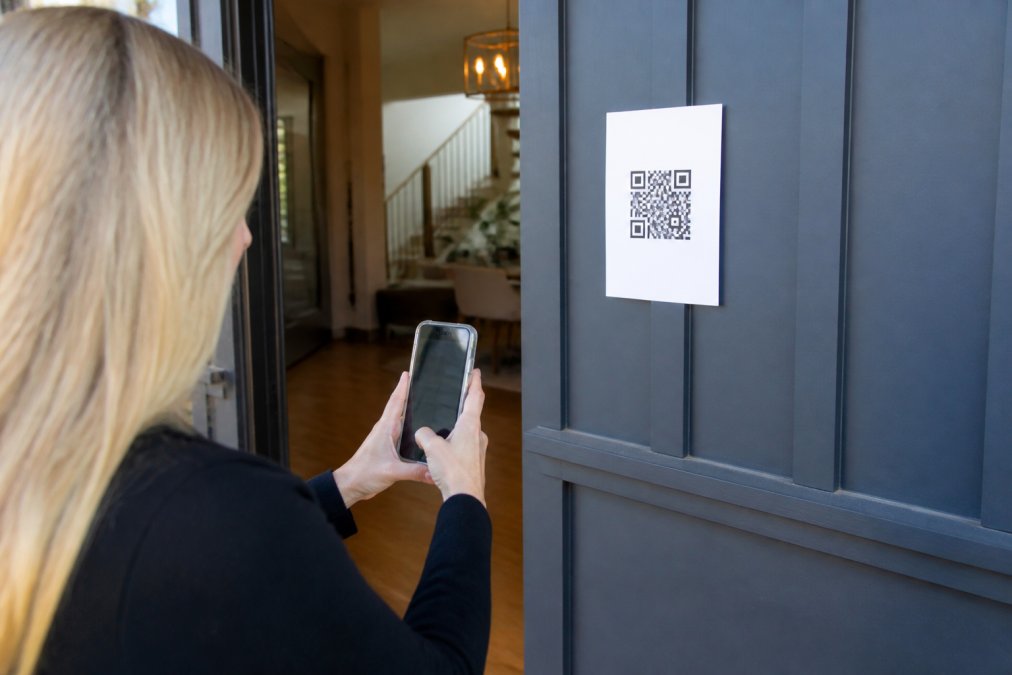
Table of Contents
- Why Digital Sign-In Sheets Beat Paper for Open Houses
- How to Verify Open House Visitor Information
- Top Digital Sign-In Sheets for Real Estate Agents
- Open House Lead Capture Software: Feature Comparison
- Best Practices for Open House Follow-Up
- Real Estate Open House Sign-In Template Setup
- Converting Open House Visitors Into Clients
- Conclusion
Last Updated: August 22, 2026
Why Digital Sign-In Sheets Beat Paper for Open Houses
Paper sign-in sheets have been the standard at open houses for decades, but they come with a critical problem: fake information. A visitor can write "John Smith" and "555-0000" without consequence. Digital sign-in sheets solve this by requiring verification before entry, ensuring every lead you capture is legitimate and ready for immediate follow-up.
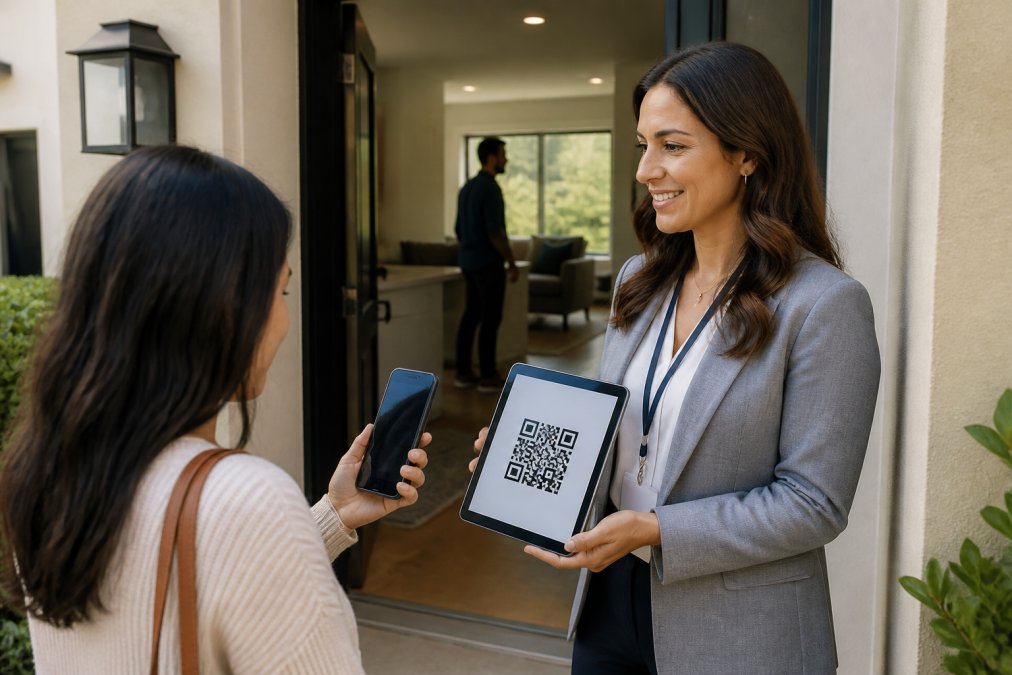
When visitors know they must provide real contact information to access a property, serious buyers proceed without hesitation while individuals with bad intentions move on. This natural filter protects agents from time-wasters and reduces fake leads cluttering your CRM.
Digital sign-in sheets also eliminate manual data entry. Paper sheets require agents to manually type visitor information into their CRM, a tedious, error-prone process that delays follow-up. Digital solutions sync visitor data automatically, so your team can begin nurturing leads within minutes of the open house ending.
How to Verify Open House Visitor Information
The most effective verification systems use a two-step process: the visitor scans a QR code at the property entrance, completes a form with their phone number and email, and then receives a one-time codeword via text or email. They enter that codeword to proceed inside. If the phone number or email is invalid, the codeword never arrives, and neither does the visitor.
This approach confirms the contact information is real and reachable, creates a record of when the visitor arrived, deters bad actors, and gives agents an instant notification that a qualified visitor has entered. Some platforms offer alternative verification methods like text-based registration for visitors without smartphones, but every method still requires real, verifiable contact information before granting access.
The verification data itself becomes valuable. Agents can see which visitors spent the most time at the property, which features they asked about, and whether they expressed serious interest. This context helps prioritize follow-up efforts and tailor messaging to each visitor's needs.
Top Digital Sign-In Sheets for Real Estate Agents
1. ohACCESS: Verified QR Code Check-In with Instant CRM Sync
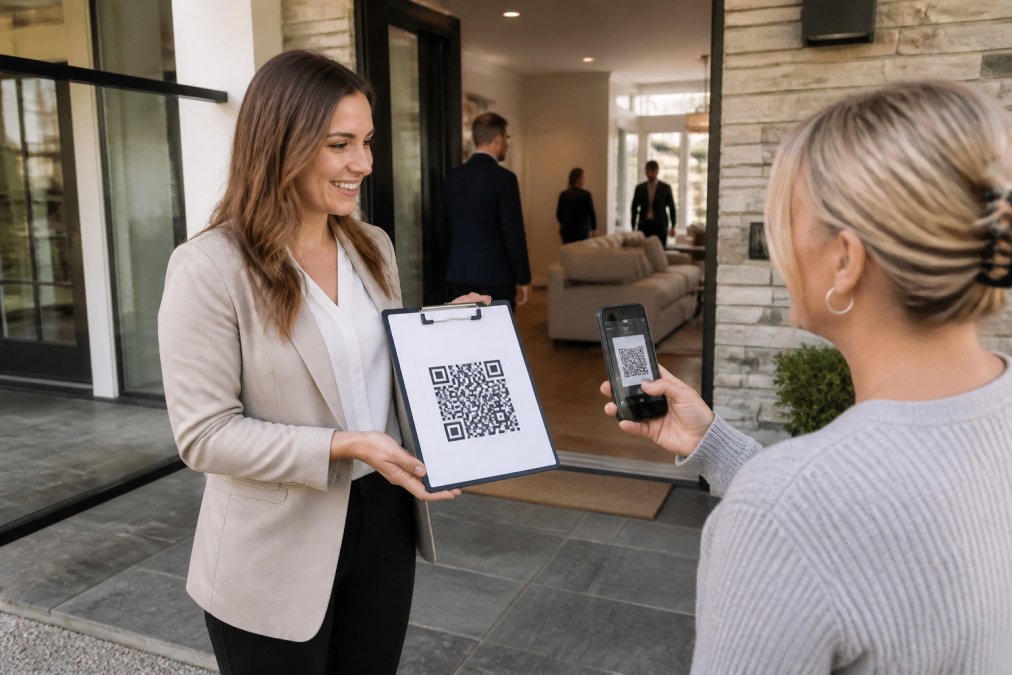
ohACCESS solves the core problem that paper sign-in sheets create: fake contact information. What sets ohACCESS apart from other digital open house sign-in platforms is that we send visitors a codeword to gain access to the property, so it requires that they enter in legitimate contact information in order to receive the codeword. They scan a QR code outside the property first. The agent gets instantly notified with the visitors details when the contact form is submitted. All data syncs directly to their CRM without manual entry.
The standout feature is the codeword verification process itself. Visitors can't bypass it, can't fake their way through, and can't enter the property without providing real contact information. For agents concerned about lead quality and personal safety, this is a game-changer. The one-tap seller report generation means agents can share open house performance and buyer interest with homeowners immediately after the event.
Best for: Agents prioritizing lead quality and verification, teams managing multiple open houses per week, brokerages needing standardized lead capture across their agents.
Pros:
- Verified contact information eliminates fake leads
- Instant CRM synchronization removes manual data entry
- Real-time agent notifications when visitors check in
- One-tap reports for homeowners demonstrating open house value
- Free plan available to test the system
Cons:
- Requires visitors to complete a verification step, which adds a few seconds to entry
- Some older visitors or those uncomfortable with technology may need guidance
2. Curb Hero: Free, Branded, and Automated
Curb Hero removes barriers to entry for solo agents. The platform is completely free for individual agents, offers branded templates, and handles automated follow-up emails without requiring integration setup. Visitors scan a QR code, enter their information, and Curb Hero automatically sends follow-up emails on a schedule you set.
Best for: Solo agents, new agents testing digital sign-in for the first time, teams on tight budgets.
Pros:
- Completely free for individual agents
- Branded templates for professional appearance
- Automated follow-up emails save time
- QR code setup is straightforward
- Mobile app available for iOS and Android
Cons:
- May have limitations for team-based operations
- CRM integration might require manual setup
- Free tier doesn't include some advanced features
3. Happy Open House: Flexible Plans for Teams and Solo Agents
Happy Open House balances simplicity with scalability. Solo agents can start on a basic plan, while teams and brokerages can add custom branding, advanced analytics, and multi-agent management. The platform supports unlimited properties and open houses on all plans.
Best for: Growing teams, agents running frequent open houses, brokerages needing standardized sign-in across multiple offices.
Pros:
- Flexible pricing tiers for solo agents and teams
- Unlimited properties and open houses on all plans
- Custom form questions allow deeper lead qualification
- Supports iOS, Android, and web-based access
- 14-day free trial to test before committing
Cons:
- Advanced features like custom email branding are limited to higher tiers
4. Open House Wizard: Lead Scoring and Advanced Analytics
Open House Wizard stands out for its lead scoring capability. After each open house, the platform automatically scores leads based on visitor behavior, time spent at the property, features asked about, and expressed interest. This scoring helps agents prioritize follow-up efforts on the most promising prospects.
The platform offers multiple sign-in methods: QR code, text-based registration, and web forms. The reporting dashboard provides detailed analytics on open house performance, visitor demographics, and conversion metrics.
Best for: High-volume agents, teams focused on lead qualification, agents who want data-driven prioritization of follow-up.
Pros:
- Lead scoring identifies hot prospects automatically
- Multiple sign-in methods accommodate different visitor preferences
- Detailed reporting dashboard tracks open house performance
- Team support and co-hosting capabilities
- Annual billing option reduces per-month cost
Cons:
- Annual billing is the primary pricing model
- Feature set may feel overwhelming for agents needing basic sign-in
5. kvCORE Open House App: Seamless CRM Integration
kvCORE Open House App is built specifically for agents already using the kvCORE CRM. Visitor information syncs directly to your CRM, and the platform triggers automated search alerts and nurture campaigns based on visitor profile data. The app works offline, caching visitor data locally and syncing to the cloud when connection is restored.
Best for: kvCORE CRM users, teams prioritizing deep CRM integration, agents wanting automated nurture workflows triggered by open house visitors.
Pros:
- Seamless integration with kvCORE CRM eliminates data silos
- Automated search alerts and nurture campaigns save time
- Offline functionality ensures lead capture even without internet
- Customizable form questions match your qualification criteria
Cons:
- Requires a kvCORE subscription
- Not a standalone product
Open House Lead Capture Software: Feature Comparison
| Feature | ohACCESS | Curb Hero | Happy Open House | Open House Wizard | kvCORE App |
|---|---|---|---|---|---|
| Verification Method | QR + codeword | QR code | QR code | QR + text | QR code |
| Lead Quality | Verified contact info | Standard capture | Standard capture | Scored leads | CRM-integrated |
| Free Tier | Yes | Yes (full) | 14-day trial | Limited free | No |
| CRM Sync | Automatic | Manual setup | Integrations | Dashboard export | Automatic |
| Best For | Lead verification | Budget-conscious | Scalable teams | Lead prioritization | kvCORE users |
Best Practices for Open House Follow-Up
Speed is your first advantage. Visitors who hear from an agent within the first hour are dramatically more likely to respond than those contacted the next day (nar.realtor). Digital sign-in sheets give you the data immediately, so begin follow-up while the open house is still happening or within 30 minutes of it ending.
Personalization is your second advantage. Because digital systems capture which features each visitor asked about, which rooms they spent time in, and whether they expressed serious interest, you can tailor your follow-up message to their specific interests. A personalized message referencing specific details gets responses; generic emails get ignored.
Segmentation matters. Not every visitor is the same. Serious buyers get priority follow-up and detailed property information. Curious visitors get general market updates and your contact information for future reference. Investors get messaging focused on market trends and investment opportunities.
Real Estate Open House Sign-In Template Setup
Essential Data Fields to Collect
The fields you collect should balance lead qualification with visitor friction. The essential fields are phone number, email address, and full name. These three give you a way to contact the visitor and identify them in your CRM.
Beyond essentials, consider adding fields that help you qualify and segment leads: Are they currently looking to buy or just browsing? What's their timeline? What's their price range? Do they have an agent already? Keep optional fields truly optional so visitors can proceed without completing them.
CRM Integration and Data Synchronization
Your digital sign-in sheet is only valuable if the data reaches your CRM automatically. Manual data entry defeats the purpose. When evaluating a platform, confirm that it integrates with your specific CRM and that syncing is automatic, not manual.
Most platforms support major CRMs like HubSpot, Salesforce, and Pipedrive. Check the integration list before committing. Test the integration in a sandbox environment before relying on it for a live open house.
Privacy and Compliance Considerations
Collecting phone numbers and email addresses from visitors creates a legal responsibility to protect that data. Familiarize yourself with relevant regulations like the CAN-SPAM Act and state-level privacy laws that may apply to your market (the FTC).
Your digital sign-in platform should have documented security practices. Confirm that data is encrypted in transit and at rest, that access is restricted to authorized users, and that the platform has a data retention policy. Include a privacy notice in your sign-in form that explains how you'll use the visitor's contact information.
Converting Open House Visitors Into Clients
The goal of a digital sign-in sheet is not just to capture leads, it's to convert those leads into clients. This requires a follow-up strategy that goes beyond a single email. After the initial contact, stay in touch with regular market updates, new listings that match the visitor's criteria, and valuable content.
Segment your follow-up by visitor type. Serious buyers warrant more frequent contact and personalized property recommendations. Casual visitors might receive monthly market updates. Investors get messaging focused on market trends.
Use your open house data to build trust. When you follow up, reference specific details from your conversation. This specificity signals that you were paying attention and thinking about their needs.
Track which follow-up tactics work. Did email get better response than phone? Did personalized messages outperform generic ones? Use these insights to refine your approach over time.
Converting open house visitors into long-term clients requires capturing accurate data, following up quickly with personalized messaging, and staying in touch over time. A digital sign-in sheet like ohACCESS removes the friction that slows down this process. By verifying visitor contact information upfront and syncing data directly to your CRM, you eliminate fake leads and manual data entry, leaving you more time to focus on actual relationship-building. Start your free trial and see how verified lead capture changes your open house results.
Frequently Asked Questions
Why should realtors switch from paper to digital sign-in sheets?
Digital sign-in sheets eliminate manual data entry, reduce fake contact information, and sync visitor data directly to your CRM in real time. Paper sheets require transcription, waste time, and often capture invalid phone numbers and email addresses. Digital solutions also provide instant agent notifications and professional reports for sellers, proof of turnout and buyer interest that paper cannot deliver.
How do I create a digital sign-in sheet for an open house?
Most digital sign-in platforms use a QR code visitors scan at your property entrance. After scanning, visitors enter their contact information into a form. Platforms like ohACCESS send a verification codeword to the visitor's phone and email before they gain entry, ensuring legitimate information. Set up takes minutes: choose your platform, customize your form fields, generate a QR code, and print or display it at your property. Data syncs automatically to your CRM.
How can I ensure the contact information provided at an open house is accurate?
Verification-based systems like ohACCESS send a codeword to the visitor's phone and email before entry, if the information is fake, no codeword is received, so they cannot enter. This deters bad actors and ensures every lead in your database has a valid, verified phone number and email address. Combine this with CRM integration to flag duplicate entries and clean your database automatically.
Do digital sign-in sheets integrate with real estate CRM software?
Yes. Most modern digital sign-in platforms sync directly with popular real estate CRMs. ohACCESS, for example, integrates automatically so visitor data appears in your CRM instantly. kvCORE Open House App syncs with the kvCORE platform, and most others offer Zapier or native integrations. Check your CRM's app marketplace or the sign-in platform's integration documentation before purchasing to confirm compatibility.
What are the benefits of using a QR-code based sign-in system?
QR codes provide touchless entry, eliminate printing and transcription, and ensure every visitor is registered. They work on any smartphone, are quick to scan, and reduce friction compared to paper forms. QR-based systems also allow for instant verification (like sending a codeword), real-time notifications to agents, and automatic CRM syncing. This speeds up lead follow-up and improves data accuracy across your entire lead pipeline.
This article was written using GrandRanker
Frequently asked questions
Why should realtors switch from paper to digital sign-in sheets?
Digital sign-in sheets eliminate manual data entry, reduce fake contact information, and sync visitor data directly to your CRM in real time. Paper sheets require transcription, waste time, and often capture invalid phone numbers and email addresses. Digital solutions also provide instant agent notifications and professional reports for sellers—proof of turnout and buyer interest that paper cannot deliver.
How do I create a digital sign-in sheet for an open house?
Most digital sign-in platforms use a QR code visitors scan at your property entrance. After scanning, visitors enter their contact information into a form. Platforms like ohACCESS send a verification codeword to the visitor's phone and email before they gain entry, ensuring legitimate information. Set up takes minutes: choose your platform, customize your form fields, generate a QR code, and print or display it at your property. Data syncs automatically to your CRM.
How can I ensure the contact information provided at an open house is accurate?
Verification-based systems like ohACCESS send a codeword to the visitor's phone and email before entry—if the information is fake, no codeword is received, so they cannot enter. This deters bad actors and ensures every lead in your database has a valid, verified phone number and email address. Combine this with CRM integration to flag duplicate entries and clean your database automatically.
Do digital sign-in sheets integrate with real estate CRM software?
Yes. Most modern digital sign-in platforms sync directly with popular real estate CRMs. ohACCESS, for example, integrates automatically so visitor data appears in your CRM instantly. kvCORE Open House App syncs with the kvCORE platform, and most others offer Zapier or native integrations. Check your CRM's app marketplace or the sign-in platform's integration documentation before purchasing to confirm compatibility.
What are the benefits of using a QR-code based sign-in system?
QR codes provide touchless entry, eliminate printing and transcription, and ensure every visitor is registered. They work on any smartphone, are quick to scan, and reduce friction compared to paper forms. QR-based systems also allow for instant verification (like sending a codeword), real-time notifications to agents, and automatic CRM syncing. This speeds up lead follow-up and improves data accuracy across your entire lead pipeline.
Keep reading
Start free with 25 verified check-ins — no credit card required.
Start Free