Strategies for Hosting Safer Real Estate Open Houses
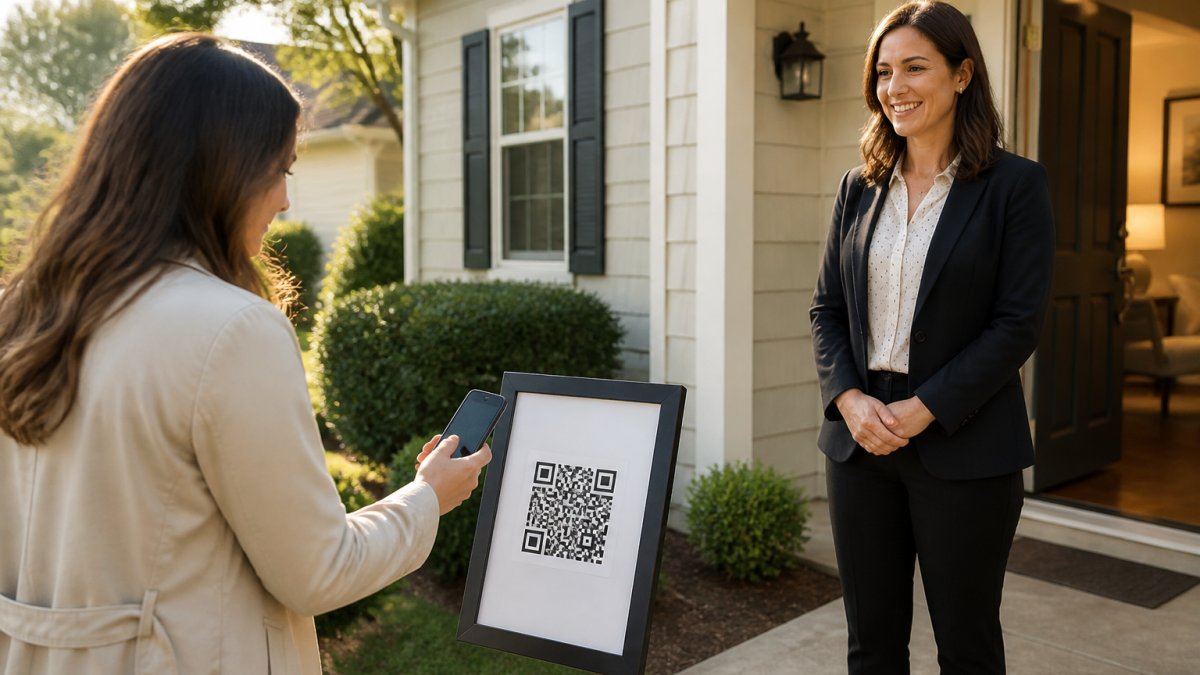
Table of Contents
- Why Safer Open Houses Start Before the First Visitor Arrives
- Your Open House Safety Checklist: Pre-Event, During, and Post-Event
- Real Estate Agent Safety Tips for Situational Awareness and Personal Space
- Rethinking the Open House Sign-In Sheet for Verified Visitor Management
- Building an Open House Safety Plan for Agents: Emergency Response and Escalation
- Safety Planning for Different Property Types and Situations
- Frequently Asked Questions
Last Updated: October 14, 2026
Why Safer Open Houses Start Before the First Visitor Arrives
Most agents think about open house safety only once the door opens. This guide from ohACCESS breaks down practical strategies for hosting safer real estate open houses, from pre-event prep to post-event documentation.
Safety is a setup problem, not a nerve problem. Agents who get hurt or scammed usually skipped a step hours earlier, an unlocked back door, working alone in a vacant house with no signal, letting a visitor walk in behind them.
Pre-Event Property Preparation and Securing Valuables
Walk the property before you stage anything. Sellers often leave jewelry, electronics, cash, and prescription medicine in drawers, ask them to remove these before the event, or move them yourself.
- Lock small valuables in a safe or take them off-site
- Store cash, checks, and financial papers out of sight
- Remove car keys, spare keys, and garage openers
Then handle the property itself. A vacant house in a remote location carries more risk than a lived-in home on a busy street. Trim bushes near the entry, turn on exterior lights even in daytime, and keep the front door as the only open entry.
Setting Up Access Points and Controlling the Flow
Control every way in and out. Most agents watch the front door and forget the side gate, back door, and garage. Lock all secondary doors before the first visitor arrives; if a back door must stay open for airflow, station yourself where you can see it. Block off rooms you do not want visitors entering, and keep your exit path clear, never get cornered in an attic, basement, or single-door room.
- Lock the side gate and back door
- Close off rooms that are not part of the tour
- Keep your phone in your pocket, not on a counter
Your Open House Safety Checklist: Pre-Event, During, and Post-Event
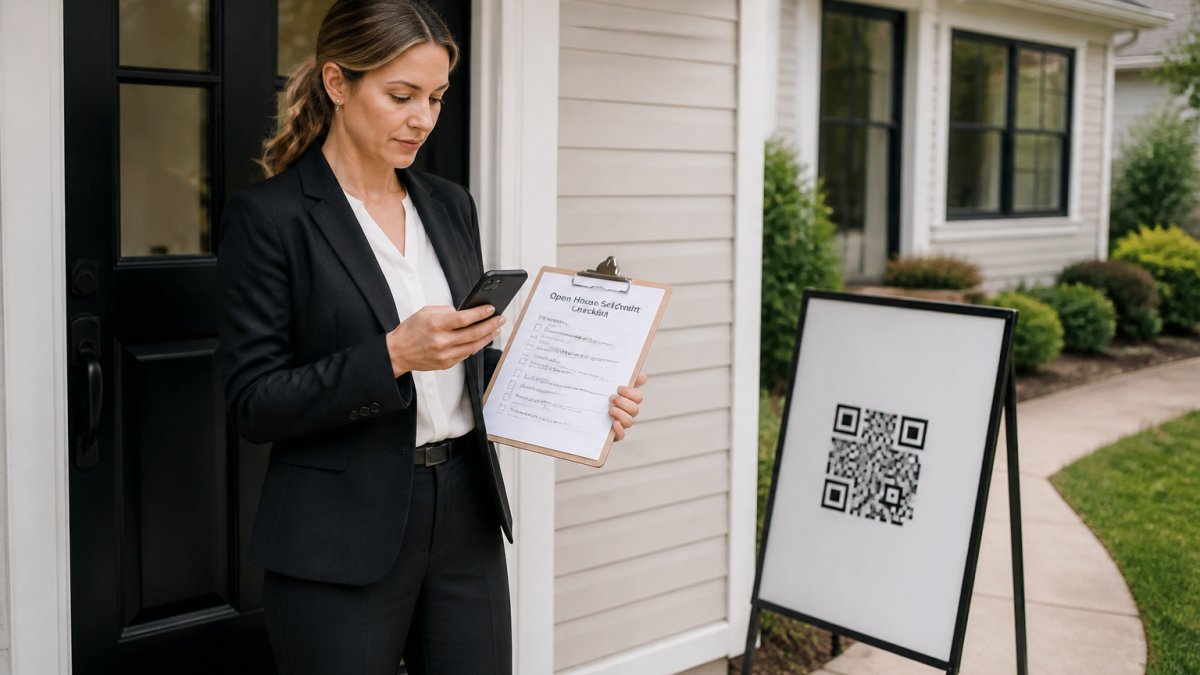
A written checklist turns scattered precautions into a routine you repeat every weekend, so nothing depends on memory.
Pre-Event Safety Checklist
- Confirm the seller removed valuables, cash, and medicine
- Lock all doors except the main entry
- Test your phone signal inside the property
During-Event Safety Checklist
- Greet every visitor at the door before they enter
- Keep your phone on your person at all times
- Stay near an exit, never in a closed room
Post-Event Safety Checklist
- Walk the property and confirm all doors are locked
- Check that no valuables are missing
- Log any incident, however small
Real Estate Agent Safety Tips for Situational Awareness and Personal Space
Situational awareness is the skill of noticing what is normal so you catch what is not. It is trainable attention, not paranoia. In the first few minutes, learn the baseline: the pace of traffic, the sound of the front door, where visitors drift. Once you have it, deviations stand out, a visitor who walks straight past you toward a back hallway, or a group that splits up at the threshold.
Positioning: Where You Stand Matters More Than What You Say
Where you place yourself controls more of the interaction than any script. Three positions do most of the work:
- The door position. Stand just inside the entry, angled so you can see both the front door and the main hallway. This is your default.
- The escort position. Walk beside a visitor or slightly ahead, never behind, walking behind puts them between you and the room they are entering.
- The exit-adjacent position. In any room, keep at least one clear path to a door. In a kitchen, stand near the doorway side of the island, not behind it.
A common pattern is the 'corner trap', an agent ends up in a basement, attic, or walk-in closet with a single door and a visitor standing in it. The fix: never enter a single-exit room with a visitor behind you. Let them go first, or stay in the doorway.
Reading Behavior Without Being Obvious
You do not need to stare at anyone. Small habits do the work:
- Greet every visitor at the door by name once they have signed in. It confirms identity and gives you a reason to look at their face.
- Ask an open question that requires a real answer, 'What brought you out today?' A rehearsed cover story often produces a vague response.
- Watch hands. Hands holding a phone or listing sheet are hands not doing anything else.
Personal Space and the Polite Exit
Keep a respectful distance, roughly an arm's length or more, and never let a visitor close that gap without a reason. If someone steps into your space, step back and turn slightly, which reopens the angle to the door.
A common mistake is worrying about seeming rude. Your safety outranks a stranger's comfort, and you can end any interaction, any time, with no explanation. Useful exits:
- 'Let me grab you a flyer from the front.'
- 'I'm going to check on the other visitors, I'll be right at the door.'
- 'Excuse me, I need to step outside for a moment.'
Each moves you toward the front door without confrontation.
Parking and Personal Items
Small choices reduce risk before the first visitor arrives:
- Park on the street, not in the driveway, so you are not blocked in.
- Keep your keys and phone in your pockets, not on a counter or table.
- Carry a small bag with your essentials rather than leaving anything in an unlocked room.
Rethinking the Open House Sign-In Sheet for Verified Visitor Management
The paper open house sign-in sheet has a real safety problem: it collects whatever a visitor writes down, with no way to check it.
A verified check-in changes that.
| Safety Concern | Paper Sign-In | Verified Digital Check-In |
|---|---|---|
| Fake names | Common, unverifiable | Phone and email confirmed |
| Bad phone numbers | No way to check | Flagged at sign-in |
| Visitor record | Handwriting, often unreadable | Clean digital log |
| Lead follow-up | Manual data entry | Delivered to your CRM |
| Seller proof | Count only | Aggregate report |
The sign-in form is available in 16 languages, so you capture leads from buyers who are not comfortable in English.
For privacy, ohACCESS keeps visitor details with you, the agent. The one-tap Seller Report shows aggregate data only: visitor count, the buying-timeline breakdown, the average home rating, and the price verdict.
Building an Open House Safety Plan for Agents: Emergency Response and Escalation
Most open house safety advice stops at 'have an emergency contact.' That is a start, not a plan. A real plan has three parts: a check-in schedule, an escalation ladder, and a post-event documentation routine.
The Check-In Schedule
Before the event, agree on a schedule with one specific person, a colleague, a team lead, or a family member. Not 'someone at the office.' One named person who knows what to do if you go quiet.
A workable pattern:
- Text when you arrive and the event starts.
- Text at the midpoint.
- Text when the event ends and you are leaving.
Write the schedule down and share it.
The Escalation Ladder
Not every uncomfortable moment is an emergency. Match your response to the level of the situation.
Level 1, Uncomfortable but not threatening. A visitor is pushy, lingers, or asks invasive personal questions.
Level 2, Concerning behavior. A visitor ignores your guidance, tries to enter a closed-off room, follows you, or refuses to leave when asked.
Level 3, Immediate threat. Anyone is aggressive, armed, or physically threatening. Leave. Do not argue, protect property, or try to reason.
Scenario-Specific Response
A generic plan is not enough. Match the response to the property and the situation.
- Vacant house, remote location. Never host alone. If you must, keep a colleague on a live phone call or on standby with a firm check-in time. If anything feels wrong, leave immediately, there is no neighbor to notice.
- Occupied home. Ask the seller to be away during the event. If they insist on staying, keep them out of the visitor flow and brief them on the exit plan.
- Weak or no cell signal. Identify a spot outside where you can make a call before the event starts and tell your check-in contact where it is. If you cannot find one, reschedule.
Post-Event Security and Incident Documentation
Re-secure the property before you leave. Walk every room. Confirm all doors and windows are locked, including the back door, side gate, and garage.
Document anything unusual. Even if nothing happened, a short log is worth keeping. If something did happen, write it down the same day while details are fresh. Include:
- Date, time, and address of the event
- A description of the person or situation
- What was said or done
A written record protects you if a seller later reports a missing item, if a visitor disputes something, or if a pattern of behavior needs to be reported.
Report up the chain. Tell your broker about any Level 2 or Level 3 incident, even if it resolved without police involvement.
Safety Planning for Different Property Types and Situations
One safety plan does not fit every property. A vacant house in a desolate area needs different rules than a lived-in home on a busy street.
For a vacant house, never host alone, bring a colleague or a lender partner. Keep exterior lights on and blinds open so neighbors and passersby can see inside.
- Vacant house: never host alone, lights on, blinds open
- Remote location: share your schedule and check in on exit
- Occupied home: seller away, valuables secured
Open house safety comes down to preparation, verified visitors, and a plan you actually follow.
Frequently Asked Questions
How can real estate agents make an open house safer?
Start with preparation: secure valuables, control access points, and confirm your cell phone has a signal. During the event, maintain situational awareness, avoid isolated areas like basements or attics, and keep personal space with visitors. Use a verified sign-in method so you know who is in the home. After the event, document any incidents and follow up with leads through your CRM. A written open house safety plan for agents ties all these steps together.
What information should visitors provide when signing in at an open house?
A standard open house sign-in sheet collects name, email, phone number, and buying timeline. Adding a verification step, like ohACCESS does with its two-codeword system, confirms the phone and email are real before the visitor enters. This reduces fake entries and gives you accurate lead data for follow-up. You can also add one custom question to the form to capture specific buyer preferences without slowing down the check-in process.
What should an agent do if they feel unsafe at an open house?
Trust your instincts and remove yourself from the situation. If you feel threatened, end the showing, step outside, and call 911 if needed. Have an emergency contact pre-programmed and share your open house schedule with a colleague or family member. Use a code word with your office to signal distress without alerting the visitor. After the event, document what happened and review your open house safety plan for agents to adjust for future events.
How can agents follow up with open house visitors safely?
Follow up through your CRM using the verified contact information collected at sign-in. ohACCESS delivers every sign-in to your CRM automatically as a formatted lead, so you can send a thank-you email the next morning without manually entering data. Keep initial follow-ups professional and avoid sharing personal details. If a visitor requests no further contact, honor that request immediately and remove them from your list.
Frequently asked questions
How can real estate agents make an open house safer?
Start with preparation: secure valuables, control access points, and confirm your cell phone has a signal. During the event, maintain situational awareness, avoid isolated areas like basements or attics, and keep personal space with visitors. Use a verified sign-in method so you know who is in the home. After the event, document any incidents and follow up with leads through your CRM. A written open house safety plan for agents ties all these steps together.
What information should visitors provide when signing in at an open house?
A standard open house sign-in sheet collects name, email, phone number, and buying timeline. Adding a verification step, like ohACCESS does with its two-codeword system, confirms the phone and email are real before the visitor enters. This reduces fake entries and gives you accurate lead data for follow-up. You can also add one custom question to the form to capture specific buyer preferences without slowing down the check-in process.
What should an agent do if they feel unsafe at an open house?
Trust your instincts and remove yourself from the situation. If you feel threatened, end the showing, step outside, and call 911 if needed. Have an emergency contact pre-programmed and share your open house schedule with a colleague or family member. Use a code word with your office to signal distress without alerting the visitor. After the event, document what happened and review your open house safety plan for agents to adjust for future events.
How can agents follow up with open house visitors safely?
Follow up through your CRM using the verified contact information collected at sign-in. ohACCESS delivers every sign-in to your CRM automatically as a formatted lead, so you can send a thank-you email the next morning without manually entering data. Keep initial follow-ups professional and avoid sharing personal details. If a visitor requests no further contact, honor that request immediately and remove them from your list.
Keep reading
Start free with 25 verified check-ins. No credit card required.
Start Free