How to Get Buyers to Respond After a Home Showing: Follow-Up Tactics
Last Updated: November 9, 2026
Quick Summary
To learn how to get buyers to respond after a home showing, send a short thank-you text within two hours, ask two specific questions by email the next morning, and follow up once more on day three. Make each reply easy to answer in one line, then stop chasing and switch to a value message.
- Send a short thank-you text within two hours of the showing, then email two specific questions the next morning.
- Keep follow-up texts under 30 words and ask only one question per text.
- Ask about price, condition, layout, location, and buyer readiness on every showing for comparable feedback.
- Contact the buyer's agent rather than the buyer directly unless the buyer reached out first.
- Track response rate, time to response, and feedback completion rate to see whether your cadence works.
Table of Contents
- Why Buyers Go Quiet After a Showing
- The Real Reasons Buyer Agents Don't Reply
- The Follow-Up Timeline: How Long to Get Feedback After House Viewing
- The Follow-Up Email After a Home Showing That Gets Replies
- The Text Message After a House Showing: Short, Specific, Sent Fast
- Questions to Ask Buyers About What They Liked and What They Didn't
- Open House Lead Follow-Up: Turning Sign-Ins Into Conversations
- Setting Up Your Verified Open House Check-In With ohACCESS
- Frequently Asked Questions
Why Buyers Go Quiet After a Showing
Most agents treat silence after a showing as rejection. Usually it isn't. It's a full inbox, a tired buyer, and an agent who never got a nudge.
Higher inventory and longer days on market can give buyers more negotiating power, and buyers often tour more homes before committing.
The agents who get answers aren't the ones who chase hardest. They're the ones who ask first, ask well, and ask through the right channel.
The Real Reasons Buyer Agents Don't Reply
The biggest mistake is assuming the buyer hated the house. In practice, the buyer's agent is the bottleneck, not the buyer.
Here's what's actually happening:
- They're carrying five clients. Your showing was one stop in a Saturday marathon.
- They don't have feedback yet. They haven't spoken to their buyer since the tour.
- Your message gave them nothing to answer. "Any thoughts?" is easy to ignore.
- They're protecting their client. Some agents won't share reactions until they know your seller will negotiate.
What most guides miss is that buyer agents respond to messages that are easy to answer in one line. Make replying cheaper than ignoring you.
The Follow-Up Timeline: How Long to Get Feedback After House Viewing
How long should you wait to get feedback after a house viewing?
That three-touch sequence works because it matches how buyers actually decide. Buyers tend to think in short windows after a tour, so your follow-up should arrive while the showing is still fresh.
For a deeper breakdown of timing and cadence, our open house follow up timing guide walks through each window in detail.
Hour 1, Day 1, and Day 3: Channel-by-Channel Guidance
| Timing | Channel | Goal | Example Opener |
|---|---|---|---|
| Within 2 hours | Text | Thank them, confirm you're available | "Thanks for coming by 14 Oak Street today." |
| Next morning | Ask two specific questions | "Curious how the kitchen compared to what you're seeing elsewhere." | |
| Day 3 | Phone or text | One last nudge, or offer next steps | "Happy to set up a second showing if it's still on your list." |
Use text for speed and email for detail. Skip the phone call on day one unless you already have a rapport.
Ready-to-Use Scripts for Every Response Scenario
A timeline tells you when to reach out.
No response after day three. Don't send a fourth "just checking in." Send a value message that gives them a reason to reply: "Saw a similar layout come up two streets over at a lower price. Want me to send it, or is 14 Oak still the one to beat?"
Vague feedback ("It was nice"). Narrow it: "Glad it worked for you.
An objection (price, condition, layout). Acknowledge it and ask what would fix it: "That's fair on the price.
A clear no. Thank them and keep the door open: "Appreciate the honest answer.
Watch out: sending the same "any thoughts?" message on repeat trains the buyer's agent to ignore you.
Tracking Whether Your Follow-Up Is Working
You can't improve a cadence you don't measure. Track three simple numbers for each showing: response rate (how many buyer agents replied at all), time to response (how long the first reply took), and feedback completion rate (how many gave you the full five-point checklist). If response rate is low, test a different send time or a shorter first text.
Professional Boundaries and Consent
Follow-up works best when it respects the buyer-agent relationship. Contact the buyer's agent, not the buyer directly, unless the buyer reached out to you first. Keep to the three-touch cadence and stop when you're told to stop. If a buyer agent says their client isn't interested, honor it and move on, a reputation for not pestering is worth more than one extra reply.
The Follow-Up Email After a Home Showing That Gets Replies
A follow-up email after a home showing gets replies when it asks two narrow questions and nothing else. Long emails with attachments and market updates get archived.
Here's the structure that works:
- One line of thanks. Name the property.
- Two specific questions. Not "thoughts?" Ask about the kitchen, the layout, or the price.
- One easy out. "If it's off the list, just say so and I'll stop bugging you."
- No attachments. No flyers, no comps, no newsletters.
Subject lines that earn opens: "Quick question about 14 Oak Street" or "Kitchen or yard?"
For a closer look at whether templates help or hurt, read are real estate follow up email templates worth using.
The Text Message After a House Showing: Short, Specific, Sent Fast
The text message after a house showing should be under 30 words and sent within two hours. Brief texts sent within an hour or two are often more effective than long emails, because speed usually beats polish.
Try these:
- "Thanks for touring 14 Oak today. Was the layout a fit, or too closed off?"
- "Quick one: how did the price feel for that block?"
- "If it's not the one, no worries. Want me to send similar listings?"
One question per text. Never send three in a row.
If your leads don't respond to email at all, follow up open house leads without email covers text-first and call-based approaches.
Questions to Ask Buyers About What They Liked and What They Didn't
Ask about specifics, not feelings. "What did you think?" invites a shrug. "How did the kitchen compare to the last one you saw?" invites an answer. But a list of good questions is only half the job. The other half is collecting answers the same way every time so you can compare one showing to the next and hand your seller something more useful than a pile of texts.
A Repeatable Five-Point Feedback Checklist
Feedback gets more actionable when it covers the same five dimensions on every showing. Ask about each one, in this order, and you can stack responses across a weekend of showings.
- Price. "How did the list price feel for this block and this condition, too high, reasonable, or too low?"
- Condition. "Was anything in the condition a dealbreaker, or just a preference you'd fix later?"
- Layout. "Did the floor plan work for how your buyers live, or did any room feel closed off?"
- Location. "How does the location compare to the other homes on your list, schools, commute, street?"
- Buyer readiness. "Where are your buyers in the process, still narrowing, or ready to write if the right one shows up?"
That fifth question matters more than most agents realize. A buyer who is 12+ months out will answer every question politely and never make an offer. A buyer who is 0-3 months out and still asking about disclosures is the one worth a second showing.
Open-Ended Questions That Pull Real Answers
When you want the buyer to talk rather than check a box, use these:
- What was the strongest feature of the home for you?
- Was anything a dealbreaker, or just a preference?
- How did the price feel compared to what else you've seen?
- Is this a second-showing candidate, or are we still narrowing?
- What would need to change for you to consider an offer?
Turning Answers Into a Seller-Ready Summary
Scattered comments don't help a seller price a home. A summary does.
Watch out: if you collect feedback verbally and never write it down, you will remember the one negative comment and forget the four positive ones, and your seller will get a skewed picture.
Our guide on how to collect buyer feedback after property tours goes deeper on structuring those questions.
Reading the Answers: Interest Versus Politeness
Interest sounds specific. Politeness sounds general.
- Interest: names rooms, asks about disclosures, mentions timelines, asks about a second showing.
- Politeness: "It was nice," "we'll think about it," no follow-up questions.
A buyer who asks a question back is usually interested. A buyer who only answers may be being courteous.
Open House Lead Follow-Up: Turning Sign-Ins Into Conversations
Open house lead follow-up starts before the visitor leaves the driveway.
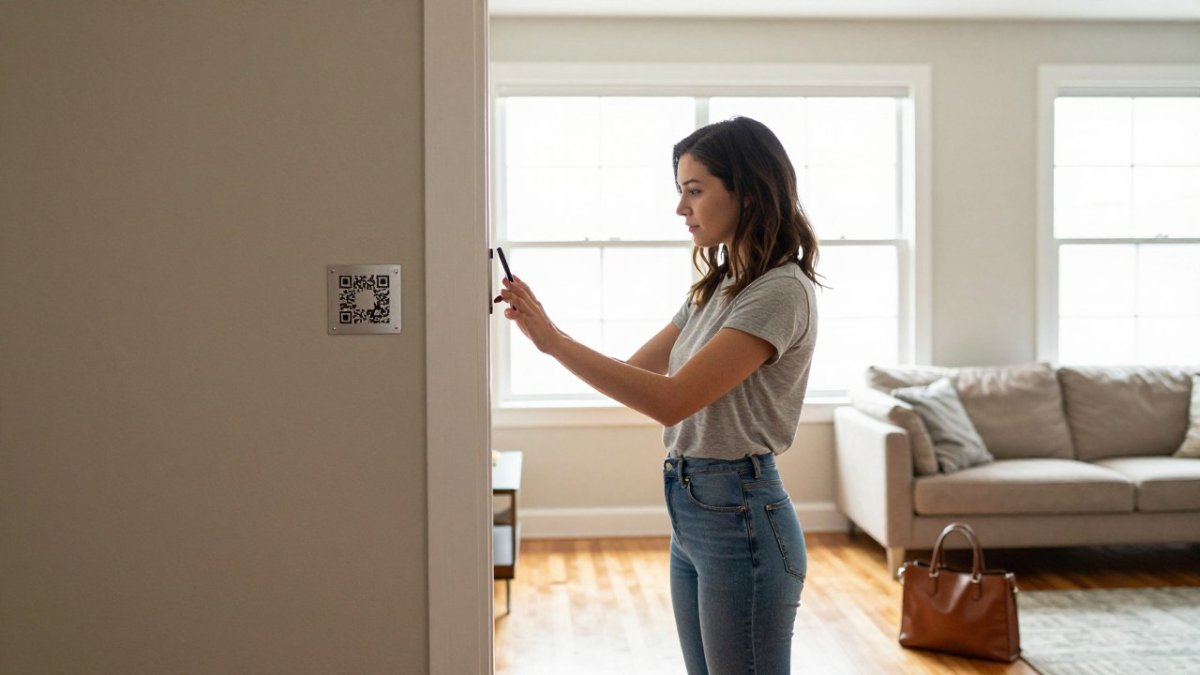
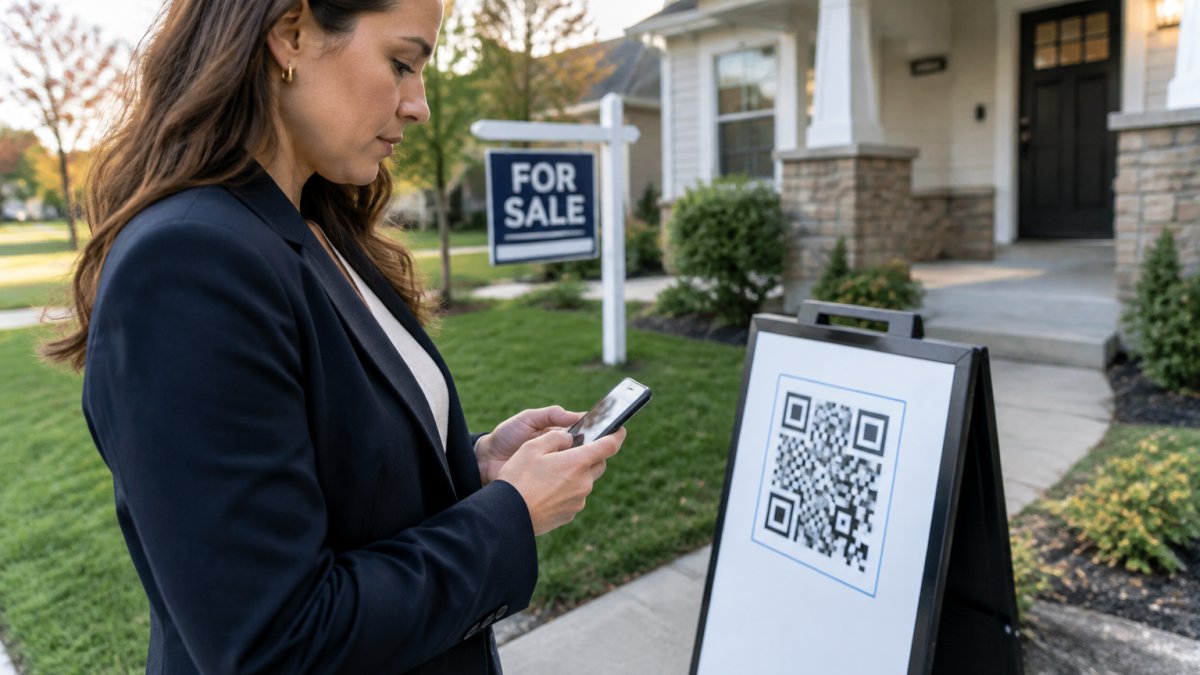
That's where verified check-in changes the math. With ohACCESS, a visitor scans a QR code at the door and fills a short form on their own phone.
The buying timeline field (0-3, 3-6, 6-12, 12+ months) tells you who to call first.
For the full playbook, see best practices for open house lead management.
Setting Up Your Verified Open House Check-In With ohACCESS
Set up takes one session. Here's the sequence:
- Create your account and pick your CRM from the dropdown so leads route correctly.
- Generate your permanent QR code, or create a per-event code for a specific open house.
- Print the branded QR sign and post it on a pedestal or A-frame outside the home.
- Set your codewords for the event using the auto-generate button.
- Add one custom question to the sign-in form if you want a specific data point.
- Run the open house. Visitors sign in on their own phones, share a codeword with you at the door, and you get an alert per sign-in.
- Send the seller report the same day. It shows aggregate data only: visitor count, buying timeline breakdown, average rating, and price verdict. No names, no contact info, no arrival times.
The first 25 visitor registrations are free, every feature included, no credit card.
Silence after a showing usually means your message was easy to skip, not that the buyer lost interest. Fix the timing, fix the question, and fix the contact data behind it.
ohACCESS gives you verified visitor contact info at the door, instant text and email alerts for every sign-in, automatic lead delivery into your CRM, and a one-tap seller report with aggregate-only data.
Frequently Asked Questions
How soon should you follow up with buyers after a home showing?
Send a short text within one to two hours of the showing, while the visit is still fresh in the buyer's mind. If there is no reply, send a follow-up email the next morning that asks one specific question about the property. A second, final nudge on day three is reasonable. Practitioners on agent forums note that emails sent days later are often ignored, so speed matters more than length. Keep each message brief and reference something concrete the buyer saw.
How long after a showing should a seller expect feedback?
Most feedback arrives within 24 to 48 hours if the buyer's agent is going to respond at all. After that window, silence usually means the buyer has moved on rather than that the agent is still gathering notes. Tell your seller this upfront so they don't wait by the phone. If you use a verified check-in system, you can still show the seller aggregate interest data, such as visitor count and buying timelines, even when individual replies are slow.
Does a second showing mean a buyer is interested?
Usually yes, but treat it as a signal to explore, not a guarantee. A second showing often means the buyer is comparing the home against one or two others or bringing a family member to confirm a decision. Respond quickly and ask what they want to see again or measure. If they request a second visit, offer a specific time window the same day. A prompt, low-pressure reply keeps the momentum going without pushing them toward an offer they aren't ready to make.
What should you do if a buyer does not respond after a showing?
Send one final, low-pressure message on day three, then stop and shift your energy to the next lead. Mention a specific property change, such as a price adjustment or a repair the seller completed, to give the buyer a reason to re-engage. Log the outcome in your CRM so you can follow up in a few weeks with new listings that match their criteria. Silence is information: it tells you where not to spend more time.

Frequently asked questions
How soon should you follow up with buyers after a home showing?
Send a short text within one to two hours of the showing, while the visit is still fresh in the buyer's mind. If there is no reply, send a follow-up email the next morning that asks one specific question about the property. A second, final nudge on day three is reasonable. Practitioners on agent forums note that emails sent days later are often ignored, so speed matters more than length. Keep each message brief and reference something concrete the buyer saw.
How long after a showing should a seller expect feedback?
Most feedback arrives within 24 to 48 hours if the buyer's agent is going to respond at all. After that window, silence usually means the buyer has moved on rather than that the agent is still gathering notes. Tell your seller this upfront so they don't wait by the phone. If you use a verified check-in system, you can still show the seller aggregate interest data, such as visitor count and buying timelines, even when individual replies are slow.
Does a second showing mean a buyer is interested?
Usually yes, but treat it as a signal to explore, not a guarantee. A second showing often means the buyer is comparing the home against one or two others or bringing a family member to confirm a decision. Respond quickly and ask what they want to see again or measure. If they request a second visit, offer a specific time window the same day. A prompt, low-pressure reply keeps the momentum going without pushing them toward an offer they aren't ready to make.
What should you do if a buyer does not respond after a showing?
Send one final, low-pressure message on day three, then stop and shift your energy to the next lead. Mention a specific property change, such as a price adjustment or a repair the seller completed, to give the buyer a reason to re-engage. Log the outcome in your CRM so you can follow up in a few weeks with new listings that match their criteria. Silence is information: it tells you where not to spend more time.
Keep reading
Start free with 25 verified check-ins. No credit card required.
Start Free