7 Benefits of Collecting Verified Visitor Contact Information
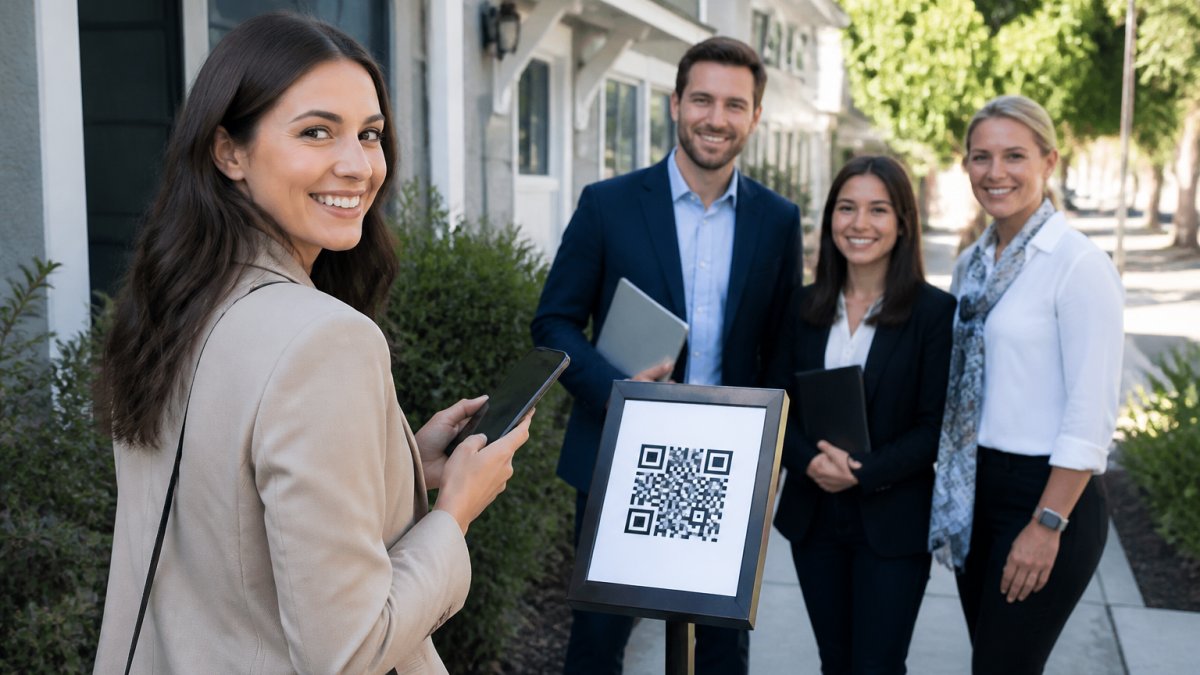
Table of Contents
- Why Verified Visitor Contact Information Beats a Paper Sign-In Sheet
- Benefit 1: Fewer Fake Names and Dead Phone Numbers in Your Pipeline
- Benefit 2: Faster Open House Lead Follow-Up While Interest Is Still Hot
- Benefit 3: Open House Sign-In Form Questions That Produce Usable Data
- Benefit 4: Open House Lead Capture Tools That Feed Your CRM Automatically
- Benefit 5: Open House Visitor Data Privacy That Protects You and the Seller
- Benefit 6: A Verified Visitor Log You Can Actually Rely on in an Emergency
- Benefit 7: Proof of Turnout You Can Hand a Homeowner the Same Day
- Frequently Asked Questions
Last Updated: October 17, 2026
Why Verified Visitor Contact Information Beats a Paper Sign-In Sheet
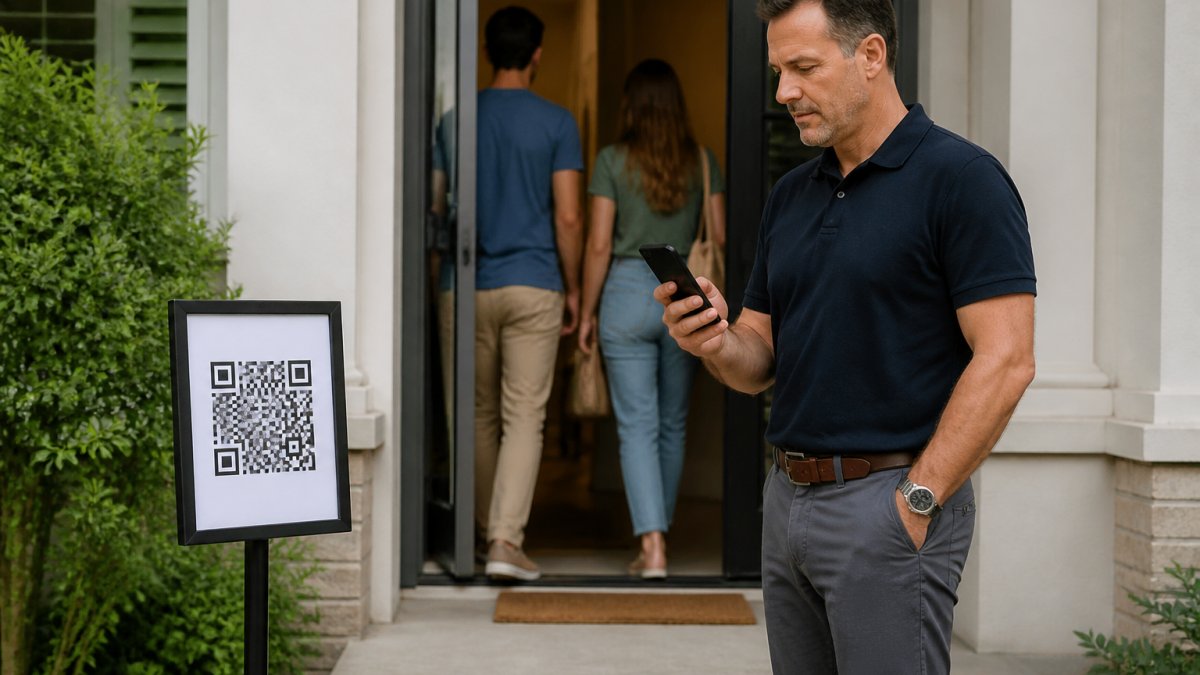
Verified visitor contact is contact data that has been proven real and owned by the person who submitted it, not just written down. At ohACCESS, we built our entire check-in flow around that distinction because a paper sheet records a claim while a verified record confirms one. A visitor scans a QR code, fills out a short form on their own phone, and instantly receives two codewords, one by text and one by email. They tell a codeword to the host agent at the door to enter. That single step proves the phone number and email are real and belong to them, because both had to arrive somewhere they control. Below, we break down seven benefits of collecting verified visitor contact information, from cleaner pipeline data to a seller report you can hand over the same day.
Benefit 1: Fewer Fake Names and Dead Phone Numbers in Your Pipeline
The biggest mistake with open house sign-in is treating every line on the sheet as a lead. In practice, a portion of paper entries are illegible, incomplete, or invented by someone who wanted to walk through a home without being contacted. A verified visitor contact record changes the math: the phone number and email must both receive a codeword before the visitor gets in, so a burner number or a throwaway email fails the test. ohACCESS also flags VoIP and burner numbers, bounced emails, undeliverable texts, and STOP opt-outs, so your pipeline holds reachable people instead of noise.
Benefit 2: Faster Open House Lead Follow-Up While Interest Is Still Hot
Open house lead follow-up lives or dies on speed. The agent who calls while a buyer is still picturing the kitchen wins more conversations than the agent who calls Tuesday. With verified check-in, every sign-in triggers an instant text and email alert to the agent with the visitor's details already attached. There is no stack of paper to transcribe that night, no handwriting to decode, and no gap between meeting someone and being able to reach them. The record is accurate the moment it lands, which means the first follow-up call can happen before the visitor has driven to the next listing.
Benefit 3: Open House Sign-In Form Questions That Produce Usable Data
A short form beats a long one, and it beats a blank sheet even more. The best open house sign-in form questions capture name, email, phone, and buying timeline, then stop. ohACCESS uses exactly that structure, with timeline options of 0-3, 3-6, 6-12, or 12+ months, plus up to one custom question the agent adds. That timeline field is what turns a name into a prioritized lead: you know who is ready now and who is a year out. The form is available in 16 languages, so international buyers are not lost to a language barrier.
Benefit 4: Open House Lead Capture Tools That Feed Your CRM Automatically
Open house lead capture tools only earn their keep if the data reaches your CRM without you retyping it. ohACCESS delivers every sign-in into your CRM automatically as a formatted lead email sent to the CRM's lead-intake address, verified working with Follow Up Boss, or through a Zapier webhook that connects to thousands of apps. Teams can also forward every member's leads to a shared team CRM. What most guides miss is that this is a delivery mechanism: the lead arrives clean and parsed, and your CRM handles tagging, scoring, and drip campaigns from there.
Benefit 5: Open House Visitor Data Privacy That Protects You and the Seller
Open house visitor data privacy is a liability question as much as an ethical one. Most guides treat privacy as a policy page and move on. The practical version is a short set of decisions you make before the first visitor walks in: what you collect, why you collect it, how long you keep it, and who is allowed to see it. Get those four right and the rest follows.
Collect only what you will actually use. A sign-in form is not a survey. Name, email, phone, and buying timeline are enough to follow up, and every additional field is data you now have to protect. ohACCESS is built around that minimum: name, email, phone, buying timeline (0-3, 3-6, 6-12, or 12+ months), plus up to one custom question the agent adds.
Explain the use at the point of collection. Visitors hand over personal information to the agent, not to the homeowner, and a responsible system keeps it that way. The clearest pattern is to tell visitors up front who will contact them and why, then honor it.
Set a retention period and stick to it. Data you keep forever is data you have to defend forever. ohACCESS purges records automatically after three years, and the Terms and Privacy Policy are attorney-reviewed. If your brokerage has its own retention schedule, align your open house practice to the shorter of the two rather than letting records drift.
Secure access and honor opt-outs. Limit who can see the visitor log, and treat opt-outs as permanent. ohACCESS honors STOP opt-outs globally, so a visitor who asks not to be contacted is suppressed across the account rather than just on one list. The system also flags VoIP and burner numbers, bounced emails, and undeliverable texts, which keeps your records accurate and reduces the chance of contacting someone who never wanted to hear from you.
Know the regulatory frame. The FTC's guidance on protecting personal information for small businesses is a useful plain-language starting point for safeguarding consumer data, and state privacy laws may add notice, access, or deletion obligations depending on where you operate. Review the FTC guidance on protecting personal information and confirm your brokerage's own policy before you change how you collect visitor details.
Benefit 6: A Verified Visitor Log You Can Actually Rely on in an Emergency
Emergency planning depends on knowing who is inside the building, and a paper sheet fails at exactly the wrong moment. It may be illegible, incomplete, or sitting on a table you cannot reach. A verified visitor log gives you a searchable, timestamped record of every sign-in, exportable as a CSV, with a forensic trail of IP, device, and phone line type behind each entry. During an incident or a business continuity disruption, that log is the difference between a defensible headcount and a guess.
The part most guides skip is the second half of the problem: a headcount tells you who was expected, but incident communication needs a way to reach them. Verified contact details are what make a timely alert possible.
What the log does and does not do. Be clear about the boundaries so you plan around them rather than assuming capabilities that are not there. The log records sign-ins, not presence: it does not track room-by-room movement, dwell time, or visit duration, and it does not tell you when someone left. Treat it as a verified arrival record and pair it with your own physical sweep during an evacuation.
Build the emergency workflow before you need it. A simple pattern works for most agents: export the CSV at the start of each open house so you have an offline copy, keep the printed QR sign and a charged phone at the door, and know in advance how you would message the list. Because sign-in runs on each visitor's own cellular data, the process does not depend on the property's Wi-Fi, which is often the first thing to fail in a disruption.
Measure whether the record would actually work. A verified log is only as good as its reachability rate. Track three numbers after each event: the share of sign-ins with both a valid phone and email, the share of records flagged as VoIP, burner, bounced, or undeliverable, and the share of a test message that reaches recipients. If the reachability rate is high, you have a record you can act on. If it is not, the gap is in collection, not in the emergency plan.
Benefit 7: Proof of Turnout You Can Hand a Homeowner the Same Day
Sellers want evidence, not anecdotes. A one-tap Seller Report gives the homeowner a clean summary of turnout the same day as the open house: how many visitors registered, how many plan to buy within six months, how they rated the home on a 1-10 scale, and whether they judged the price too high, reasonable, or too low. Because the report is aggregate-only, you demonstrate performance without exposing anyone's contact details. That is the balance most agents get wrong: share the numbers, protect the people behind them.
| Benefit | What It Fixes | What You Get |
|---|---|---|
| Verified contact | Fake names, dead numbers | Reachable leads only |
| Instant alerts | Slow follow-up | Same-hour outreach |
| Short form plus timeline | Unusable data | Prioritized buyer list |
| CRM delivery | Manual retyping | Clean leads in your CRM |
| Aggregate seller report | Privacy risk | Same-day proof of turnout |
| Verified visitor log | Emergency guesswork | Searchable, exportable record |
| Flagging and opt-outs | Compliance exposure | Honored opt-outs, clean lists |
Frequently Asked Questions
What are the benefits of collecting verified visitor contact information at an open house?
Verified visitor contact information means the phone number and email a visitor submits actually belong to them. The benefits stack up quickly: no fake names in your pipeline, follow-up that reaches a real person, a clean visitor log for safety and emergency use, and a seller report you can share the same day. You also cut the manual data entry that causes typos and lost leads. For agents running several open houses a month, that difference shows up in how many visitors actually answer your call.
What information should an open house sign-in form collect?
Keep it short enough that visitors finish it at the door. Name, email, phone, and buying timeline (0-3, 3-6, 6-12, or 12+ months) cover the essentials, and one optional custom question lets you ask something specific to the property, such as whether the buyer has a home to sell. Avoid asking for details you will not use. Every extra field lowers completion rates, and a form that takes under a minute gets far more submissions than a long questionnaire.
How can agents follow up with open-house visitors without wasting time on bad numbers?
Start with verification. When a visitor's phone and email are confirmed at the door, your follow-up list contains only reachable people, so your first call or text lands instead of bouncing. From there, send a short thank-you the next morning, then route the lead into your CRM so it enters whatever sequence you already run. Agents who skip verification spend hours dialing numbers that were never real, which is the single biggest time drain in open house follow-up.
How can agents manage open-house visitor information securely?
Limit who sees the data, store it in one system rather than scattered paper sheets, and know how long you keep it. A digital check-in tool with an attorney-reviewed privacy policy and automatic data-retention purge removes the guesswork. Be clear with visitors about what you collect and why, honor opt-outs immediately, and never pass visitor names or contact details to the seller. The seller report should show aggregate numbers only, since visitors consented to the agent having their information, not the homeowner.
Paper sheets ask visitors to be honest. Verified check-in asks them to prove it, and that difference shows up in every lead you follow up on. If your pipeline is carrying fake names and dead numbers, ohACCESS replaces the sheet with QR-code check-in, two-codeword verification by text and email, and leads delivered straight into your CRM. Start free with your first 25 sign-ins and see what a clean visitor log looks like.
Frequently asked questions
What are the benefits of collecting verified visitor contact information at an open house?
Verified visitor contact information means the phone number and email a visitor submits actually belong to them. The benefits stack up quickly: no fake names in your pipeline, follow-up that reaches a real person, a clean visitor log for safety and emergency use, and a seller report you can share the same day. You also cut the manual data entry that causes typos and lost leads. For agents running several open houses a month, that difference shows up in how many visitors actually answer your call.
What information should an open house sign-in form collect?
Keep it short enough that visitors finish it at the door. Name, email, phone, and buying timeline (0-3, 3-6, 6-12, or 12+ months) cover the essentials, and one optional custom question lets you ask something specific to the property, such as whether the buyer has a home to sell. Avoid asking for details you will not use. Every extra field lowers completion rates, and a form that takes under a minute gets far more submissions than a long questionnaire.
How can agents follow up with open-house visitors without wasting time on bad numbers?
Start with verification. When a visitor's phone and email are confirmed at the door, your follow-up list contains only reachable people, so your first call or text lands instead of bouncing. From there, send a short thank-you the next morning, then route the lead into your CRM so it enters whatever sequence you already run. Agents who skip verification spend hours dialing numbers that were never real, which is the single biggest time drain in open house follow-up.
How can agents manage open-house visitor information securely?
Limit who sees the data, store it in one system rather than scattered paper sheets, and know how long you keep it. A digital check-in tool with an attorney-reviewed privacy policy and automatic data-retention purge removes the guesswork. Be clear with visitors about what you collect and why, honor opt-outs immediately, and never pass visitor names or contact details to the seller. The seller report should show aggregate numbers only, since visitors consented to the agent having their information, not the homeowner.
Keep reading
Start free with 25 verified check-ins. No credit card required.
Start Free