Solo Agent Safety: Tips to Stay Safe on Every Showing
Last Updated: November 13, 2026
Quick Summary
Solo agent safety comes from routine rather than courage: vet clients before you meet them, walk each property before the client arrives, and keep a trusted contact informed of your schedule and check-in times. Verified sign-ins and a written checklist further reduce the risk of working alone.
- Confirm a lead's full name and working phone number, and check that both match before meeting.
- Meet first in an office or public place rather than at a vacant listing.
- Share your calendar with a trusted contact and agree on check-in times.
- Arrive early, walk the house, and note every exit before the client arrives.
- If you feel unsafe, leave calmly first, then document the details and report the incident.
Table of Contents
- Why Solo Agents Face Higher Personal Safety Risk
- Vet Clients Before You Meet Them
- Build a Real Estate Showing Safety Checklist
- Open House Safety Tips for Agents Working Alone
- Check-In Routines and Trusted Contact Protocols
- Solo Agent Safety Tools Worth Considering
- What to Do If a Client Makes You Feel Unsafe
- Set Up Your Safety Routine Before Your Next Showing
- Frequently Asked Questions
Why Solo Agents Face Higher Personal Safety Risk
Solo agents face higher personal safety risk because no one else is in the room when a showing goes wrong. A team agent can call a colleague, and a broker can check the schedule. A solo agent usually walks into an empty house with a stranger and no backup, which is why solo agent safety depends on planning ahead.
The main risks are simple. You may not know who the client really is. You may not know the layout of the house. And you may have no clear way out if the situation turns. Solo work removes the margin for error that a second person provides.
We think the fix starts with routine, not courage. Agents who build habits around vetting, check-ins, and exits face fewer dangerous surprises. The sections below walk through those habits, from the first phone call to the last lock-up.
Vet Clients Before You Meet Them
Vetting clients before a showing is an important step a solo agent can take. Risky encounters often begin with a stranger who gave a fake name or a disposable phone number. Learn how to spot and filter out fake or suspicious leads before you meet them.
Start by confirming who you are speaking with. Ask for a full name and a working phone number, and verify that both match. Look for mismatches, such as an email address that doesn't fit the name or a phone number that sounds like a prepaid line.
Meet first in an office or a public place whenever possible. A first meeting at a coffee shop or your brokerage can be a safer starting point than a first meeting at a vacant listing.
Digital verification tools can help too. Platforms that confirm phone numbers and email addresses, and flag disposable contact details, can filter out fake leads before you commit time to a showing. ohACCESS applies this idea to open houses, where visitors prove their phone and email are real before entering.
Finally, trust your instincts. If a client pushes to meet at a remote property, avoids giving basic details, or insists on being alone with you right away, decline the showing and reschedule in a public setting.
Build a Real Estate Showing Safety Checklist
A written checklist turns good intentions into habits. Keep it short enough to use every time, and keep a copy on your phone.
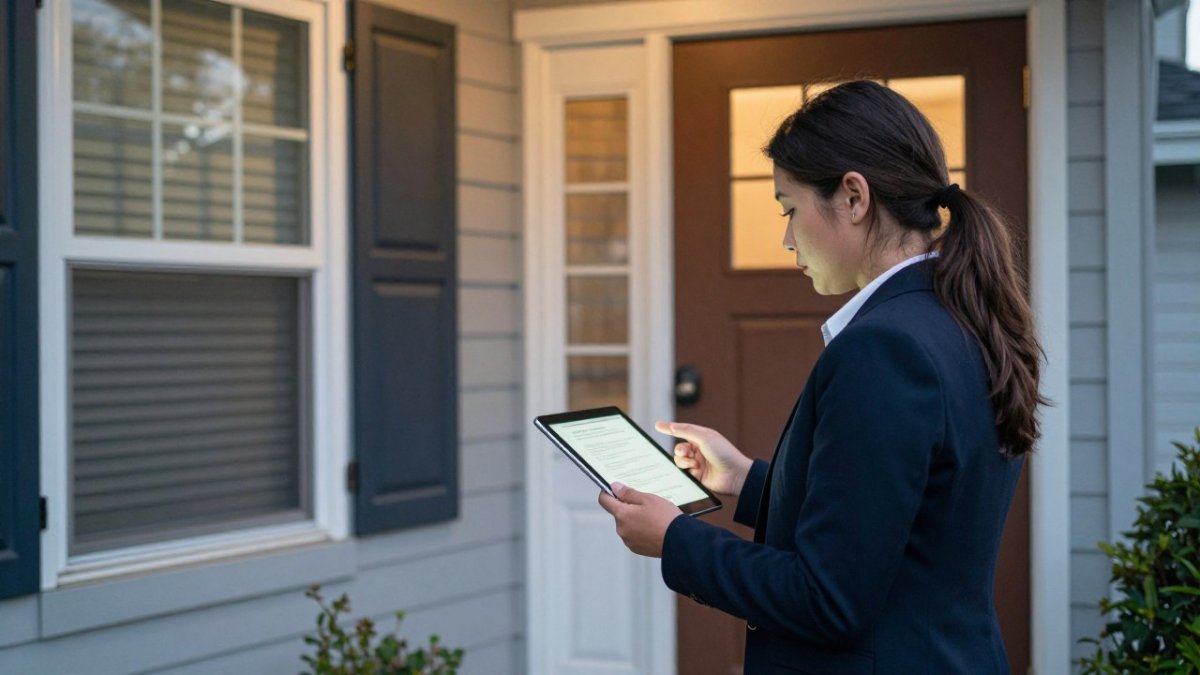
Before every showing, confirm the property address, the time, and the client's name. Tell a colleague, family member, or assistant where you will be and when you expect to finish. Set a check-in time, and agree on what happens if you miss it.
At the property, arrive early. Walk the house before the client arrives. Turn on the lights, open the doors you will need, and note every exit. Keep a clear path to the front door, and avoid rooms with only one way out.
Keep your phone charged and your location sharing on. For more guidance on protecting agents during individual showings, see showing safety guidance. Know how to call emergency services quickly from your lock screen.
During the showing, let the client lead you through rooms rather than walking behind them. Stay near the entrance where possible. Keep your bag and keys within reach, and avoid entering basements, attics, or closets with a client you don't know well.
Afterward, lock up, confirm the house is secure, and send your check-out message. Log the showing notes in your CRM while the details are fresh. A consistent checklist makes it much easier to notice when something feels wrong.
Open House Safety Tips for Agents Working Alone
Open houses bring many strangers into one home, often with no advance vetting. Working one alone raises the stakes, so plan the event with safety in mind. For a dedicated guide to protecting yourself at open houses, see open house safety guide.
Start with the visitor sign-in. Paper sign-in sheets are easy to fill with false names and fake phone numbers, and they give you little useful data afterward. A digital check-in with verified contact details lets you confirm who walked through the door. ohACCESS is built for this. Visitors scan a QR code on their own phone, fill out a short form, and receive two codewords by text and email. They share a codeword with you at the door, which confirms that their phone and email are real.
Position yourself near the entrance rather than in a back room. Keep your phone within reach and your personal belongings out of sight. Avoid letting visitors wander into areas you cannot see, and consider asking a colleague or friend to stop by during the event.
Set a clear end time and stick to it. Plan how you will close the house, lock the doors, and leave without lingering in the driveway. A short check-in message to a backup contact when the event ends can reduce uncertainty.
Check-In Routines and Trusted Contact Protocols
A trusted contact is the backbone of solo safety. This person knows your schedule, your location, and what to do if you stop responding.
Choose a contact you can rely on, and share your full calendar for the day. Include each property address, the expected start and end times, and the names of clients you are meeting. Agree on a check-in interval, such as a text every thirty minutes during a long day of showings.
Define the escalation steps in advance. For example, if you miss a check-in by fifteen minutes, your contact calls you. If you do not answer, they call emergency services and share the property address. Write these steps down so no one has to guess under pressure.
Update your contact whenever your plans change. A quick message such as "Moved to 4 p.m., same address" keeps the schedule accurate. Your broker or team lead can also serve as a backup, especially if they have access to the calendar.
Solo Agent Safety Tools Worth Considering
Several tools can make solo work safer, though none replaces good judgment. The useful way to think about them is by the job each one does: alerting someone, proving who you are meeting, or documenting what happened.
Alerting tools. Location sharing through your phone lets a trusted contact see where you are during a showing. Many phones include an emergency SOS feature, though its behavior varies by device. Test each of these before you rely on it.
Verification tools. These confirm that the person you are meeting is reachable at the phone number and email they gave you. For one-on-one showings, a simple call-back to the number on file can help confirm a lead is real.
Documentation tools. A record of who was where, and when, matters after an incident.
When comparing tools, ask a few practical questions. Does it work on the phones your visitors actually use? Does it store contact data securely? Does it fit into your existing routine without adding steps you will skip?
Watch out: a safety app that depends on a strong signal can fail in a vacant house with poor coverage, so confirm your backup plan does not rely on the same connection.
The article compares safety tools by the job each one does, so here is a quick summary of the three categories it describes.
| Tool category | Job it does | Practical check before relying on it |
|---|---|---|
| Alerting tools | Lets a trusted contact see where you are during a showing | Test the feature; confirm it still works |
| Verification tools | Confirms the person you are meeting is reachable at their phone and email | Confirm the number and email match the lead |
| Documentation tools | Creates a record of who was where and when | Save sign-in records and call and text history |
What to Do If a Client Makes You Feel Unsafe
Sometimes you will feel uneasy during a showing, even when nothing specific has happened. Treat that feeling as information. A common concern is that people talk themselves out of a bad feeling to avoid seeming rude.
Leave first, explain later. Leave the property calmly. Say you need to take a call or step outside, then walk to your car or the street. Do not argue or explain at length.
Document while it is fresh. Write down the client's name, the time, the property, what was said, and how the person behaved. Save any messages, call logs, and sign-in records.
Report through the right channel. Start with your broker, who may have a written incident policy and a duty to document it. If a crime occurred or was threatened, file a police report and get the report number.
Look after yourself afterward. Talk with your broker or a colleague, and consider speaking with a counselor if the experience left you shaken.
Do not ignore the pattern. If a client has made you uncomfortable, decline future showings and refuse to work with them again.
Watch out: deleting a threatening text or blocking a number can destroy evidence you may need, so save a screenshot before you block anyone.
Set Up Your Safety Routine Before Your Next Showing
A safety routine works only if you build it before you need it. Start with three steps you can complete this week.
First, write your showing checklist and save it where you can open it in seconds. Second, choose a trusted contact and share your calendar with them. Third, set up a verified check-in method for your next open house, whether that is a digital sign-in tool or a simple process you follow every time.
Revisit the routine every few months. Update your contact list, check that your location sharing still works, and remove any steps that feel like clutter. Small, consistent habits protect you far better than a plan you intend to follow someday.
Your next showing is a good place to begin. Set the checklist, notify your contact, and walk the property before anyone else arrives.
Frequently Asked Questions
How can a solo real estate agent stay safe when showing a property?
Share your exact schedule, property address, and expected return time with a trusted colleague or family member before every showing. Arrive at least 15 minutes early, walk the property, turn on the lights, and identify exits before your client arrives. Keep your phone charged and your location sharing on, and trust your instincts if a client asks to change plans or avoid public check-in steps. Agents who follow a consistent routine are better prepared if something feels wrong.
What should real estate agents do before meeting a new client?
Confirm the client's identity by checking their name, phone number, and email against a published profile or prior conversation. Meet first in your office or a public place, or by video call, rather than at a vacant property. Ask about their buying timeline and budget so you understand their intent. Let a colleague know who the client is, when and where you are meeting, and when you expect to check in afterward.
How can agents make open houses safer?
Require every visitor to sign in before entering, and use a digital check-in that captures a phone number and email the visitor must verify. Ask visitors to share a codeword with you at the door, which confirms their contact details are real and gives you a verified visitor log. Keep valuables out of sight, avoid rooms with limited exits, and keep a colleague or trusted contact informed of your open house schedule. ohACCESS offers a free trial covering the first 25 sign-ins, with paid plans at $15 per month for a solo agent.
What information should an agent share with a trusted contact before a showing?
Share the property address, the client's name and phone number, the scheduled time, and the time you expect to finish. Include the vehicle you are driving and a check-in deadline after which your contact should call you or the police if you have not responded. Update your contact if the plan changes. Keeping this information in one written message makes it easier for someone else to act quickly.

Frequently asked questions
How can a solo real estate agent stay safe when showing a property?
Share your exact schedule, property address, and expected return time with a trusted colleague or family member before every showing. Arrive at least 15 minutes early, walk the property, turn on the lights, and identify exits before your client arrives. Keep your phone charged and your location sharing on, and trust your instincts if a client asks to change plans or avoid public check-in steps. Agents who follow a consistent routine are better prepared if something feels wrong.
What should real estate agents do before meeting a new client?
Confirm the client's identity by checking their name, phone number, and email against a published profile or prior conversation. Meet first in your office or a public place, or by video call, rather than at a vacant property. Ask about their buying timeline and budget so you understand their intent. Let a colleague know who the client is, when and where you are meeting, and when you expect to check in afterward.
How can agents make open houses safer?
Require every visitor to sign in before entering, and use a digital check-in that captures a phone number and email the visitor must verify. Ask visitors to share a codeword with you at the door, which confirms their contact details are real and gives you a verified visitor log. Keep valuables out of sight, avoid rooms with limited exits, and keep a colleague or trusted contact informed of your open house schedule. ohACCESS offers a free trial covering the first 25 sign-ins, with paid plans at $15 per month for a solo agent.
What information should an agent share with a trusted contact before a showing?
Share the property address, the client's name and phone number, the scheduled time, and the time you expect to finish. Include the vehicle you are driving and a check-in deadline after which your contact should call you or the police if you have not responded. Update your contact if the plan changes. Keeping this information in one written message makes it easier for someone else to act quickly.
Keep reading
Start free with 25 verified check-ins. No credit card required.
Start Free