Open House App With IDX Integration: 2026 Guide
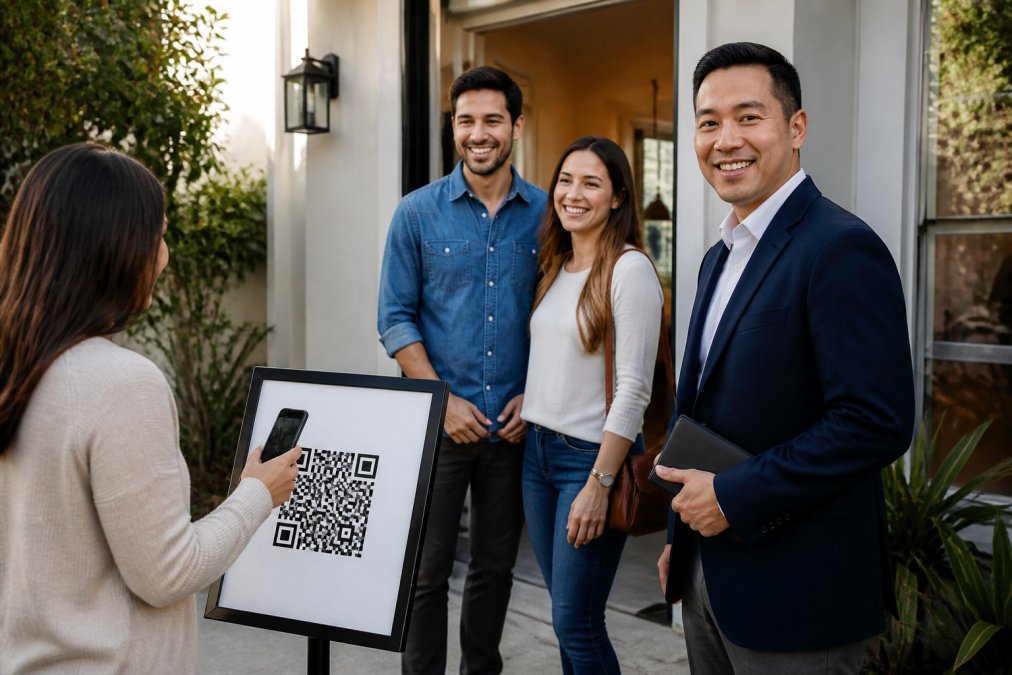
Table of Contents
- What an Open House App With IDX Integration Actually Does
- Quick Comparison: Open House and IDX Tools
- The Digital Open House Sign-In Sheet, Explained
- How to Verify Open House Visitors Before They Walk In
- CRM Lead Intake for Realtors: Getting Sign-Ins Into Your Database
- Real Estate Open House Best Practices for Capturing Better Leads
- Privacy, Compliance, and Seller Reports
- Frequently Asked Questions
Last Updated: September 23, 2026
What an Open House App With IDX Integration Actually Does
An open house app with IDX integration connects two systems that usually operate in separate silos: the door-side visitor registration tool and the property-search platform feeding your website. The app captures who walked in; the IDX layer shows what they browsed. ohACCESS built the capture side around verified QR-code check-in because the weakest link in open house lead generation has never been search technology, it has been the data.
Here is the practical split:
- IDX handles discovery. Property listing feeds, saved searches, map-based browsing, listing alerts.
- The open house app handles identity. Visitor registration, contact verification, timeline capture, CRM delivery.
Quick Comparison: Open House and IDX Tools
Open house and IDX tools split into two categories: IDX search platforms that display MLS listings on your site, and visitor-registration tools that capture and verify leads at the door. Most agents need one of each, not one that claims to do both.
| Tool | Category | Starting Price | Best For |
|---|---|---|---|
| ohACCESS | Verified open house check-in | Free trial (25 sign-ins) | Agents who need verified contacts delivered to CRM |
| IDX Broker | IDX search platform | $60/month | Custom MLS search on your own site |
| Showcase IDX | IDX plugin (WordPress) | $94.95/month | WordPress sites focused on conversion |
| HighNote | Digital presentation + sign-in | Free tier | Agents wanting interactive property packets |
| iHomefinder | IDX + lead management | $150/month | Teams needing enterprise-scale IDX |
How IDX Data Actually Moves, and Where an Open House App Plugs In
Most articles call IDX integration a "seamless sync" and stop there. Here is the actual pipeline, knowing it tells you which questions to ask a vendor.
- The MLS publishes a data feed. Your regional MLS exposes listing data through a RETS or RESO Web API feed, RETS is the older XML standard, RESO Web API the newer REST/JSON standard most MLSs are migrating toward. The feed carries address, price, beds, baths, square footage, status, and photos, refreshing on a schedule the MLS controls.
- The IDX vendor ingests and normalizes that feed. IDX Broker, Showcase IDX, and iHomefinder each map MLS field names to a consistent schema, because no two MLSs name fields the same way. That is why a vendor's coverage list matters: they must have built and maintained a connector for your MLS.
- The vendor renders listings on your site. Search, map view, saved searches, and listing alerts run against the vendor's copy of the data, not the MLS directly. Display rules, which listings you may show, how you attribute the listing broker, how often you refresh, are set by the MLS and enforced by the vendor.
- Visitor behavior generates events. A saved search, a favorited listing, a request-for-showing form, a price-drop alert click, the raw material of IDX lead generation, living inside the IDX vendor's system.
- The open house app sits at a different point in the funnel. It captures identity at the door, who physically walked in, with a verified phone and email, and delivers that record to your CRM.
That architecture has real consequences:
- Ask whether the open house app delivers leads without human action. If it requires a CSV export and import, the record is stale by the time it lands.
- Ask whether the IDX vendor exposes its lead data to your CRM. Some do natively, some require a Zapier-style connector, some only email a notification. If IDX behavior never reaches your CRM, you cannot join it to the door-side record.
- Ask what identifies a person across both systems. Email is the most reliable join key; phone works until someone changes it; name alone is useless. One more reason a verified email, not just a verified phone, matters at the door.
What IDX Integration Does Not Do
IDX is a listing display framework, not a lead verification system, not a door-side check-in tool, not a CRM. A vendor marketing "IDX integration" on an open house product usually means one of three things: a link from the app to your IDX search page, a lead-delivery path into the same CRM your IDX vendor uses, or a marketing claim with nothing behind it. Ask which one, in writing.
- IDX handles discovery. Property listing feeds, saved searches, map-based browsing, listing alerts.
- The open house app handles identity. Visitor registration, contact verification, timeline capture, CRM delivery.
- The CRM handles the join. It is the only place both records reliably land.
The Digital Open House Sign-In Sheet, Explained
The form is available in 16 languages, and visitors with non-US or Canada phone numbers receive their codeword through WhatsApp. Returning visitors are remembered for a year and see their information pre-filled, which shortens the line at the door.
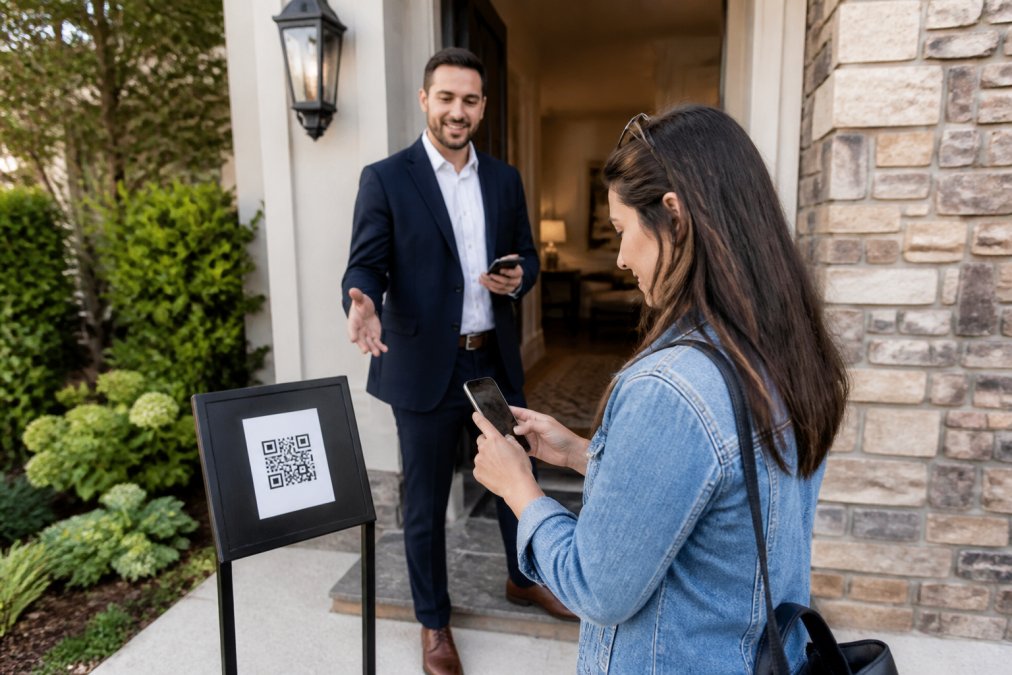
How to Verify Open House Visitors Before They Walk In
Verifying open house visitors means confirming the phone number and email a visitor submits actually belong to them before they get past the threshold. The method is a two-channel codeword: one sent by text, one by email, both delivered the moment the form is submitted.
CRM Lead Intake for Realtors: Getting Sign-Ins Into Your Database
CRM lead intake for realtors works best when the sign-in tool delivers leads automatically rather than asking the agent to export a CSV and import it later. Manual transfer is where open house leads go to die, because the gap between the showing and the import is exactly when a buyer is most reachable.
- A formatted lead email sent to your CRM's lead-intake address, labeled so the CRM parses it into fields automatically. Verified working with Follow Up Boss; agents pick their CRM from a dropdown covering BoldTrail/kvCORE, Lofty, Sierra Interactive, Real Geeks, CINC, Top Producer, Wise Agent, LionDesk, and others.
- A Zapier webhook connecting the same data to thousands of other apps.
- Team CRM forwarding, letting a team lead copy every member's leads to a shared team CRM.
Real Estate Open House Best Practices for Capturing Better Leads
Real estate open house best practices for lead capture come down to reducing friction at the door while increasing the quality of what you collect. Those two goals usually fight each other. Verification is the rare technique that serves both.
Privacy, Compliance, and Seller Reports
Privacy compliance in open house lead capture means collecting only what you need, telling visitors what you do with it, and keeping their information out of hands they did not consent to. This is where most agent workflows are quietly exposed.
The Rules That Actually Apply to an Open House Sign-In Form
You do not need to be a lawyer to run a compliant sign-in process, but you do need to know which frameworks touch a name, email, phone number, and buying timeline collected at a front door.
- The Telephone Consumer Protection Act (TCPA). The biggest real-world exposure for agents. It governs calls and texts to consumers and carries a private right of action, consumers can sue directly. You need prior express consent before marketing calls or texts, and prior express written consent for autodialed or prerecorded marketing. A phone number collected at an open house is not automatically consent to a drip campaign; if a CRM fires automated texts the moment a lead lands, that is the risk point.
- The CAN-SPAM Act. Governs commercial email: accurate headers, a non-deceptive subject line, clear identification that the message is an advertisement, a valid physical postal address, and a functioning opt-out honored within 10 business days. It applies to the follow-up emails a CRM sends, not the transactional codeword email itself.
- State privacy laws. California, Colorado, Connecticut, Virginia, Utah, and others have comprehensive consumer privacy statutes, with California's CCPA/CPRA the most familiar. They generally give consumers the right to know what personal information a business collects, the right to delete it, and the right to opt out of its sale or sharing. Coverage depends on thresholds set in each statute, so the safe assumption for a team collecting leads at scale is that at least one applies.
- MLS and brokerage rules. Separate from statute, your MLS and your brokerage have their own advertising and solicitation policies. Some restrict how you may contact a visitor who signed in at another agent's listing.
How to Build Consent Into the Sign-In Itself
Compliance is cheaper at the point of collection than at the point of cleanup. A few design choices carry most of the weight:
- Say what you will do with the data, in plain language, on the form. Not in a linked policy nobody opens. A short line, "We will use your contact information to follow up about your home search", is the difference between informed consent and a surprise.
- Do not pre-check consent boxes. Opt-in must be an affirmative act; a pre-checked box is not consent under any framework above.
- Honor opt-outs globally and immediately. ohACCESS flags STOP opt-outs and honors them across the account, a consumer who texts STOP to one message has revoked consent for that channel, not just that campaign.
- Keep a record of when and how consent was given. The forensic trail on every ohACCESS sign-in, IP address, device, phone carrier and line type, is not just a fraud signal but evidence of the circumstances under which a visitor submitted their information.
- Do not hand visitor contact data to anyone the visitor did not consent to. This is the seller-report problem, and the one agents get wrong most often.
Why the Seller Report Is Aggregate-Only by Design
Visitors consent to the agent having their information, not the seller. A seller is a third party to that transaction, and handing over a list of names and phone numbers collected at their home is a disclosure the visitor never agreed to.
Data Retention and Handling
Retention is the part of privacy compliance agents most often ignore, because keeping data forever feels harmless. It is not: every additional month of stored personal information is additional exposure if the account is ever compromised, and several state statutes require data be kept no longer than necessary for the purpose it was collected.
Compliance is not a page in your policy binder. It is the consent line on the form, the opt-out you honor the same day, the report you refuse to hand a seller with names on it, and the purge that runs whether you remember it or not.
Frequently Asked Questions
What is an IDX-integrated open house app?
An IDX-integrated open house app connects the sign-in process at a property to the same listing data that powers your website. In practice, that means a visitor registers on their phone at the door, and the listing details they were browsing online stay attached to their record. ohACCESS handles the verified sign-in side and delivers each lead into your CRM automatically, so the IDX data you already pay for stays connected to the person who walked through the home.
Can open house apps automatically send leads to my CRM?
Yes, but the mechanism matters. ohACCESS delivers every sign-in to your CRM as a formatted lead email sent to the CRM's lead-intake address, which platforms like Follow Up Boss parse into fields automatically. A Zapier webhook covers thousands of other apps, and teams can forward every member's leads to a shared CRM. What ohACCESS does not do is a native two-way sync, field mapping, or lead scoring, so plan on your CRM handling tagging and follow-up sequences.
How do digital open house sign-in sheets improve lead quality?
Paper sheets accept whatever a visitor writes down, including fake numbers and throwaway emails. A digital sign-in sheet with verification flips that. The visitor registers on their own phone and immediately receives two codewords, one by text and one by email. They tell a codeword to the host agent at the door to get in, which proves the phone number and email are real. Agents also get flags for VoIP numbers, bounced emails, and undeliverable texts.
How do I verify visitor contact information at an open house?
Use a sign-in flow that requires the visitor to prove control of the phone and email they entered. With ohACCESS, the visitor scans a QR code, fills out a short form, and instantly receives two codewords, one by text and one by email. They share a codeword with the host agent at the door to enter the home. Nothing is typed back into a system, and the codeword never expires on a timer. Agents can also ask up to one custom question on the form to qualify buyers on the spot.
Frequently asked questions
What is an IDX-integrated open house app?
An IDX-integrated open house app connects the sign-in process at a property to the same listing data that powers your website. In practice, that means a visitor registers on their phone at the door, and the listing details they were browsing online stay attached to their record. ohACCESS handles the verified sign-in side and delivers each lead into your CRM automatically, so the IDX data you already pay for stays connected to the person who walked through the home.
Can open house apps automatically send leads to my CRM?
Yes, but the mechanism matters. ohACCESS delivers every sign-in to your CRM as a formatted lead email sent to the CRM's lead-intake address, which platforms like Follow Up Boss parse into fields automatically. A Zapier webhook covers thousands of other apps, and teams can forward every member's leads to a shared CRM. What ohACCESS does not do is a native two-way sync, field mapping, or lead scoring, so plan on your CRM handling tagging and follow-up sequences.
How do digital open house sign-in sheets improve lead quality?
Paper sheets accept whatever a visitor writes down, including fake numbers and throwaway emails. A digital sign-in sheet with verification flips that. The visitor registers on their own phone and immediately receives two codewords, one by text and one by email. They tell a codeword to the host agent at the door to get in, which proves the phone number and email are real. Agents also get flags for VoIP numbers, bounced emails, and undeliverable texts.
How do I verify visitor contact information at an open house?
Use a sign-in flow that requires the visitor to prove control of the phone and email they entered. With ohACCESS, the visitor scans a QR code, fills out a short form, and instantly receives two codewords, one by text and one by email. They share a codeword with the host agent at the door to enter the home. Nothing is typed back into a system, and the codeword never expires on a timer. Agents can also ask up to one custom question on the form to qualify buyers on the spot.
Keep reading
Start free with 25 verified check-ins. No credit card required.
Start Free