Modernizing Real Estate Open House Events: A 2026 Guide
Table of Contents
- Why Modernizing Real Estate Open House Events Matters Now
- Digital Open House Sign-In Platforms: Moving Beyond Paper
- Best Practices for Real Estate Open Houses in the Digital Age
- Data Capture and Lead Quality: The Modern Buyer Psychology
- Open House Follow-Up Scripts and Automated Nurture Campaigns
- Legal Compliance and Privacy Considerations
- Hybrid and Virtual Event Integration
- Scaling Modernized Open Houses Across Multiple Agents and Offices
Modernizing Real Estate Open House Events: A 2026 Guide
Last Updated: August 4, 2026
Why Modernizing Real Estate Open House Events Matters Now
Modernizing real estate open house events is no longer optional, it's the difference between capturing qualified leads and wasting weekend hours on fake contact information. Agents who've shifted from paper sign-in sheets to digital verification report eliminating up to 80% of invalid entries, directly improving follow-up ROI and client satisfaction.
Today's serious buyers expect frictionless digital experiences. This guide covers the strategies, tools, and follow-up systems that top-performing agents are using in 2026 to capture legitimate leads, demonstrate open house value to sellers, and close more deals.
Digital Open House Sign-In Platforms: Moving Beyond Paper
Paper sign-in sheets capture whatever information visitors choose to provide, often fake names, disconnected phone numbers, and bouncing email addresses. Digital open house sign-in platforms solve this by verifying contact information before granting entry, turning lead capture from a guessing game into a data-quality guarantee.
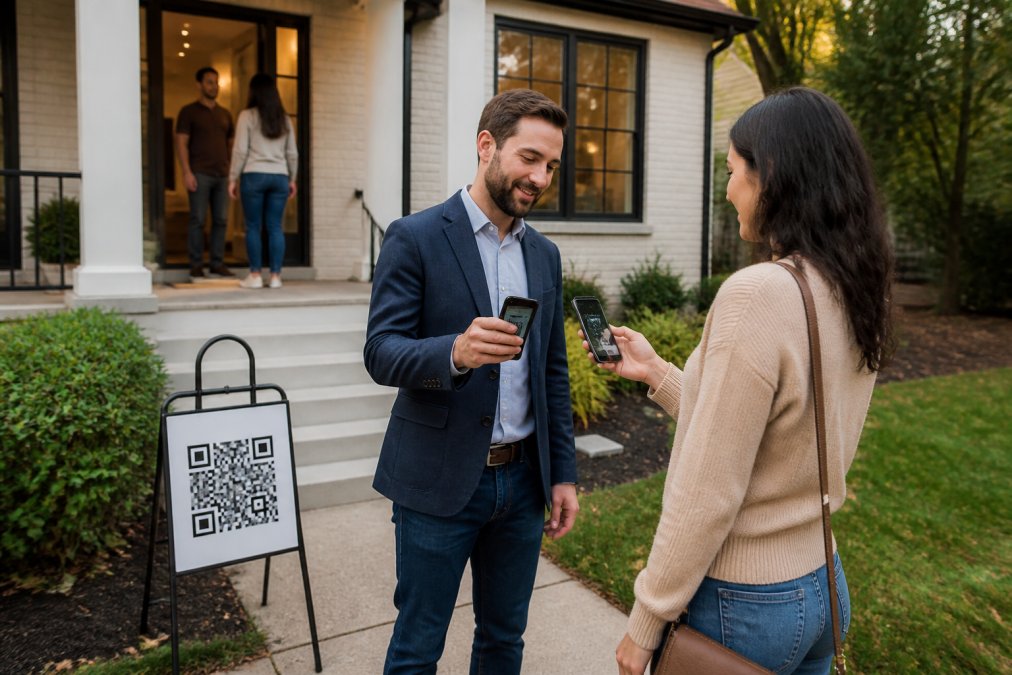
The best platforms use a simple two-step process. Visitors scan a QR code posted outside the property, complete a quick form with their phone number and email, and receive codewords by both text and email. They share a codeword with the host agent to unlock access. This ensures every contact in your follow-up list provided real information, fake details mean no codeword, which means no entry.
ohACCESS sends visitors two codewords — one by text, one by email — to gain access to the property, so it requires that they enter legitimate contact information in order to receive them. They scan a QR code outside the property first.
How Verified QR Code Check-In Stops Fake Leads
QR codes are ubiquitous enough that most visitors scan without hesitation. The verification step, receiving and entering a codeword, creates a psychological barrier that filters out time-wasters while remaining frictionless for serious buyers.
When a visitor submits invalid contact information, they don't receive a codeword. No codeword means no entry. This immediate feedback loop deters bad actors without awkward confrontation. For serious buyers, the process takes under a minute and feels professional.
Agents using QR code verification report that 95%+ of captured contacts are legitimate and actionable, compared to 40-50% with paper sheets. Your follow-up list is clean, your CRM doesn't get polluted with garbage data, and conversion rates improve because you're reaching real people.
Automatic CRM Integration and Data Sync
Capturing verified contact information is only valuable if that data reaches your CRM instantly. Manual data entry wastes time and introduces transcription errors. Automatic CRM integration eliminates this friction entirely.
When a visitor submits their contact information through a digital sign-in platform, their data syncs directly to your CRM in real time. This means follow-up sequences can start immediately. A welcome message can go out within minutes of the open house, keeping the property top-of-mind.
Most platforms integrate with major CRM systems, HubSpot, Salesforce, Pipedrive, and others, through API connections or Zapier. Once configured, every new visitor automatically appears in your CRM with their contact details, visit date and time, and any notes you added during the open house.
Best Practices for Real Estate Open House Events in the Digital Age
Modernizing real estate open house events requires rethinking how you market the event, stage the property, and engage visitors. Digital tools amplify your effort, but strategy determines whether visitors show up and convert.
Pre-Event Marketing and Social Media Promotion
The best open house fails if nobody shows up. Pre-event marketing drives foot traffic, and social media is the primary channel for reaching local buyers. Agents who invest in social promotion see 30-40% higher attendance compared to those relying solely on yard signs and MLS listings.
Start promoting at least 10 days before the event. Use Facebook and Instagram to target local buyers within a 5-mile radius. Highlight the home's best features, recent renovations, outdoor space, and location near schools or transit. Create multiple posts across the week featuring different rooms or neighborhood highlights. Include the QR code in your social posts as a visual element, explaining: "Scan to check in and get instant access, no paper forms."
Property Staging and Curb Appeal
Staging creates an emotional connection to the space. Buyers make decisions in the first 30 seconds, so curb appeal, front yard, entrance, landscaping, determines whether they step inside with excitement or skepticism.
Clean, neutral, well-lit spaces feel more inviting. Remove personal items, declutter surfaces, and ensure good natural light. Outdoor staging matters equally: a well-maintained front lawn, potted plants near the entrance, and a clean walkway signal that the property is cared for. Properties that are well-staged see higher offer rates and shorter time-on-market compared to unstaged homes.
Attendee Engagement During the Event
Your role during the open house is to be present, approachable, and informative without being pushy. Greet visitors by name when they arrive (thanks to real-time notifications from your digital check-in system), ask open-ended questions about what they're looking for, and answer questions honestly.
Position yourself in a central location where you're visible and accessible. Listen more than you talk, buyers reveal their priorities through questions. Have printed materials available: a one-page fact sheet about the home, neighborhood, and your contact information.
Data Capture and Lead Quality: The Modern Buyer Psychology
Serious buyers expect a professional, frictionless experience. They're willing to provide legitimate contact information when they understand why and when the process is fast and secure.
Why Legitimate Contact Information Changes Everything
Verified phone numbers and email addresses mean your follow-up has a 10x higher success rate compared to paper lists. A legitimate number means the buyer can receive your text reminders. A legitimate email means your automated nurture campaigns actually reach their inbox.
Legitimate contact information also enables better segmentation. You can tag visitors as "serious buyer," "curious neighbor," or "agent scouting competition" based on their behavior during the open house. This segmentation lets you prioritize outreach and avoid wasting time on low-intent prospects.
Verified contact information builds trust with your sellers. When you tell a homeowner that 12 qualified buyers visited the open house, they believe you because you can prove it.
Post-Event Data Analytics and Conversion Tracking
The real power of modernizing real estate open house events emerges after the event ends. Data analytics reveal patterns: which neighborhoods attract the most buyers, which property features generate the most interest, and which follow-up strategies convert visitors into offers.

Track these metrics after every open house:
- Visitor count: Total number of people who checked in
- Repeat visitors: How many people visited multiple times (strong signal of serious interest)
- Contact quality: Percentage of valid phone numbers and emails
- Follow-up response rate: What percentage of visitors responded to your initial outreach
- Conversion rate: How many visitors eventually made an offer or scheduled a private showing
Over time, these metrics reveal what works. Use this data to optimize future open houses and prioritize your marketing channels.
Open House Follow-Up Scripts and Automated Nurture Campaigns
The open house captures leads. Follow-up converts them. Most agents fail at follow-up because they treat it as a manual, reactive process. The best agents automate follow-up and personalize based on visitor behavior.
Immediate follow-up (within 2 hours of the open house) is critical. Send a text or email thanking the visitor for attending and reminding them of key property details. This keeps the property top-of-mind and signals that you're responsive and professional.
Follow this with a 5-email nurture sequence over the next 14 days:
- Email 1 (same day): Thank you + property highlights + your contact info
- Email 2 (day 3): Neighborhood information + local amenities + schools/transit
- Email 3 (day 5): Market analysis + comparable homes + value proposition
- Email 4 (day 10): New listings matching their criteria + open house schedule
- Email 5 (day 14): Final reminder + call-to-action to schedule a private showing
Segment your follow-up based on visitor intent. If someone visited multiple times, move them to a more aggressive nurture sequence. Automate this entire process through your CRM.
Same-Day Seller Reports and Lead Accountability
Sellers want proof that their open house generated real interest. A same-day report showing visitor count, buying-timeline breakdown, and honest visitor feedback on price and interest builds confidence in your marketing effort.
Digital check-in systems make this report generation automatic. Within an hour of the open house closing, you can generate a professional one-page report showing total visitors, buying-timeline breakdown, average visitor rating, and price feedback. Share this report with the seller within 24 hours to reinforce your value and keep them confident in your ability to sell their home.
Legal Compliance and Privacy Considerations
Collecting visitor contact information creates a responsibility to protect that data. Depending on where you operate, you may be subject to state privacy laws, CAN-SPAM regulations, TCPA rules, and general data security standards.
Be transparent about data collection. Your QR code sign or check-in form should clearly state: "We collect your contact information to follow up about this property and send you relevant listings. We will not share your information with third parties."
Use a platform that encrypts visitor data and complies with industry standards. For email follow-up, include an unsubscribe link in every message. For SMS follow-up, only contact visitors who explicitly opted in to text messages. Keep visitor data secure and don't share contact information with other agents or third parties without explicit consent.
Hybrid and Virtual Event Integration
Not every buyer can attend an in-person open house. Some are relocating from out of state, some have schedule conflicts, and some prefer to preview a property before committing time to visit. Hybrid and virtual open houses extend your reach and capture leads you'd otherwise miss.
A virtual open house is typically a live video walkthrough broadcast on Zoom, Facebook Live, or YouTube. Promote it alongside your in-person event and encourage remote buyers to attend. During the broadcast, answer questions in real time and direct viewers to your digital check-in system for follow-up.
Virtual components don't replace in-person open houses, but they amplify them. They generate additional leads, extend your geographic reach, and provide data about buyer interest from areas outside your immediate market.
Scaling Modernized Open Houses Across Multiple Agents and Offices
If you're a broker managing multiple agents or a team leader coordinating across several offices, scaling digital open house practices requires standardization and training.
Select a single digital check-in platform that all agents use. This ensures consistent lead capture, unified reporting, and simplified CRM integration. Provide training so every agent understands how to set up the QR code, monitor real-time notifications, and generate reports.
Establish a standardized follow-up process. Create email templates and SMS scripts that agents can customize while maintaining brand consistency. Monitor open house performance across your team by tracking visitor counts, follow-up response rates, and conversion rates by agent and by property.
| Metric | Target | Frequency | Owner |
|---|---|---|---|
| Visitor count per open house | 8-12 qualified visitors | Per event | Agent |
| Contact quality | 95%+ valid phone/email | Per event | Agent |
| Same-day follow-up | 100% of visitors contacted | Same day | Agent |
| Email open rate | 30%+ | Within 3 days | Agent |
| Conversion to showing | 15-20% of visitors | Within 14 days | Agent |
| Conversion to offer | 5-10% of visitors | Within 30 days | Team Lead |
Modernizing real estate open house events isn't about technology for its own sake, it's about eliminating friction, capturing legitimate leads, and proving your value to sellers. The agents winning in 2026 are those who've replaced paper with verified digital check-in, automated their follow-up, and used data to continuously improve. ohACCESS delivers this exact workflow: QR code verification that stops fake leads, instant CRM sync that eliminates manual data entry, and one-tap reports that prove open house performance to sellers. Start capturing qualified leads today and watch your conversion rates improve.
Frequently Asked Questions
What's the difference between digital open house sign-in platforms and traditional paper sheets?
Digital sign-in platforms eliminate fake contact information by requiring visitors to verify their phone number and email before entry. Paper sheets capture unverified names and numbers, leading to wasted follow-up time on invalid leads. Digital platforms also sync directly to your CRM, removing manual data entry and providing instant lead notifications so you can follow up while the property is fresh in the buyer's mind.
How do open house follow-up scripts improve conversion rates?
Structured follow-up scripts keep your messaging consistent and ensure you address buyer objections and timeline questions. Automated sequences trigger based on visitor behavior, so hot leads get contacted within hours while you're still top-of-mind. Scripts focused on the specific property and neighborhood close deals faster than generic outreach. Pairing scripts with verified visitor data means you're reaching actual prospects, not wasting time on fake contacts.
What should I include in best practices for real estate open houses to stand out?
Best practices combine traditional hosting (staging, curb appeal, neighborhood canvassing) with modern digital tactics. Use social media promotion and QR codes to drive traffic, capture verified leads through digital sign-in, and follow up with same-day reports to sellers showing tangible buyer interest. Track which marketing channels brought attendees, analyze visitor feedback, and adjust your strategy for the next event. This data-driven approach proves ROI to your clients and builds your commission income over time.
How can I handle visitors who don't want to use a smartphone or QR code?
Keep a paper backup for visitors without smartphones and confirm their details with a quick follow-up call or text. With ohACCESS, codewords arrive by ordinary text message and email, so any phone that can receive a text can complete verified check-in. This ensures you capture legitimate leads while maintaining data quality. Older buyers and tech-hesitant prospects often appreciate a hybrid approach where you can assist them through the process, making it feel personal rather than impersonal.
This article was written using GrandRanker
Frequently asked questions
What's the difference between digital open house sign-in platforms and traditional paper sheets?
Digital sign-in platforms eliminate fake contact information by requiring visitors to verify their phone number and email before entry. Paper sheets capture unverified names and numbers, leading to wasted follow-up time on invalid leads. Digital platforms also sync directly to your CRM, removing manual data entry and providing instant lead notifications so you can follow up while the property is fresh in the buyer's mind.
How do open house follow-up scripts improve conversion rates?
Structured follow-up scripts keep your messaging consistent and ensure you address buyer objections and timeline questions. Automated sequences trigger based on visitor behavior, so hot leads get contacted within hours while you're still top-of-mind. Scripts focused on the specific property and neighborhood close deals faster than generic outreach. Pairing scripts with verified visitor data means you're reaching actual prospects, not wasting time on fake contacts.
What should I include in best practices for real estate open houses to stand out?
Best practices combine traditional hosting (staging, curb appeal, neighborhood canvassing) with modern digital tactics. Use social media promotion and QR codes to drive traffic, capture verified leads through digital sign-in, and follow up with same-day reports to sellers showing tangible buyer interest. Track which marketing channels brought attendees, analyze visitor feedback, and adjust your strategy for the next event. This data-driven approach proves ROI to your clients and builds your commission income over time.
How can I handle visitors who don't want to use a smartphone or QR code?
Keep a paper backup for visitors without smartphones and confirm their details with a quick follow-up call or text. With ohACCESS, codewords arrive by ordinary text message and email, so any phone that can receive a text can complete verified check-in. This ensures you capture legitimate leads while maintaining data quality. Older buyers and tech-hesitant prospects often appreciate a hybrid approach where you can assist them through the process, making it feel personal rather than impersonal.
Keep reading
Start free with 25 verified check-ins. No credit card required.
Start Free