Real Estate Lead Management: 7 Steps That Work in 2026
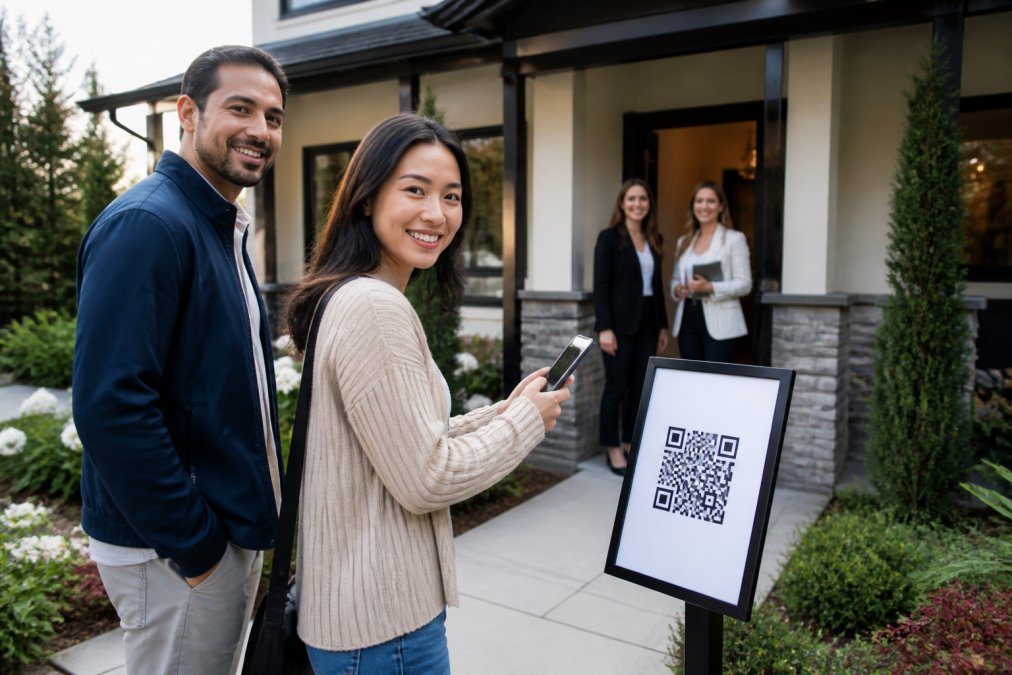
Table of Contents
- What Real Estate Lead Management Actually Includes
- Step 1: Capture Leads With Open House Lead Capture Strategies
- Step 2: Qualify and Score Every Lead
- Step 3: Set Up Real Estate CRM Lead Integration
- Step 4: Learn How to Follow Up With Open House Leads Fast
- Step 5: Track Lead Sources, Response Time, and ROI
- Step 6: Keep Leads After Closing With Retention Workflows
- Step 7: Stay Compliant With Data Privacy Rules
- Frequently Asked Questions
Last Updated: September 16, 2026
What Real Estate Lead Management Actually Includes
Real estate lead management is the practice of capturing, qualifying, routing, and following up with every prospect who shows interest in a property, then tracking each one until they buy or fall out of the pipeline. This guide from ohACCESS breaks the process into seven steps, starting at the door.
The lead lifecycle: capture to conversion
Every lead moves through the same five stages: capture, qualification, assignment, nurture, and conversion or disqualification. Speed to lead matters more than almost any other variable, because a buyer touring three homes in one afternoon will work with whoever responds first and sounds competent. The National Association of Realtors guide to lead generation frames the same sequence from the consumer's side: buyers expect a response while the showing is still fresh in their mind.
Step 1: Capture Leads With Open House Lead Capture Strategies
The best open house lead capture strategies collect a verified phone number and email at the door without slowing the tour. Paper sign-in sheets fail that test: anyone can write "Mickey Mouse" and a disconnected number, and the agent doesn't find out until the follow-up call bounces.
Digital open house sign-in sheets vs. paper
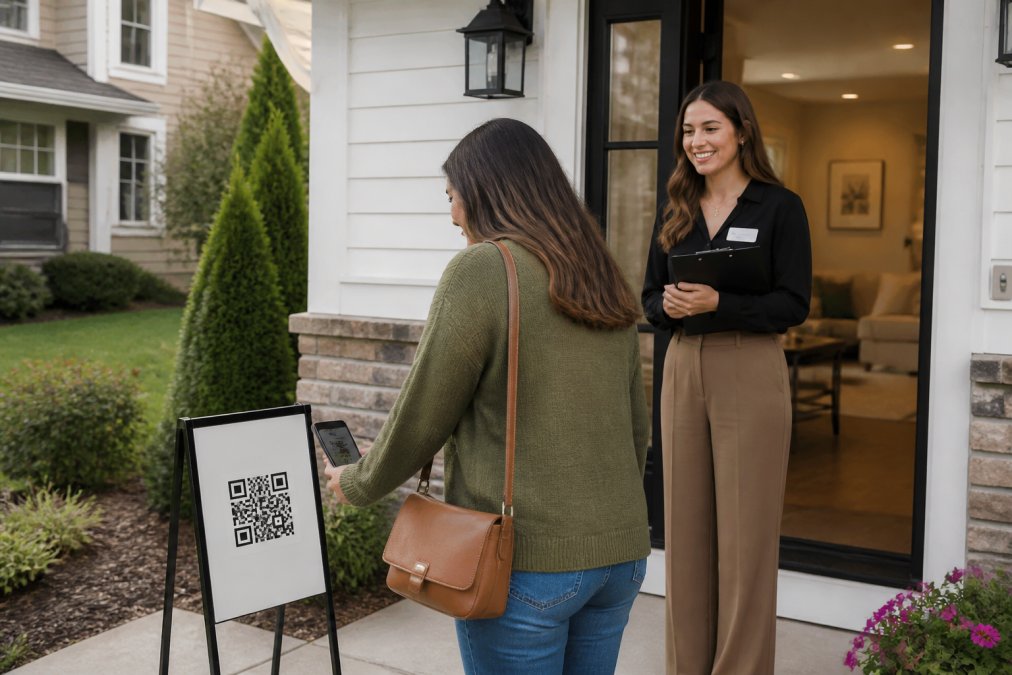
Digital open house sign-in sheets replace the clipboard with a QR code posted outside the home. The visitor scans it, fills a short form on their own phone (name, email, phone, buying timeline), and the data lands in the agent's log immediately. ohACCESS adds a verification layer: the visitor instantly receives two codewords, one by text and one by email, and tells a codeword to the host agent at the door to enter. Nothing is typed back into a system.
| Method | Data Quality | Follow-Up Speed | Fake Entries |
|---|---|---|---|
| Paper sign-in sheet | Unverified, often illegible | Manual entry, same day at best | Common |
| Tablet or kiosk | Typed, but unverified | Manual export | Possible |
| Verified QR check-in | Phone and email confirmed | Instant text and email alert | Blocked at the door |
Step 2: Qualify and Score Every Lead
Lead qualification in real estate starts with three questions: timeline, financing status, and whether the buyer already has an agent. Lead scoring assigns points to each answer so the hottest prospects surface first instead of sitting in a flat list.
- Timeline: 0-3 months = 40 points, 3-6 months = 25, 6-12 months = 10, 12+ months = 5
- Financing: pre-approved = 30 points, pre-qualified = 20, cash = 30, none yet = 0
- Representation: unrepresented = 20 points, has an agent = 0
- Engagement: asked a question during the tour = 10 points
Step 3: Set Up Real Estate CRM Lead Integration
Real estate CRM lead integration is the step most agents skip, and it determines whether the other six steps compound or collapse. A lead scattered across a notebook, a phone screenshot, and an email inbox isn't a lead, it's a future apology.
The three delivery mechanisms that actually work
There are three reliable ways to get open house sign-ins into a CRM without manual re-entry:
- Formatted lead email to the CRM's intake address. The sign-in platform sends a structured email to a dedicated address your CRM monitors, and the CRM parses the email body into fields automatically. This is the lowest-friction option because most CRMs already support it. ohACCESS labels its lead emails so the CRM parses them into fields automatically, verified working with Follow Up Boss. Agents pick their CRM from a dropdown, Follow Up Boss, BoldTrail/kvCORE, Lofty, Sierra Interactive, Real Geeks, CINC, Top Producer, Wise Agent, LionDesk, or Other.
- Zapier webhook. The sign-in platform fires a webhook to Zapier, which routes the data into thousands of connected apps. Use it when your CRM isn't on the dropdown list or when you want to fan a single sign-in out to multiple destinations.
- Team CRM forwarding. A team lead configures every member's sign-ins to copy into a shared team CRM. This is the only mechanism that solves the brokerage visibility problem, without it, each agent's open house leads live in a private pipeline, and the team lead has no idea how many verified leads walked through the door last weekend.
What "integration" does not mean
A word of caution: not every platform that claims CRM integration delivers structured data. Some send a plain-text notification a human has to retype; some require a manual CSV export and import; some claim a "native sync" but only push a name and email, leaving timeline, financing status, and custom-question answers behind.
A setup sequence that survives contact with a real open house
- Pick your delivery mechanism before your next open house. If your CRM is on the dropdown, use the lead email. If it isn't, set up the Zapier webhook. If you run a team, turn on team forwarding too.
- Send one real sign-in through the pipeline. Walk through the visitor flow on your own phone. Confirm the lead email arrived at the CRM's intake address and parsed into the right fields, the Zapier zap fired, and the team CRM received the copy.
- Delete the test record. You don't want a fake lead polluting your pipeline.
- Check the flags. ohACCESS flags VoIP and burner numbers, bounced emails, undeliverable texts, and STOP opt-outs. Review these before your first follow-up call.
- Export a CSV as a backup. A periodic CSV export gives you a portable record of every verified sign-in if you ever change CRMs.
Why this step determines whether the other six compound
If capture is clean but integration is broken, every downstream step inherits the problem. Qualification can't score a lead that never arrived. Follow-up can't start within five minutes if the agent doesn't know the lead exists until Monday. Source tracking can't attribute a closing to an open house if the lead never entered the CRM.
Step 4: Learn How to Follow Up With Open House Leads Fast
How to follow up with open house leads comes down to one rule: the first contact happens within minutes, not days. A buyer who toured four homes on Saturday has already formed impressions, and the agent who calls while they're still in the car is the agent they remember.
A workable sequence looks like this:
- Within 5 minutes: automated thank-you email with the property address and your contact details.
- Within 1 hour: personal call or text referencing something specific from the tour.
- Day 2: send two or three comparable listings that match their stated timeline and budget.
- Day 7: check in with a market update, not a "just following up" message.
- Day 30 onward: monthly value touch until they're ready.
Step 5: Track Lead Sources, Response Time, and ROI
Lead source tracking answers a question most agents guess at: which activities actually produce closings? Without it, marketing spend goes to whatever felt busiest last month.
Step 6: Keep Leads After Closing With Retention Workflows
Post-closing retention is the gap most agents never close. A closed transaction is not the end of the relationship, it's the start of the referral pipeline, and the agents who treat it that way get repeat business without paying for it twice.
Step 7: Stay Compliant With Data Privacy Rules
Data privacy and compliance is where real estate lead management gets genuinely risky, and most agents run on assumptions rather than rules. Collecting a phone number and email at an open house creates obligations around consent, storage, and how that data is shared, and getting it wrong can generate a five-figure penalty.
The three federal and state rules that actually apply
TCPA (Telephone Consumer Protection Act). The TCPA governs how you contact consumers by phone and text. For open house leads:
-
Prior express consent is required before you place a marketing call or send a marketing text to a cell phone. Consent to be contacted about the specific property they toured is narrower than consent to ongoing marketing.
-
Written consent is required for autodialed or prerecorded marketing calls and texts. If your CRM sends automated drip texts, you need express written consent, not just a phone number.
-
Every marketing message must include opt-out instructions, and opt-outs must be honored promptly. A STOP reply is a legal instruction, and continuing to message after a STOP generates TCPA litigation.
-
The National Do Not Call Registry applies to cold outreach. A lead who gave you their number at an open house is generally not a cold call, but a purchased list is a different story.
-
Right to know what personal information you collect and how you use it.
-
Right to delete personal information you've collected, subject to certain exceptions.
-
Right to opt out of the sale of personal information. Most agents don't sell data, but if you share leads with a lender or title partner, review whether that constitutes a "sale" under the statute's broad definition.
-
Right to non-discrimination for exercising these rights.
A practical compliance checklist for open house lead data
- Tell visitors what you'll do with their data. A short consent line on the sign-in form covers the disclosure obligation: what you collect, why, and how to opt out.
- Collect only what you need. Name, email, phone, and buying timeline are defensible. Asking for a Social Security number or a driver's license copy at an open house is not.
- Don't share visitor contact details with third parties who didn't receive consent. This includes the seller. Sellers routinely ask for the sign-in sheet, and handing it over is a privacy problem. ohACCESS's one-tap Seller Report shows aggregate data only: registered-visitor count, buying-timeline breakdown, average 1-10 home rating, price verdict, and aggregated custom-question answers. No names, no phone numbers, no emails, no arrival times, no per-visitor rows. Visitors consented to the agent having their info, not the seller, and the aggregate-only design is a selling point you can explain to a seller who asks why they can't see the list.
- Honor opt-outs immediately and globally. A STOP request should suppress that contact across every channel and campaign, not just the one that triggered it. ohACCESS honors opt-outs globally.
- Set a retention limit and stick to it. Data you don't have can't be breached or subpoenaed. ohACCESS includes an automatic three-year data-retention purge.
- Use attorney-reviewed terms and a published privacy policy. ohACCESS includes attorney-reviewed Terms and a Privacy Policy, and its verification flow includes a forensic trail (IP, device, phone carrier and line type) on every sign-in, useful if you ever need to demonstrate that a specific visitor consented at a specific time.
- Know what you can't do. ohACCESS does not provide automated right-to-be-forgotten workflows or configurable retention policies. If a consumer exercises a deletion right, you handle that request through your own process. The three-year purge is automatic, not configurable.
Why this section matters more than it used to
The compliance landscape has tightened every year for the past decade, and the enforcement pattern is consistent: regulators and plaintiffs' attorneys target businesses that collect consumer data without clear consent and then contact those consumers without honoring opt-outs. Real estate is a frequent target because open house sign-ins, IDX inquiries, and purchased lists all generate phone numbers and emails at scale.
Frequently Asked Questions
What is the most effective way to manage real estate leads?
Manage real estate leads as a pipeline, not a contact list. Capture every lead with verified contact data, score them by buying timeline, deliver them into your CRM automatically, and follow up within minutes rather than days. The agents who win are the ones who treat speed to lead and data accuracy as the two levers that matter most. A verified sign-in at the door, like the ohACCESS codeword check, removes the fake numbers that stall a pipeline before it starts.
How do you verify real estate leads at an open house?
Verification means proving the phone number and email a visitor gives you are real and belong to them. ohACCESS does this without any typing: the visitor scans a QR code, fills a short form on their own phone, and instantly receives two codewords, one by text and one by email. They tell a codeword to the host agent at the door to enter. Because the visitor must receive the message to get in, a wrong number or dead email fails on the spot.
What is the best way to integrate open house leads into a CRM?
Use a tool that pushes each sign-in into your CRM automatically instead of re-typing paper sheets. ohACCESS sends every verified sign-in as a formatted lead email to your CRM's intake address, which the CRM parses into fields, and it also offers a Zapier webhook plus team CRM forwarding. It does not do native API sync, field mapping, or lead scoring, so plan to set your pipeline stages and tags inside the CRM itself.
How can agents improve lead conversion rates after an open house?
Move fast and personalize. Send a thank-you the next morning, reference the specific home they toured, and ask one qualifying question about their timeline. Segment by buying timeline so the 0-3 month group gets a call today and the 12+ month group enters a long-term nurture sequence. Track response time as a metric. Leads that sit for a week convert far worse than leads contacted the same day, so build the follow-up into your CRM as an automated workflow, not a mental to-do list.
Frequently asked questions
What is the most effective way to manage real estate leads?
Manage real estate leads as a pipeline, not a contact list. Capture every lead with verified contact data, score them by buying timeline, deliver them into your CRM automatically, and follow up within minutes rather than days. The agents who win are the ones who treat speed to lead and data accuracy as the two levers that matter most. A verified sign-in at the door, like the ohACCESS codeword check, removes the fake numbers that stall a pipeline before it starts.
How do you verify real estate leads at an open house?
Verification means proving the phone number and email a visitor gives you are real and belong to them. ohACCESS does this without any typing: the visitor scans a QR code, fills a short form on their own phone, and instantly receives two codewords, one by text and one by email. They tell a codeword to the host agent at the door to enter. Because the visitor must receive the message to get in, a wrong number or dead email fails on the spot.
What is the best way to integrate open house leads into a CRM?
Use a tool that pushes each sign-in into your CRM automatically instead of re-typing paper sheets. ohACCESS sends every verified sign-in as a formatted lead email to your CRM's intake address, which the CRM parses into fields, and it also offers a Zapier webhook plus team CRM forwarding. It does not do native API sync, field mapping, or lead scoring, so plan to set your pipeline stages and tags inside the CRM itself.
How can agents improve lead conversion rates after an open house?
Move fast and personalize. Send a thank-you the next morning, reference the specific home they toured, and ask one qualifying question about their timeline. Segment by buying timeline so the 0-3 month group gets a call today and the 12+ month group enters a long-term nurture sequence. Track response time as a metric. Leads that sit for a week convert far worse than leads contacted the same day, so build the follow-up into your CRM as an automated workflow, not a mental to-do list.
Keep reading
Start free with 25 verified check-ins. No credit card required.
Start Free