Modernizing Real Estate Follow-Up for Busy Agents
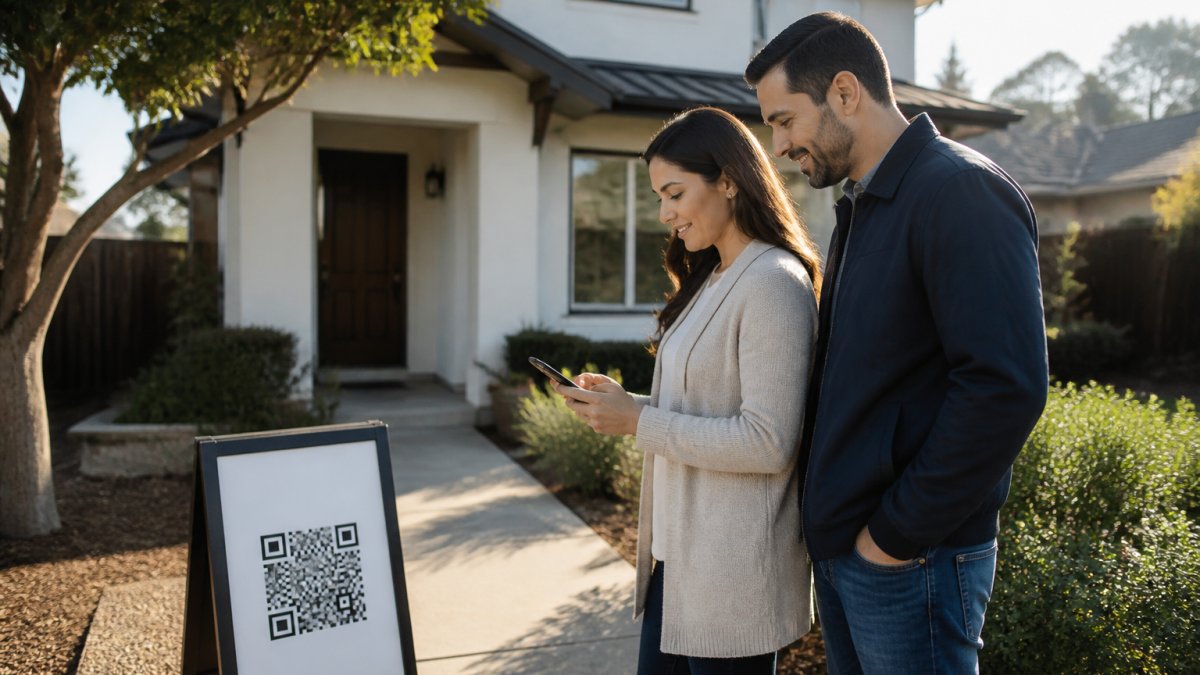
Table of Contents
- Why the Old Follow-Up Sheet Fails Busy Agents
- Step 1: Capture Verified Contact Data at the Door
- Step 2: Build a Real Estate Follow-Up System That Runs Itself
- Step 3: Set Your Follow-Up Cadence (How Often to Follow Up With Real Estate Leads)
- Step 4: Use Real Estate Follow-Up Scripts That Don't Sound Like Scripts
- Step 5: Send an Open House Follow-Up Email People Actually Open
- Step 6: Choose a Real Estate CRM for Lead Follow-Up
- Step 7: Measure Follow-Up Performance and Fix What's Leaking
- Frequently Asked Questions
Last Updated: October 20, 2026
Why the Old Follow-Up Sheet Fails Busy Agents
The paper sign-in sheet is where good real estate follow-up goes to die. A visitor scribbles an unreadable address, a phone number missing a digit, and an email that bounces. By Wednesday the sheet is buried under listing paperwork.
The deeper problem is trust. You cannot tell a real buyer from a looky-loo, so you treat every name the same: half-hearted calls, generic emails, no system.
Step 1: Capture Verified Contact Data at the Door
Real estate follow-up only works if the contact data is real. Verified check-in fixes that at the source: the visitor proves the phone and email belong to them before they ever walk through the door.
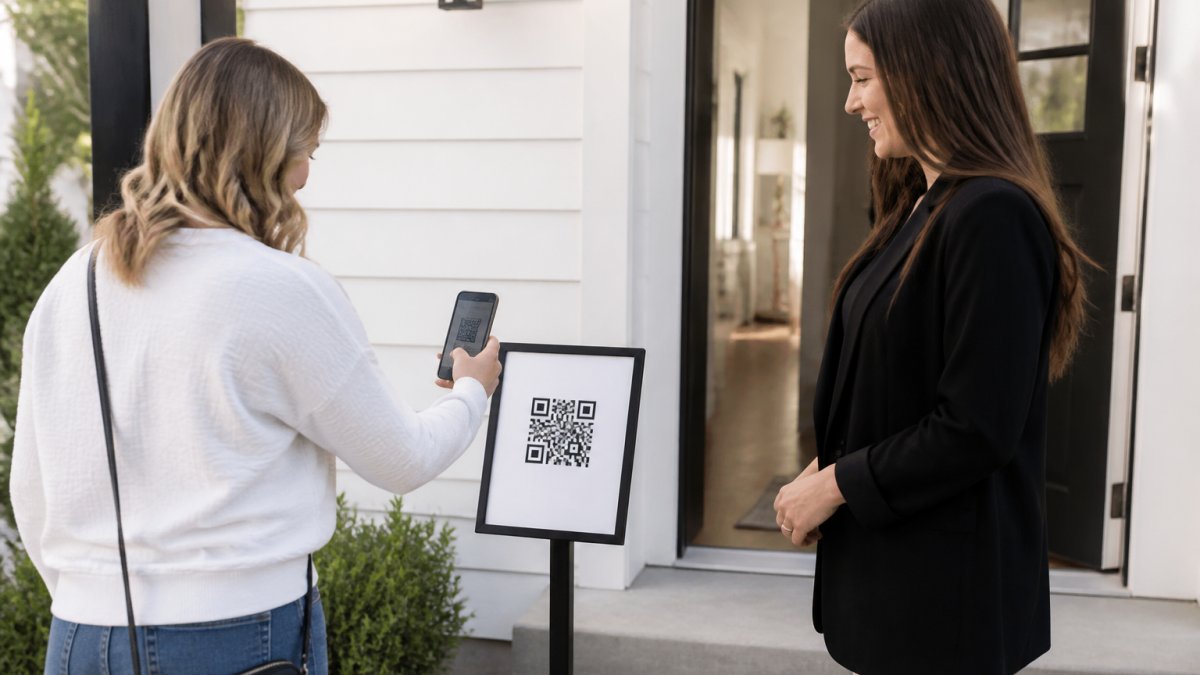
How Verified Check-In Works at an Open House
The flow is simple and takes seconds:
- The visitor scans a QR code posted on a pedestal or a-frame sign at the door.
- They fill out a short form on their own phone: name, email, phone, and buying timeline.
- They instantly receive two codewords, one by text and one by email.
- They tell a codeword to the host agent at the door to enter.
- You get an instant text and email alert with their details.
Nothing is typed back into a system. The visitor simply shares the codeword with you, and that proves the phone and email are live. ohACCESS delivers every sign-in to your CRM automatically as a formatted lead, so the data is ready for follow-up before the visitor leaves.
Step 2: Build a Real Estate Follow-Up System That Runs Itself
A real estate follow-up system is the set of tools and rules that move a new lead from first contact to booked appointment without you remembering every step. No lead should depend on your memory.
Set it up in this order:
- One inbox. Every lead lands in your CRM, not your phone's text thread.
- Automatic reminders. Tasks appear on the day they are due.
- Templates ready to send. Scripts and emails live where you can grab them fast.
Step 3: Set Your Follow-Up Cadence (How Often to Follow Up With Real Estate Leads)
How often should you follow up with real estate leads? It depends on where the lead came from and how soon they plan to buy. A single cadence for every lead is why most follow-up systems collapse, you either over-contact cold leads or under-contact hot ones and lose them to the agent who called first.
The Base 14-Day Cadence for New Open-House Leads
For a fresh open-house lead, aim for contact on day one, day two, day four, day seven, and day fourteen. After that, shift to a monthly check-in. This cadence keeps you top of mind without becoming a pest.
| Day | Channel | Action |
|---|---|---|
| Day 0 | Text | Thank them and confirm you got their info |
| Day 1 | Phone call | Ask about their timeline and needs |
| Day 3 | Send the listing flyer plus two similar homes | |
| Day 7 | Phone call | Offer a private showing |
| Day 14 | Share a market update for their target area |
After day fourteen, move the lead to a long-term nurture list. Long-term prospects still buy, just later.
Lead-Source-Specific Playbooks
Each source carries a different level of intent, and your cadence should match it.
Portal inquiries (the highest-intent source). These leads are actively shopping and often talking to several agents at once.
Referrals. These arrive with trust already attached, so the cadence is warmer and slower.
Social media leads. Intent is lower and attention is shorter.
Past clients. These are not leads in the traditional sense; they are your referral engine.
The Time-Blocked Workflow for Busy Agents
A cadence you cannot execute is worse than no cadence at all. Here is how to fit it into a week already full of showings, inspections, and paperwork:
- Morning block (15 minutes). Clear new leads from the overnight and early-morning alerts. Send the day-one texts and make the day-one calls before your first appointment.
- Midday block (10 minutes). Handle the day-three and day-seven touches, the emails and follow-up calls that do not require a live conversation.
- End-of-day block (10 minutes). Log every touch, update
last touch date, and confirm tomorrow's tasks are queued. This is the block that keeps the system from silently breaking.
When to Stop Following Up
A cadence needs an exit. If a lead has not responded to five touches across two channels over 30 days, move them to long-term nurture and stop active outreach. Honor opt-outs immediately and across every channel, a STOP on text means no more texts, and a request to stop contact means no more calls or emails either.
Step 4: Use Real Estate Follow-Up Scripts That Don't Sound Like Scripts
Real estate follow-up scripts work best when they sound like a person, not a telemarketer. The trick is to memorize the structure, not the words.
Try this opener for a call: "Hi [name], this is [you] from the open house on [street].
For a text, keep it short: "Hi [name], thanks for stopping by [address] today. Quick question: was the layout close to what you're looking for?"
Step 5: Send an Open House Follow-Up Email People Actually Open
An open house follow-up email should reference the specific property and offer something useful. Generic blasts get ignored.
Here is a template you can adapt:
Subject: The [street name] house, plus two you might like
Hi [name],
Thanks for visiting [address] on [day]. You mentioned you're looking in the [price range] range with a [bedroom] layout in mind.
I pulled two similar listings you may not have seen: [listing 1] and [listing 2]. Want me to set up a private showing this week?
[Your name]
Send it within 24 hours, while the visit is still fresh. Personalization is what separates a value-driven follow-up from noise.
Step 6: Choose a Real Estate CRM for Lead Follow-Up
A real estate CRM for lead follow-up is the backbone of the whole system. Without one, contact tracking falls apart by week two. What separates a working system from a graveyard of stale contacts is how you configure it, the fields, tags, reminders, and triggers that make follow-up happen without you remembering it.
The Three Non-Negotiables
Pick a CRM that does three things well:
- Captures leads automatically from your open houses and website, so no name lives only in your phone's text thread.
- Creates follow-up tasks on a schedule you set, not on whatever you happen to remember.
- Sends from multiple channels, including text and email, so you can meet each lead where they respond.
The Setup Recipe Competitors Skip
Here is the configuration that makes a CRM run for a busy agent:
Fields to create (beyond name, email, phone):
- Lead source, open house, portal inquiry, referral, social, past client. This single field drives which cadence fires.
- Buying timeline, 0-3, 3-6, 6-12, or 12+ months. This is the field that tells you who to call first.
- Property of interest, the address they toured or asked about, so every message can reference it.
Tags to apply:
hot-0-3andwarm-3-6for timeline-based prioritization.open-house-[date]so you can pull a list of everyone from a single event.nurture-long-termfor the 12+ month crowd that still buys eventually.
Reminders and triggers:
- A task that fires the moment a lead arrives, so day-one contact is not optional.
- A recurring monthly reminder on every
nurture-long-termcontact. - A trigger that creates a new task whenever a lead replies, so a response never sits unread.
- A stale-lead alert if
last touch dateis more than 30 days old on any active contact.
Sequences to build (in your CRM, not in a spreadsheet):
- A 14-day new-lead sequence matching the cadence in Step 3.
- A 90-day long-term nurture sequence with a market update, a check-in, and a value-add resource.
- A post-showing sequence that fires after any private showing, not just open houses.
How Verified Check-In Feeds the CRM
This is where ohACCESS earns its place. Its free trial covers your first 25 sign-ins with every feature included, and pricing for solo agents, teams, and brokerages is available on their website. Every verified visitor arrives in your CRM as a formatted lead, delivered through a formatted lead email to your CRM's lead-intake address, a Zapier webhook, or team CRM forwarding, so your follow-up starts the moment they walk in.
Step 7: Measure Follow-Up Performance and Fix What's Leaking
You cannot improve what you do not track. Measuring follow-up performance means watching a few numbers every week, not drowning in dashboards.
Track these:
- Response time. How fast do you reach a new lead? Speed matters for conversion.
- Contact rate. What share of leads do you actually reach?
- Appointment rate. How many leads turn into showings?
- Source quality. Which lead source produces the best buyers?
Check these weekly and fix the weakest link first. If contact rate is low, your data is bad. If appointment rate is low, your messaging needs work.
Modernizing real estate follow-up is not about doing more. It is about building a system that captures clean data, runs on a schedule, and shows you what is working.
Frequently Asked Questions
How soon should a real estate agent follow up with a new lead?
Reach out the same day, ideally within the first hour after the showing or inquiry. A quick text or call while the property is still fresh in the buyer's mind gets the best response. Then move into a structured cadence: a personal call or text on day one, a value-driven email on day two or three, and check-ins spaced over the following two weeks. Speed matters, but consistency matters more. A same-day touch followed by a reliable schedule beats one fast message and silence.
How often should agents follow up with real estate leads without being pushy?
Match frequency to buyer intent. For leads with a 0-3 month timeline, aim for a touch every two to three days in the first two weeks, then weekly. For 6-12 month prospects, a useful check-in every two to three weeks keeps you top of mind without crowding them. Always lead with value: a new listing, a market update, or an answer to a question they asked. Non-pushy follow-up is about giving something useful each time, not asking for the appointment on every message.
What should an open house follow-up email say?
Keep it short and personal. Reference the specific property, thank them for visiting, and include one useful item such as a comparable sale or a link to similar listings. Ask a single easy question, like whether they'd like to see anything else this weekend. Avoid generic newsletters and long paragraphs. One clear next step and a real reason to reply will outperform a polished template every time.
What tools help busy agents manage follow-up?
You need three pieces: a way to capture verified contact data, a CRM that holds the lead and reminds you to act, and a channel for each touch (call, text, email). ohACCESS handles the capture side by replacing the paper sign-in sheet with verified digital check-in, then delivering every visitor's details into your CRM automatically as a formatted lead. From there, your CRM manages reminders and cadence. The result is a follow-up system that doesn't depend on memory or a stack of paper sheets.
Frequently asked questions
How soon should a real estate agent follow up with a new lead?
Reach out the same day, ideally within the first hour after the showing or inquiry. A quick text or call while the property is still fresh in the buyer's mind gets the best response. Then move into a structured cadence: a personal call or text on day one, a value-driven email on day two or three, and check-ins spaced over the following two weeks. Speed matters, but consistency matters more. A same-day touch followed by a reliable schedule beats one fast message and silence.
How often should agents follow up with real estate leads without being pushy?
Match frequency to buyer intent. For leads with a 0-3 month timeline, aim for a touch every two to three days in the first two weeks, then weekly. For 6-12 month prospects, a useful check-in every two to three weeks keeps you top of mind without crowding them. Always lead with value: a new listing, a market update, or an answer to a question they asked. Non-pushy follow-up is about giving something useful each time, not asking for the appointment on every message.
What should an open house follow-up email say?
Keep it short and personal. Reference the specific property, thank them for visiting, and include one useful item such as a comparable sale or a link to similar listings. Ask a single easy question, like whether they'd like to see anything else this weekend. Avoid generic newsletters and long paragraphs. One clear next step and a real reason to reply will outperform a polished template every time.
What tools help busy agents manage follow-up?
You need three pieces: a way to capture verified contact data, a CRM that holds the lead and reminds you to act, and a channel for each touch (call, text, email). ohACCESS handles the capture side by replacing the paper sign-in sheet with verified digital check-in, then delivering every visitor's details into your CRM automatically as a formatted lead. From there, your CRM manages reminders and cadence. The result is a follow-up system that doesn't depend on memory or a stack of paper sheets.
Keep reading
Start free with 25 verified check-ins. No credit card required.
Start Free