How to Protect Homeowner Privacy During Open Houses
Last Updated: November 14, 2026
Quick Summary
Protect homeowner privacy during open houses by clearing valuables, medications, mail, and passwords out of sight before visitors arrive, securing connected cameras and smart devices, and controlling entry with verified check-in. Lock away small expensive items and sensitive papers, and walk each room with a checklist.
- Move cash, jewelry, laptops, and prescription medications out of sight or into a locked spot.
- Clear mail, bills, and sticky notes with passwords from counters, desks, and entry tables.
- Unplug indoor cameras and baby monitors, and mute voice assistants before the event.
- Walk each room with the checklist and do a final sweep about 15 minutes before the open house.
- Verified digital check-in replaces the paper sign-in sheet so the agent knows who entered.
Table of Contents
- Why Homeowner Privacy Matters During Open Houses
- What to Hide Before an Open House
- Home Showing Privacy Checklist, Room by Room
- Securing Smart-Home Devices, Cameras, and Wi-Fi
- Open House Visitor Sign-In Privacy: Controlling Who Enters
- Should Sellers Leave During an Open House?
- Booking Your Next Open House With a Privacy Plan
- Frequently Asked Questions
Why Homeowner Privacy Matters During Open Houses
An open house puts your home in front of strangers. Most of them are serious buyers, but some are just curious, and a few are looking for something to take.
Privacy protection starts before the first visitor arrives. Think about what a stranger can see, touch, or read in five minutes. Then decide what needs to move out of sight.
Good hosts also control who comes in.
What to Hide Before an Open House
Start with a short walkthrough. Look at each room the way a visitor would. Ask what is in plain view, what is easy to pick up, and what reveals personal details.
Most sellers focus on the obvious items. The less obvious ones, like mail and password notes, often cause more trouble.
Valuables, Cash, and Medications
Small, expensive items should leave the house or go into a locked spot. That includes:
- Cash, gift cards, and spare keys
- Jewelry and watches
- Laptops, tablets, and phones left on counters
Check bathrooms and bedroom nightstands too. Medications often sit there in plain sight.
Personal Documents, Mail, and Passwords
Paperwork shows a lot about a household. Clear it from kitchen counters, desks, and entry tables.
- Stack mail and put it in a drawer or take it with you
- Remove bills, tax forms, and insurance papers
- Cover or hide any sticky notes with passwords or account numbers
Identity theft often starts with small items like these. A single bill with an account number can give a stranger more than they need.
Home Showing Privacy Checklist, Room by Room
Use this as a checklist before every open house. Walk each room and check the items off.
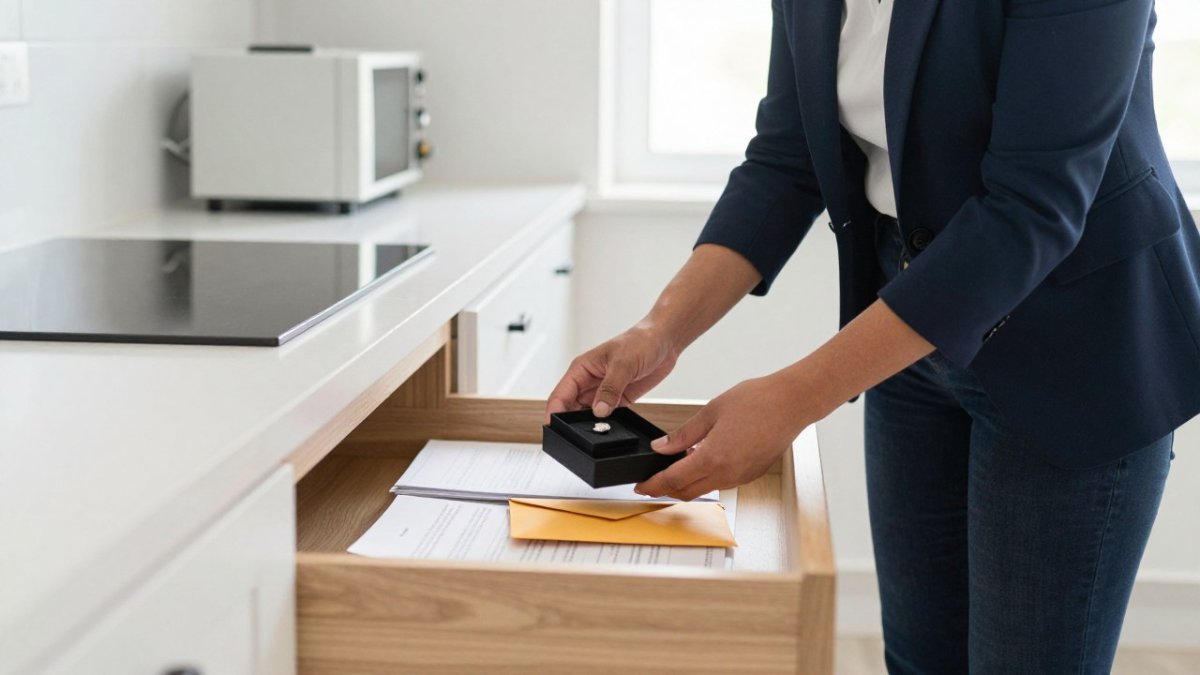
- Entryway: Clear mail, keys, and bags from tables. Remove family photos that show children's school names or schedules.
- Kitchen: Put medications, cash, and loose papers out of sight. Clear the fridge of notes with names or appointments.
- Living room: Move laptops, tablets, and remote-controlled devices into a closed cabinet or another room.
Give each room a quick final check about 15 minutes before the open house begins.
Securing Smart-Home Devices, Cameras, and Wi-Fi
Connected devices can reveal more than furniture does. A smart speaker, camera, doorbell, thermostat, or router can expose your routines, your network, and in some cases your voice and video.
Work through the devices one at a time rather than flipping a single switch. A short walkthrough the night before the open house is enough if you know what to look for.
Cameras and Doorbells
- Indoor cameras: Unplug them or physically cover the lens. Do not rely on a privacy mode in an app you may not check.
- Video doorbells: These usually stay on because they cover the entry, but tell your agent they are recording. Audio recording rules vary by state, so check your local requirements before leaving a device that captures conversations inside the foyer.
- Baby monitors and pet cameras: Unplug them. They are easy to forget and they often point at bedrooms.
Watch out: A camera you leave running can capture visitors who did not consent to being recorded, and that footage may be discoverable if a dispute arises later.
Voice Assistants and Smart Speakers
- Mute the microphone on every voice assistant in the home, or unplug the devices entirely.
- Review the device's voice-history settings and delete stored recordings before the open house if the app allows it.
- If a device is tied to your shopping, calendar, or contacts, sign out of the account rather than just muting it.
Smart Locks, Garage Doors, and Connected Appliances
- Do not hand out a permanent smart-lock code to visitors. Use a temporary guest code for the agent if your lock supports one, and delete it after the event.
- Check that garage-door apps and connected appliances are not sharing access with an old account or a former contractor.
- Turn off any appliance feature that can be triggered remotely, such as a smart oven or a connected sprinkler, so a curious visitor cannot test it.
Wi-Fi and the Home Network
Visitors do not need access to your home network, and you should assume someone will ask for the password.
- Change the router admin password if it is still the default. The default login is published by the manufacturer and is the first thing anyone tries.
- Use a guest network if your router offers one, and give that password to your agent only if a visitor genuinely needs connectivity. Keep the main network separate.
- Turn off WPS (Wi-Fi Protected Setup) if your router has it. The push-button pairing feature has known weaknesses.
What Your Listing Photos Already Revealed
Privacy protection starts before the first visitor arrives, and the listing itself is part of the exposure. Photos and floor plans posted online can show more than you intended.
- Documents and screens: Look at each listing photo for bills, calendars, diplomas, prescription labels, and computer screens. Ask your agent to reshoot or crop any image that shows them.
- Family photos and children's items: These can reveal names, school names, and schedules. Remove or turn them before the photographer arrives, not just before the open house.
- Security equipment: Visible cameras, keypads, and alarm panels tell a stranger where the system is and how it is set up.
A common pattern is for sellers to scrub the house for the open house and leave the listing photos untouched. The photos stay online long after the event, so fix them first.
Open House Visitor Sign-In Privacy: Controlling Who Enters
A paper sign-in sheet is easy to misuse. Anyone can write a fake name, and anyone can read the names and numbers of the people who came before them. That is a privacy problem for both visitors and homeowners, and it is the part of the open house most sellers never think to plan.
Access control is a shared job. The seller secures the house; the agent controls the door. Agree on who does what before the first visitor arrives.
A Showing-Day Timeline
The day before
- Walk the house with the room-by-room checklist and lock or remove anything sensitive.
- Unplug cameras and mute voice assistants.
- Confirm the agent's check-in setup is ready, including the QR code and the codewords for the event.
About 30 minutes before
- Do a final sweep of entryway, kitchen, bathrooms, and home office.
- Close and lock interior doors to private rooms, storage areas, and the garage.
- Confirm pets are away or secured.
During the open house
- The agent greets every visitor at the door and confirms check-in before entry.
- The agent keeps sightlines on the main path and does not let visitors wander unaccompanied into closed areas.
- If you are present, keep conversations general and let the agent handle questions and check-in.
After the last visitor leaves
- Walk the house and check that locked rooms are still locked and windows are closed.
- Check the router's connected-device list for anything unfamiliar.
- Confirm valuables and medications are where you left them.
Verified Check-In at the Door
A better approach than a paper sheet is verified digital check-in. Here is how ohACCESS handles it:
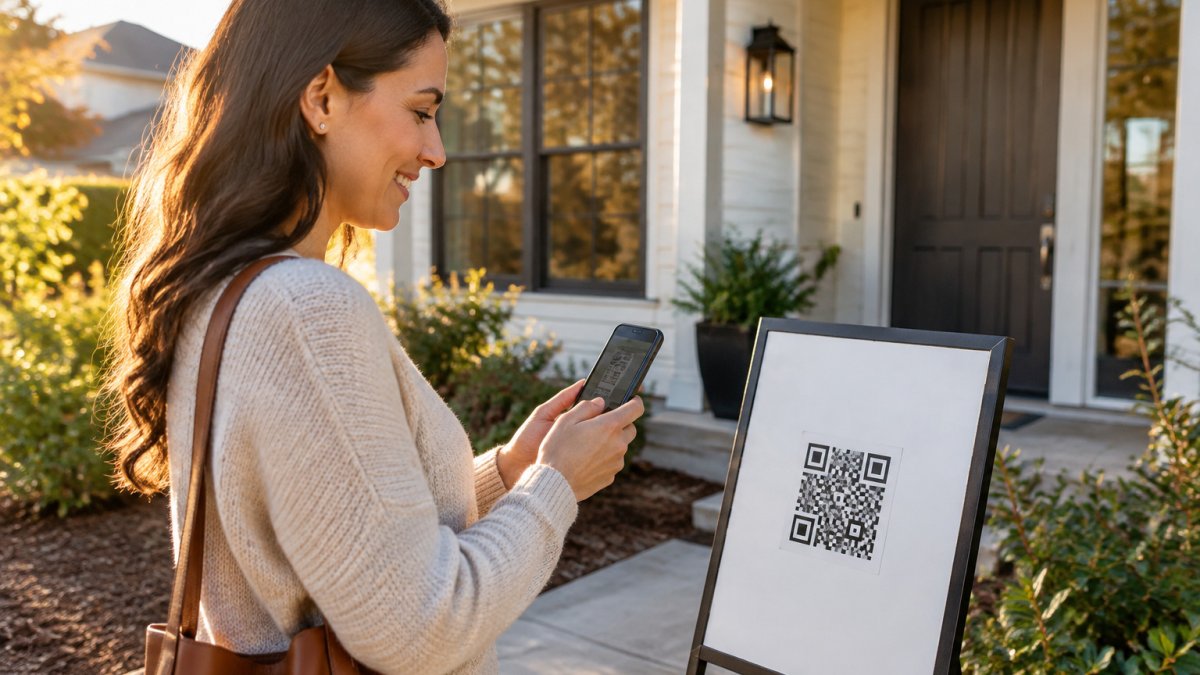
- The visitor scans a QR code at the door and fills out a short form on their own phone.
- They instantly receive two codewords, one by text and one by email.
- They tell a codeword to the host agent at the door to enter. The text codeword is primary, and the email codeword is the backup.
- The agent gets an instant text and email alert for each sign-in.
Nothing is typed into a system at the door. The codeword proves that the phone number and email are real and belong to the visitor.
ohACCESS delivers each sign-in into the agent's CRM automatically as a formatted lead, so the agent does not need to copy names by hand.
Watch out: A sign-in sheet that sits in plain view lets each visitor read everyone else's contact information.
If Something Goes Missing or Is Damaged
Most open houses end without incident, but a plan for the exception is part of privacy and safety.
- Document immediately. Note the item, the time you noticed it, and the last time you saw it. Photograph the space as it is now.
- Tell your agent the same day. The agent has the visitor log and can match the timeline to check-ins.
- Preserve the log. Do not delete the event or clear the visitor list. The verified log, including the forensic trail of IP, device, and phone line type on each sign-in, is the record you would need if the matter escalates.
A verified visitor log does not prevent every problem, but it turns a vague suspicion into a dated record. That is the difference between a story and a report.
The table below summarises the key sign-in steps and how each one protects both visitors and the homeowner.
| Step | What happens | Privacy benefit |
|---|---|---|
| Visitor scans QR code | Visitor fills out a short form on their own phone | No paper sheet others can read |
| Codewords sent | Two codewords arrive, one by text and one by email | Confirms phone and email are real |
| Codeword shared at door | Visitor tells the codeword to the host agent | Nothing is typed into a system at the door |
| Agent alert | Agent gets a text and email for each sign-in | Agent knows who walked through the door |
| Verified visitor log | Each sign-in is kept as a verified record | Dated record if something goes missing |
Should Sellers Leave During an Open House?
Many sellers prefer to leave the house during a showing. That gives visitors room to look around without feeling watched, and it keeps your personal belongings out of view. It also lowers the chance that you say something you did not mean to.
If you stay, keep your conversations general and stay in one room. Let your agent handle questions and visitor check-in.
Sellers who want feedback can still get it without seeing visitor details. ohACCESS offers a one-tap Seller Report that shows aggregate data only: the number of registered visitors, how many plan to buy within six months, the buying-timeline breakdown, and the average visitor rating and price verdict. It does not show visitor names, phone numbers, emails, or arrival times, because visitors agreed to share their information with the agent, not the seller.
Booking Your Next Open House With a Privacy Plan
Before your next open house, set aside time for a privacy plan. Walk the house with the checklist, lock up valuables, and turn off or secure connected devices.
Agents who want to protect homeowner privacy while building a clean lead list can start with the free trial.
Start Free with ohACCESS and run your next open house with verified check-in and a privacy-safe seller report.
Frequently Asked Questions
What is the best way to protect your privacy during an open house?
Remove or lock away valuables, cash, medications, and personal documents before the first visitor arrives. Then control entry with a sign-in process so the agent knows who is in the home at any time. Keep mail, financial records, and computer screens out of sight, and avoid leaving passwords or family photos with identifying details on display. Agents can also limit the tour to shared living areas and keep private rooms closed.
Should the homeowner be at the open house?
Most agents recommend that the homeowner leave during the showing. An empty home lets visitors speak freely with the agent, and it removes any pressure on the seller to answer questions or make comments that could affect negotiations. It also reduces the risk that a visitor will engage with the seller in ways that feel uncomfortable. The homeowner can plan to be away for the full open house window and return once the property is secured.
What should you put away before an open house?
Put away cash, jewelry, electronics, prescription medications, firearms, and anything else that is valuable or hazardous. Lock up personal documents such as tax returns, bills, passports, and checkbooks, along with mail. Remove anything that shows financial or identifying information, including whiteboards with notes and paperwork on counters. Taking these steps before the showing reduces the chance of theft and identity exposure.
How should agents handle visitor sign-in information?
Replace the paper sign-in sheet with verified digital check-in, where each visitor registers on their own phone. ohACCESS sends two codewords, one by text and one by email, and the visitor shares a codeword with the host agent to enter, which confirms the phone number and email are real. Each sign-in sends the agent an instant text and email alert, and leads are delivered to your CRM automatically through a formatted lead email or a Zapier webhook. The free trial covers the first 25 sign-ins, and current plan pricing is listed on the ohACCESS website.

Frequently asked questions
What is the best way to protect your privacy during an open house?
Remove or lock away valuables, cash, medications, and personal documents before the first visitor arrives. Then control entry with a sign-in process so the agent knows who is in the home at any time. Keep mail, financial records, and computer screens out of sight, and avoid leaving passwords or family photos with identifying details on display. Agents can also limit the tour to shared living areas and keep private rooms closed.
Should the homeowner be at the open house?
Most agents recommend that the homeowner leave during the showing. An empty home lets visitors speak freely with the agent, and it removes any pressure on the seller to answer questions or make comments that could affect negotiations. It also reduces the risk that a visitor will engage with the seller in ways that feel uncomfortable. The homeowner can plan to be away for the full open house window and return once the property is secured.
What should you put away before an open house?
Put away cash, jewelry, electronics, prescription medications, firearms, and anything else that is valuable or hazardous. Lock up personal documents such as tax returns, bills, passports, and checkbooks, along with mail. Remove anything that shows financial or identifying information, including whiteboards with notes and paperwork on counters. Taking these steps before the showing reduces the chance of theft and identity exposure.
How should agents handle visitor sign-in information?
Replace the paper sign-in sheet with verified digital check-in, where each visitor registers on their own phone. ohACCESS sends two codewords, one by text and one by email, and the visitor shares a codeword with the host agent to enter, which confirms the phone number and email are real. Each sign-in sends the agent an instant text and email alert, and leads are delivered to your CRM automatically through a formatted lead email or a Zapier webhook. The free trial covers the first 25 sign-ins, and current plan pricing is listed on the ohACCESS website.
Keep reading
Start free with 25 verified check-ins. No credit card required.
Start Free